Apple Trade In vs Selling for Cash: Which Is Better?
By syedladen ·
Apple Trade In is usually the better choice if you are buying a new Apple product right now and want the simplest, lowest-risk swap. Selling to a cash buyback store is usually the better choice if you want actual money in hand today, your device is damaged or unusual, or you are not buying from Apple at all. Neither route wins every time, and the right answer depends on what you want the payout to be: credit, or cash.
We run a buyback chain, so we have a stake in this. That is exactly why this guide says plainly where Apple is the smarter pick. If you want a number for your own device, the fastest way to compare is to get a free cash quote and set it beside Apple's estimate. Neither takes long, and both are free.
How Apple Trade In actually works, step by step
Apple's program is well documented publicly, and the basic flow has stayed consistent. Here is how it works in practice, whether you go online or in a store.
Online trade-in
- Start an estimate. You enter the device type, model, and answer questions about its condition: whether it powers on, whether the screen or back glass is cracked, whether buttons and cameras work, and whether there is other damage.
- Receive an estimated value. This is an estimate based on your answers, not a final offer. Apple says the final value depends on the device matching your description.
- Choose how to use it. Typically you apply the value as credit toward a new purchase, or take it on an Apple Gift Card, depending on how and where you trade.
- Prepare the device. You back it up, sign out of your Apple ID, turn off Find My, and erase the device. A device still tied to your account cannot be used by the next owner, and a locked device is a problem for any buyer.
- Ship it. Apple sends a prepaid shipping kit or label, and you send the device in. When you trade toward a purchase, there is a deadline to send it, and missing it can lead to a charge or adjustment, so read the terms shown at checkout.
- Inspection. Apple or its trade-in partner checks the device against your description. If it matches, the value stands. If it does not, you get a revised offer.
- Accept or decline. If the offer changes, you can generally accept the new value or ask for the device back.
In-store trade-in
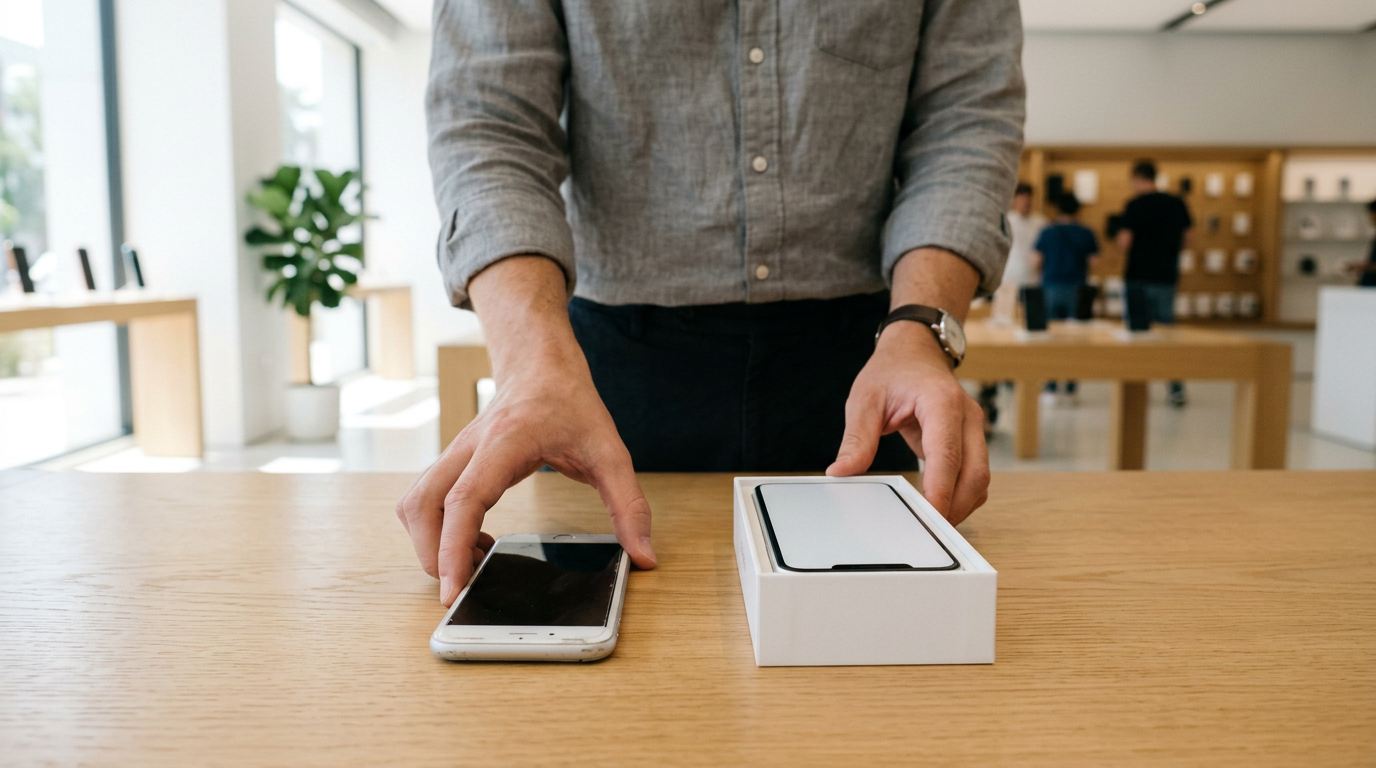
At an Apple Store, a team member evaluates the device with you, and the value is applied as credit toward a purchase or loaded on a gift card. This skips the shipping and waiting, which is the main reason people like it.
Credit vs gift card vs cash: what you really get
This is the most important difference, and the one people overlook when comparing headline numbers.
- Credit toward a purchase only has value if you are buying something from Apple. It reduces what you pay, but it is not money you can spend elsewhere, and it does not help with rent, a used-phone purchase from another seller, or a different brand.
- An Apple Gift Card is flexible within Apple's ecosystem (products, accessories, services) but not outside it. It is usable later, but it is still store currency.
- Cash is usable anywhere, immediately, for anything. You can put it toward an Android phone, a console, a bill, or an Apple product if you choose.
There is a fair counterpoint: if you were already going to buy a new iPhone, MacBook, or iPad from Apple, credit is effectively the same as cash for that purchase. The question is only whether the credit is more or less than you would get elsewhere. For that reason, comparing a cash quote to the trade-in estimate is worth two minutes before you commit.
Instant credit vs mail-in inspection, and offer revisions
These are the three process details that cause the most frustration with any trade-in program, not just Apple's.
Instant credit
When you trade in a store, the evaluation happens while you are there. You see the value, you agree, and it is applied. There is little room for surprises because the person evaluating your device is looking at it in front of you. This is the lowest-friction version of Apple Trade In.
Mail-in inspection
Online trade-ins add a gap between describing your device and having it inspected. That gap is where most disappointments happen. You may be buying your new device while your old one is still in transit, so you are relying on the final value matching the estimate. If you are comfortable with that, it is convenient. If you would rather know the exact outcome before parting with the device, it is a real downside.
Offer revisions
A revised offer is not a trick; it is how any estimate-first system works. The estimate assumes your answers are accurate. If the inspector sees a cracked camera lens, a faint screen burn-in, a swollen battery, or a device that will not power on, the value adjusts. The practical advice is to be conservative when you describe condition. If you are unsure whether a flaw counts as minor, describe it as the worse option. A lower estimate that holds up is better than a higher one that gets revised.
If a revision comes back lower than expected, you can usually decline and have the device returned. Keep photos of your device before shipping it, as a record of its condition.
How selling to a cash buyback store works
A buyback store has a different structure: you get a quote, the device is inspected in front of you, and you are paid on the spot. At Sell Your Gadgets, the process looks like this.
- Get a free quote online, by text, or by walking in. We do not publish prices, because values depend on the exact model, storage, and condition, so a quote is the honest way to see a number.
- Bring the device to a store. No appointment is needed. If you are not near one, find a store near you or use the mail-in option.
- Quick inspection while you wait, so the offer is based on the device in hand.
- Show a valid government photo ID. This is required for every sale.
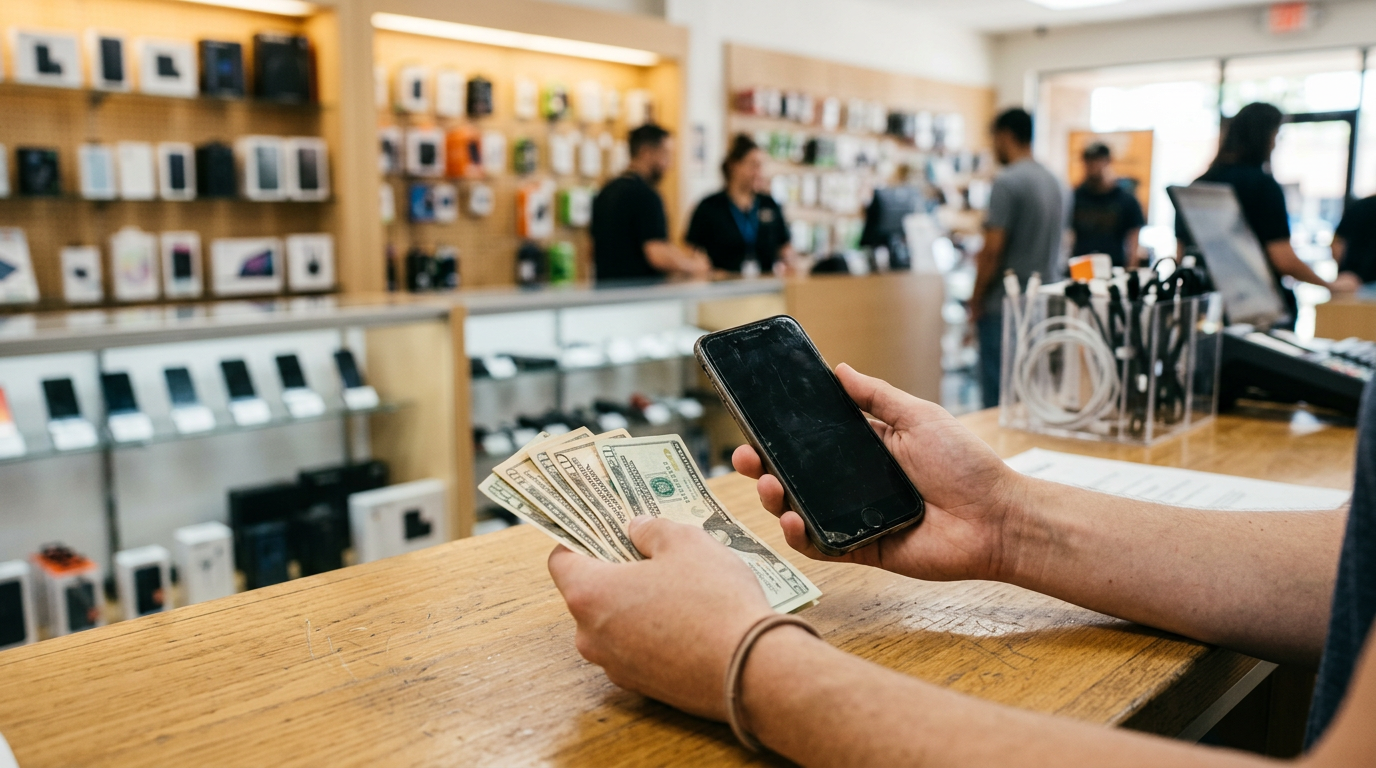
- Get paid on the spot, and we wipe the data for free in store.
For the full walk-through, see how selling to us works. If your device is a phone, the iPhone selling page explains what affects value for specific models.
What we do not buy
We do not buy devices that are iCloud or Activation locked, reported lost or stolen, or blacklisted. That is worth knowing up front: a locked device is a problem with Apple's program too, because Apple requires Find My to be off and the device to be removed from your account.
Side-by-side comparison
| Factor | Apple Trade In | Cash buyback store |
|---|---|---|
| Payout form | Credit toward a purchase or an Apple Gift Card | Cash, paid at the counter |
| Speed | Fast in store; online depends on shipping and inspection | Typically the same visit as the quote and inspection |
| Effort | Low in store; moderate online (backup, sign-out, packaging, shipping) | Low: bring device and ID; free data wipe in store |
| Risk | Online offer can be revised after inspection; deadlines apply when credit is used at checkout | Little risk of later revision because inspection happens in front of you; you can walk away |
| Condition flexibility | Best for working devices; heavily damaged devices may get little or no value | Buys new, used, and broken devices |
| Device range | Apple products and some other eligible devices | Phones, tablets, laptops, consoles, cameras, drones, VR, GPUs, trading cards, and more |
| Who it suits | People buying a new Apple device who want a simple swap | People who want cash, have damaged or mixed-brand gear, or are not buying from Apple |
Hidden costs and gotchas on each side
Apple Trade In
- Credit is not cash. If you change your mind about buying, the value may not be useful to you.
- Purchase-tied deadlines. If you apply the trade-in at checkout and do not send the device on time, there may be consequences. Check the terms at the time you order.
- Activation lock and Find My. If you forget to sign out, the trade-in can stall or the value can be cancelled. This is the most common avoidable problem.
- Revised offers. A condition mismatch, even a small one, can change the final value.
- Accessories and extras. Cases, chargers, and boxes usually do not add value, so do not expect to be paid for them.
- Limited value for damaged devices. A broken device may be accepted only for recycling, with little or no credit.
Cash buyback
- You have to show up (or mail it). Walk-in is fast, but it requires a trip. Mail-in works for people far from a store.
- ID is required. A valid government photo ID is mandatory for every sale. This protects everyone, but it means you cannot do it anonymously.
- A buyer has to resell. Any buyback business needs room to resell, so you will not get a private-sale price. You are trading a little value for speed and certainty.
- Quotes vary by store and market. Compare quotes before committing, whichever buyer you use.
- Locked or blacklisted devices are not eligible. Sort out iCloud and account status before you go.
On the subject of comparisons: other cash options exist too, and they are not all the same. If you are weighing kiosks or pawn shops, see our honest breakdowns of ecoATM vs Sell Your Gadgets and pawn shops vs Sell Your Gadgets.
Which option wins for which seller
Apple Trade In wins when...
- You are buying a new iPhone, iPad, Mac, or Apple Watch from Apple anyway and want the trade-in applied directly.
- Your device is in clean, working condition and you value the simplicity of a single transaction.
- You are comfortable with credit and do not need the money elsewhere.
- You prefer dealing with the manufacturer for peace of mind.
In that case, it is a genuinely good option, and you should not feel pressured to go elsewhere. Check what you would get from a cash quote, but do not be surprised if Apple is the easier answer.
Cash buyback wins when...
- You need money, not credit: for bills, a different brand, a used purchase, or a trip.
- Your device is cracked, damaged, or not powering on. Buyback stores are built to evaluate and buy broken gear.
- You want to sell more than one item, such as a phone, a console, and a few game cards in one visit.
- You are not buying from Apple, or you are switching to Android or another ecosystem.
- You do not want to wait for shipping and inspection or risk a revised offer.
- You have items Apple does not take: cameras, drones, VR headsets, GPUs, trading cards, and so on.
It is a toss-up when...
- Your device is in very good shape and you are buying a new one. Compare both numbers and decide whether cash or credit matters more.
- You own a laptop or tablet. Model, age, and condition matter a lot, so get both estimates.
How to maximize value whichever route you pick
These steps help regardless of where you sell.
- Identify your exact model and storage. Check Settings to confirm the model and capacity. Guessing is how estimates go wrong.
- Get more than one estimate. Apple's estimate and a free cash quote take minutes and cost nothing.
- Be accurate about condition. Note cracks, dents, battery issues, and any non-working function. Accuracy prevents revisions.
- Clean the device. Wipe the screen and body. A clean device looks better kept, and small marks that are just dirt should not be mistaken for wear.
- Back up, then sign out. Turn off Find My, sign out of your Apple ID, and erase the device. If you use a buyback store, they offer a free data wipe, but signing out of your account is still your responsibility.
- Remove SIM cards and cases. Also remove any screen protector that is damaged or peeling.
- Sell before the next model launches. Values tend to soften as newer models arrive, so timing matters. If you are planning an upgrade, do not wait long.
- Keep proof. Take photos of your device, and keep receipts or confirmation emails.
- Do not repair first unless it is cheap. A repair costs money and rarely adds back the full amount in resale value. Ask for a quote on the device as-is before fixing anything.
Other Apple Trade In alternatives worth knowing
If you are searching for Apple Trade In alternatives, the main options are these:
- Carrier trade-ins, which often pay through bill credits over time and may tie you to a plan. Read the terms carefully.
- Private sale, which can yield the most money for a clean device but takes the most time, involves meeting strangers, and carries scam and payment risk.
- Online marketplaces, which work for patient sellers but charge fees and require shipping and dispute handling.
- Kiosks and pawn shops, which are fast but work differently from a dedicated buyback store. See the comparisons linked above.
- Cash buyback stores, which sit in the middle: faster and safer than private sales, with cash payouts instead of credit.
If you are asking what the best way to sell your phone is, the honest answer is: it depends on whether you value the highest possible price (private sale), the easiest swap (Apple), or the fastest cash with the least hassle (buyback).
Frequently asked questions
Is Apple Trade In worth it?
It is worth it when you are buying a new Apple device anyway, your current one works, and you want a simple, trusted process. It is less compelling if you want cash, your device is damaged, or you are not buying from Apple. Compare its estimate to a cash quote before deciding.
Does Apple Trade In give you cash?
Generally, no. Apple Trade In pays in credit toward a purchase or as an Apple Gift Card, depending on the channel and terms at the time. If you need cash, a buyback store or private sale is the more direct route.
Why would Apple change my trade-in offer?
Apple's online estimate is based on your answers. After the device arrives, it is inspected, and if the condition differs from what you described, the value can be revised. Being conservative about condition reduces the chance of a surprise.
Can I trade in a broken or cracked phone?
Apple accepts many devices, but damaged ones may receive much less, or only a recycling outcome. A cash buyback store buys broken devices as a normal part of its business, so a quote is worth getting before you write the device off.
What do I need to do before selling my iPhone?
Back it up, sign out of your Apple ID, turn off Find My, and erase the device. A device that is still locked to your account cannot be used by the next owner, and we cannot buy iCloud or Activation locked devices. See our iPhone page for more.
Do I need an ID to sell to a buyback store?
Yes. At Sell Your Gadgets, a valid government photo ID is required for every sale. It protects you and us by keeping stolen devices out of the market.
Can I mail in my device instead of visiting a store?
Yes, we offer a mail-in option for people far from a store. If a store is nearby, walking in is faster because you are quoted, inspected, and paid in one visit. You can check store locations to see what is closest.
Not sure which route makes sense for your device? Get a free quote from Sell Your Gadgets online, by text, or at a store near you, and compare it to Apple's estimate before you decide.
Hear from a real customer
Why they chose Sell Your Gadgets. Working or broken, get a free quote and walk out with cash the same day.
Compare your options
See how selling to us stacks up against other ways to sell, side by side.