Carrier Trade-In Deals vs Selling for Cash: Honest Guide
By syedladen ·
Carrier trade-in deals can be worth it if you were going to buy a new phone on that carrier's plan anyway and will stay for the full credit period. If you want money now, no strings, and the freedom to go anywhere, selling for cash usually wins. The difference comes down to one thing: a carrier pays you in future bill credits that depend on you staying, while a buyback store pays you once, upfront, and you walk away.
How carrier trade-in deals actually work, step by step
Verizon, AT&T, and T-Mobile all run trade-in promotions that look similar on the surface, though the details differ and change often. The general pattern, based on their widely published terms, looks like this:
- You pick a new phone and a qualifying plan. Many of the best-advertised offers require a new line, an upgrade on a specific plan tier, or both. Some are open only to customers who add a line or switch from another carrier.
- You describe your old phone. The carrier asks for the model, storage, and condition. You are usually asked whether it powers on, whether the screen is cracked, and whether it is paid off or still financed.
- The offer is shown as a discount, not cash. Instead of money in your pocket, the trade-in value is applied as a credit. On the biggest promotions, that credit is not taken off at the register. It is split into monthly bill credits.
- You finance the new phone. The new phone is usually on an installment agreement, commonly spread over 24 to 36 months. The monthly credits offset the installments, so the phone appears cheaper over time.
- You send in the old phone. You either hand it over in store or mail it using a prepaid kit. There is typically a deadline. If the carrier does not receive a phone that matches your description in time, the promised credit can be reduced or removed.
- Credits arrive one month at a time. Each bill shows a credit as long as your account stays in good standing on an eligible plan and line.
Terms vary by carrier, device, plan, and month, so always read the current fine print before signing. What matters for this comparison is the structure: the value is deferred, conditional, and tied to a contract-like relationship.
The real catch: bill credits, lock-in, and leaving early
The phrase "lock-in" is not dramatic here. It is how the deal is built. Understanding it is the core of whether carrier trade-in deals are worth it for you.
Credits are paid over time, not upfront
If the promotion is spread across 24 to 36 months, you only receive the full benefit if you stay that whole time. The early months feel like a big discount. The value you are owed in month twenty still depends on you being a customer in month twenty.
What happens if you leave early
Under the standard structure, the remaining credits stop when you cancel the line, switch carriers, or move off the qualifying plan. The remaining balance on the phone's installment agreement generally becomes due, often all at once. In plain terms: the discount you were counting on disappears, but the bill for the phone does not. Some carriers have also published rules about credits ending if you downgrade your plan or if a line is suspended.
Device unlocking is also tied to these terms
Carriers typically require a phone to be paid off, and in some cases to have been active for a minimum period, before they will unlock it. Promotional devices may carry their own extra unlock conditions. If you plan to use the phone with another carrier later, check the unlock policy for that specific deal before you commit.
Why this matters more than the headline offer
A credit you cannot fully collect is worth less than its advertised size. If you know you may switch carriers, move abroad, pause service, or get a better plan elsewhere, the lock-in has a real cost, even though it never shows up as a line item.
How selling to a cash buyback store works
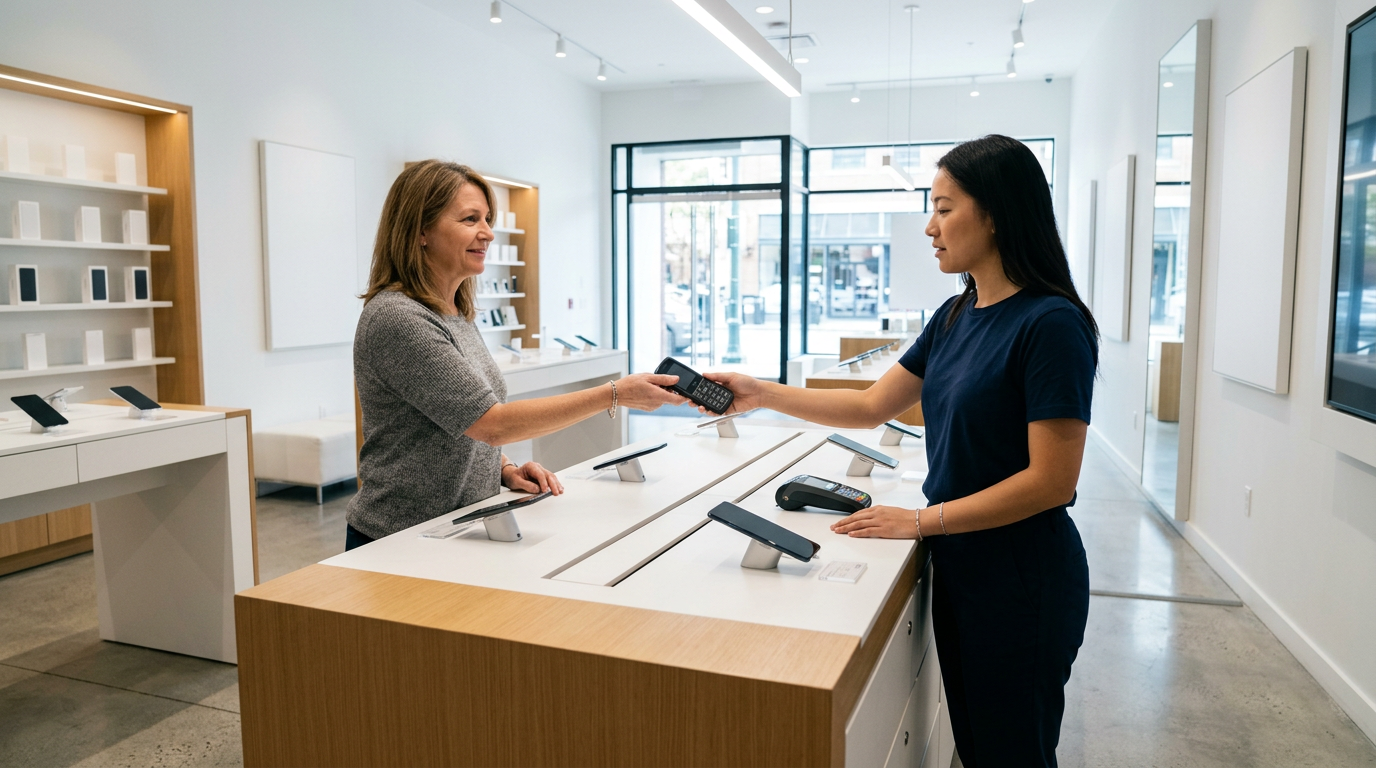
A buyback store is a simpler transaction. You get a quote, the store inspects the device, and you get paid. At Sell Your Gadgets the process is: get a free quote online, by text, or by walking in; a quick inspection confirms the condition; and you are paid on the spot. No appointment is needed, and a free data wipe is done in store. A valid government photo ID is required for every sale. You can read the full flow on our how selling to us works page, or see where to walk in at our store locations. If you live far from a store, there is a mail-in option.
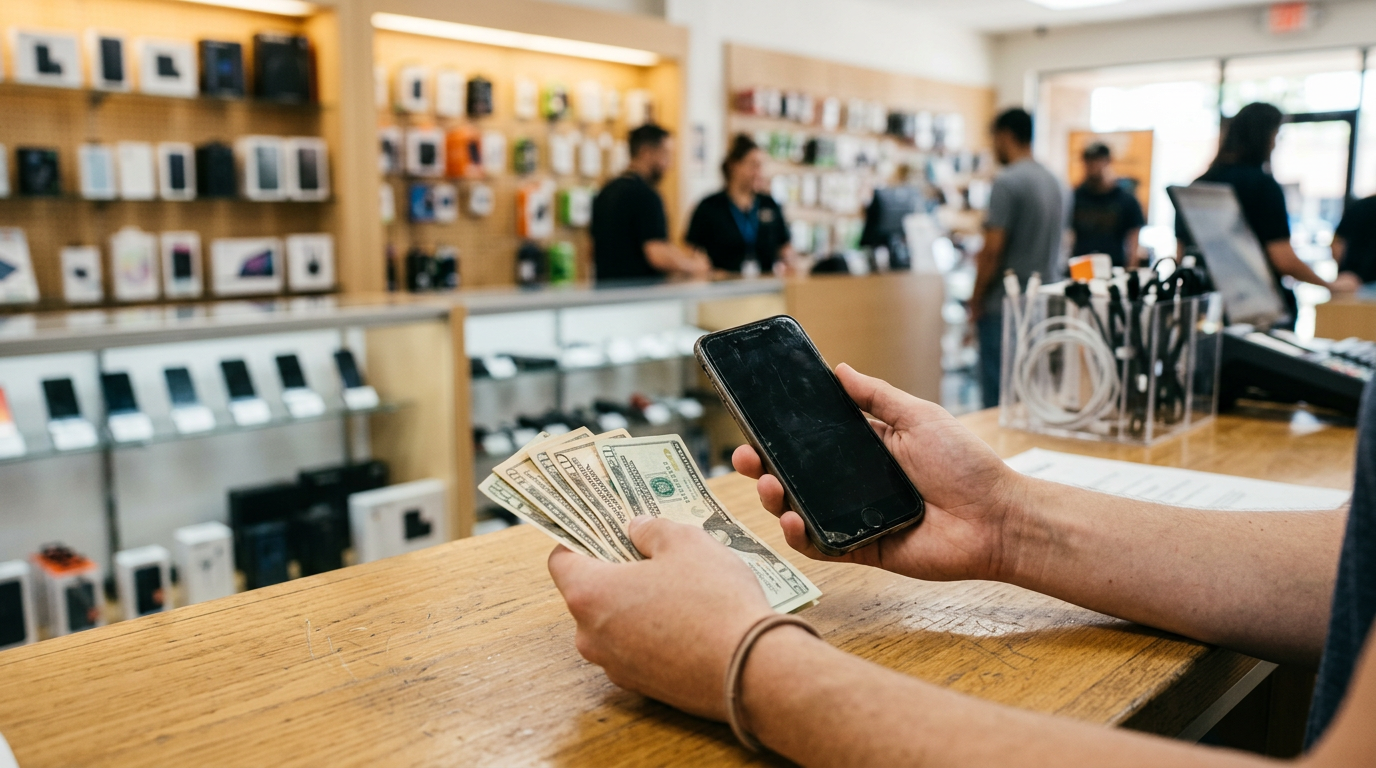
The payout is money, not credit. It does not depend on your carrier, your plan, or how long you keep service. The phone does not need to come from a particular network, and you do not need to buy anything in return.
There are firm limits. We do not buy devices that are iCloud or Activation locked, reported lost or stolen, or blacklisted. Those limits exist for good reasons, and any legitimate buyer should apply them.
Side-by-side comparison
| Factor | Carrier trade-in deal | Cash buyback store |
|---|---|---|
| Payout form | Usually bill credits spread over 24-36 months, or an instant discount on certain promos | Cash paid at the time of sale |
| Speed | Slow to fully realize; the first credit comes on a later bill and the last one comes years later | Same visit for walk-ins; quick inspection and payment |
| Effort | Low at signup, but you must ship or hand over the phone on time and watch your bills for credits | Low: get a quote, bring the device and ID, get paid |
| Risk | Lose remaining credits if you leave, downgrade, or miss the return window; remaining phone balance may come due | Low once paid; the quote can change only if the device differs from what you described |
| Condition flexibility | Often strict; damaged or non-working phones may get reduced value or none, depending on the promo | Buys used, new, and broken devices, with the quote reflecting condition |
| Requires buying a new phone? | Yes, from that carrier, typically with a qualifying plan | No; you can spend the cash anywhere |
| Who it suits | People staying with one carrier who are buying a new phone there anyway | People who want cash now, flexibility, or who have a device the carrier will not value well |
Hidden costs and gotchas on each side
Carrier trade-in gotchas
- Plan requirements. The best promo may only apply on a higher-priced plan. If that plan costs more than you would otherwise pay each month, the extra cost eats into the benefit.
- Conditional credits. Missing the return window, sending a phone in worse condition than described, or shipping the wrong model can void or shrink the credit.
- Financing tied to the account. Leaving early can trigger the full remaining phone balance, which is often more painful than people expect.
- Reduced switching power. When you owe credits-dependent money, a competing carrier's better offer becomes harder to accept. You may be tempted to stay on a plan that no longer fits.
- Less clarity on real value. Because the offer is folded into a device discount, it is hard to tell what your old phone was actually worth versus what is marketing.
- Data and accounts. You still must erase your data and sign out of Apple or Google accounts yourself before sending the phone in. Failing to do so can delay or cancel the trade-in.
Cash buyback gotchas
- No carrier bonus. You will not get the extra promotional boost some carriers fund to win a new customer. When a carrier's promo is truly generous and you will collect every credit, it can outweigh a cash offer.
- Quote depends on condition. If you overstate the condition, the in-person inspection can change the number. Be honest upfront.
- ID is required. A valid government photo ID is needed for every sale. Bring it.
- Locked devices are declined. If your phone is iCloud or Activation locked, reported lost or stolen, or blacklisted, we cannot buy it. Remove your account lock before you go.
- Financed phones need sorting out. If you still owe the carrier on a phone, selling it is messier. Check your balance and lock status first.
Which option wins for which kind of seller
The carrier usually wins when...
- You were already planning to buy a new phone from your current carrier and plan to keep that service for the full credit period.
- The promo is tied to a plan you would choose regardless of the deal.
- You value convenience and do not want to manage a separate sale.
- Your old phone is in good, working condition, and the carrier is offering a strong promotional boost on your exact model.
Cash usually wins when...
- You might switch carriers, travel, or change plans within the next couple of years.
- You want to buy your next phone anywhere, including unlocked from the manufacturer or a retailer, or buy used.
- Your phone is cracked, has a dead battery, or is otherwise damaged, and the carrier's rules would cut its value.
- You are not buying a phone at all and just want money for an old device.
- You have several devices to sell at once, such as a phone, tablet, smartwatch, and earbuds. Carrier programs generally focus on phones and a narrow set of other devices.
- You want simplicity and certainty: one visit, one payment, nothing to track on future bills.
A mixed case
Some people do both. If you have two phones, you might trade one in for a carrier promo that only accepts that line, and sell the other for cash. Comparing the two on each device separately is smarter than treating the decision as all-or-nothing.
When the carrier is genuinely the better choice
It is worth saying plainly: there are situations where we are not the best answer. Carriers can fund promotions that a buyback store cannot match because the carrier is paying to keep or win a long-term customer. If you are a long-time subscriber who is happy with your network, buying a new flagship from them, and certain you will stay for the whole financing term, a strong promo can deliver more total value than a one-time cash payment for your old phone.
The catch is the word certain. The benefit only shows up if you stay. If there is a realistic chance you will leave, the math changes quickly. A practical test: list what you would do if a cheaper plan appeared from another carrier in a year. If the answer is "I could not take it without paying a big balance," you are paying for that promo with your flexibility.
Also consider that if your phone has little resale value, a carrier deal where the trade-in is nominal is not much of a loss for you, and the convenience alone may be enough.
How to maximize value whichever route you pick
Before you do anything
- Check your phone's status. Confirm it is not financed or locked, and that your Apple ID or Google account is removed. A locked phone cannot be sold to any reputable buyer and can void a carrier credit.
- Back up, then erase. Back up your photos and data, sign out of your accounts, and factory reset. We also offer a free data wipe in store as a safety net.
- Grade your phone honestly. Note cracks, deep scratches, battery health, and any features that do not work. Take photos. Honest descriptions protect the quote on both routes.
- Gather accessories. Original box, charger, and cable can help on some devices.
If you choose the carrier
- Read the full promo terms, especially the plan requirement, return window, and what happens to credits if you leave or downgrade.
- Calculate the real cost: monthly plan price over the whole term, minus credits. Compare it to buying the same phone outright.
- Keep a record of your trade-in confirmation and shipping receipt.
- Verify each monthly credit appears on your bill.
If you choose cash
- Get a free cash quote before you decide. It costs nothing and gives you a real number to compare to the carrier's offer.
- Sell before the phone loses more value. Newer models typically hold value better than older ones, and value tends to drop when a new generation launches.
- Clean the device and remove cases and screen protectors. A well-kept phone is easier to grade well.
- Bring valid government photo ID.
The best check of all
Ask yourself: if the carrier's offer were cash today, would I take it? If a carrier credit of a given size feels great, but a cash offer for the same phone feels about the same, cash is often the better deal because it carries no strings. Get both numbers, then compare.
Carrier trade-in deal alternatives
If you are searching for the best way to sell your phone, the carrier and a buyback store are only two of several options. A quick orientation:
- Buyback stores. Fast, walk-in, paid the same day. If you have an iPhone, start with our iPhone selling page; for other models, see sell your smartphone.
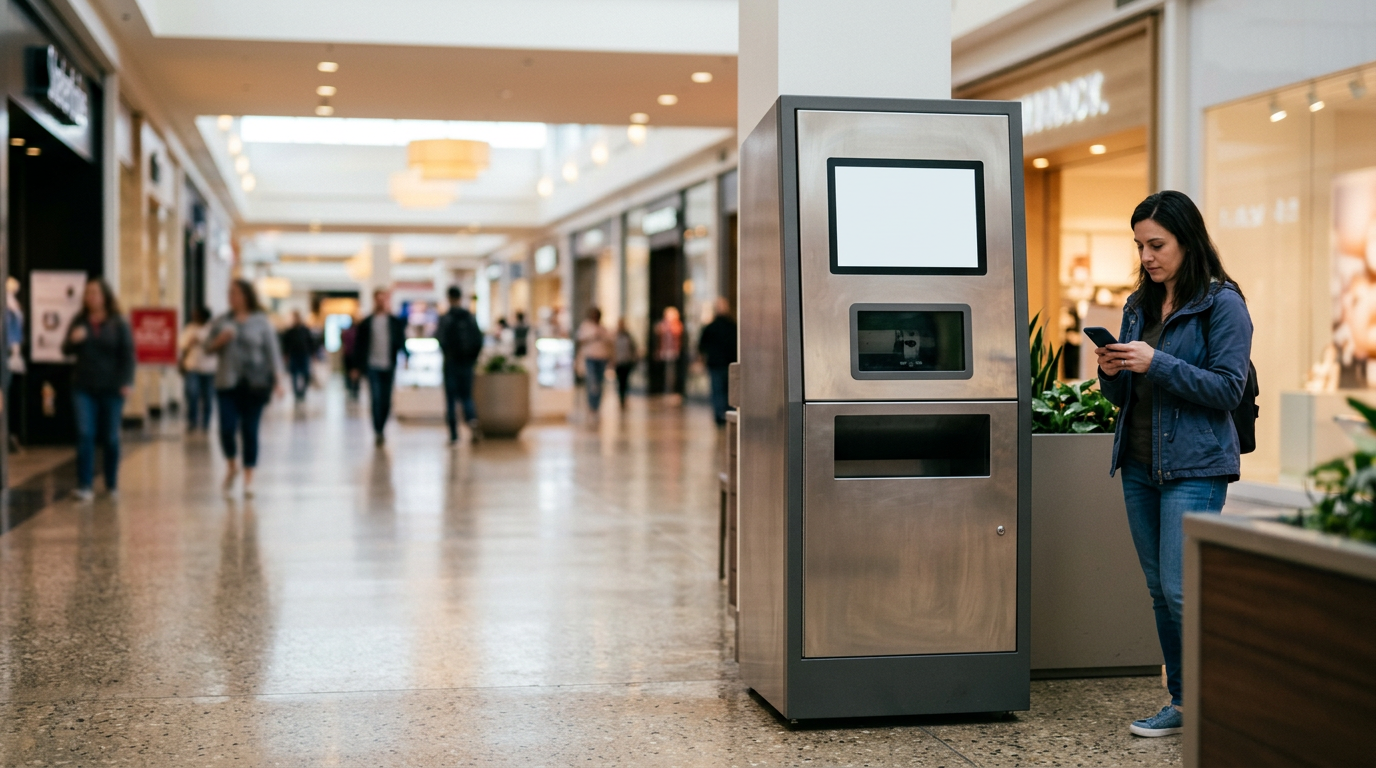
- Kiosks. Automated machines can be convenient, but they work differently from a person inspecting your device. See our honest breakdown of ecoATM vs Sell Your Gadgets.
- Pawn shops. Workable for quick cash, but the model is different, especially if you are not taking a loan. Our pawn shops vs Sell Your Gadgets comparison explains it.
- Online marketplaces and peer-to-peer sales. These can reach buyers who pay more, but you handle listing, messages, no-shows, payment scams, and returns. You are trading your time and risk for potentially higher money.
- Manufacturer trade-in programs. Some brands offer credit toward a purchase, usually with their own condition rules and payout type.
The best way to sell your phone depends on what you value. If it is speed and certainty, a buyback store fits. If it is the last bit of value and you have patience, private sale can. If it is a discount on a phone you are buying anyway, the carrier can.
Frequently asked questions
Are carrier trade-in deals worth it?
They can be, when you are buying a new phone from that carrier, are comfortable with the required plan, and will stay for the entire credit period. They are less attractive if you might switch carriers, because leaving usually ends the remaining credits while the phone balance can come due. Compare the total cost over the full term with buying outright and selling your old phone separately.
What happens to my trade-in credits if I leave my carrier early?
Under the standard structure, the monthly credits stop when you cancel the line or move off the qualifying plan, and the unpaid balance on the new phone typically becomes due. Exact rules vary by carrier and promotion, so check the current terms for your specific deal.
Can I sell my phone for cash while it is still on a payment plan?
It is complicated. A phone that is not paid off is often still tied to the carrier, and it may also be locked to their network. The simplest route is to pay off the balance first and confirm the phone is unlocked, then sell it. Check your status with your carrier before visiting a store.
Will a buyback store take a cracked or broken phone?
Yes. We buy used, new, and broken devices. A cracked screen or weak battery lowers the quote, but it does not automatically rule out a sale. Carrier programs are often stricter about damaged phones. Start with a free quote to see what yours is worth.
Do I need an appointment or ID to sell?
No appointment is needed. You do need a valid government photo ID for every sale. Your device must also not be iCloud or Activation locked, reported lost or stolen, or blacklisted.
Can I do both, sell for cash and buy a new phone from a carrier?
Yes. Nothing stops you from selling your old phone for cash and buying a new one from a carrier, including with their promos that do not require a trade-in. Some promotions require a trade-in to get the best deal, though, so read the terms before deciding.
What is the best way to sell my phone?
There is no single answer. For the fastest payment with the least hassle, a buyback store is hard to beat. For a carrier discount on a phone you are buying anyway, a trade-in can make sense. For maximum price with maximum effort, a private sale may come out ahead. Compare at least two real offers before deciding.
Not sure which way to go? Get a free cash quote from Sell Your Gadgets online, by text, or by walking into a store, then put it next to your carrier's offer and pick the one that fits your plans.
Hear from a real customer
Why they chose Sell Your Gadgets. Working or broken, get a free quote and walk out with cash the same day.
Compare your options
See how selling to us stacks up against other ways to sell, side by side.