GameStop Trade-In vs Selling for Cash: Which Pays Off?
By syedladen ·
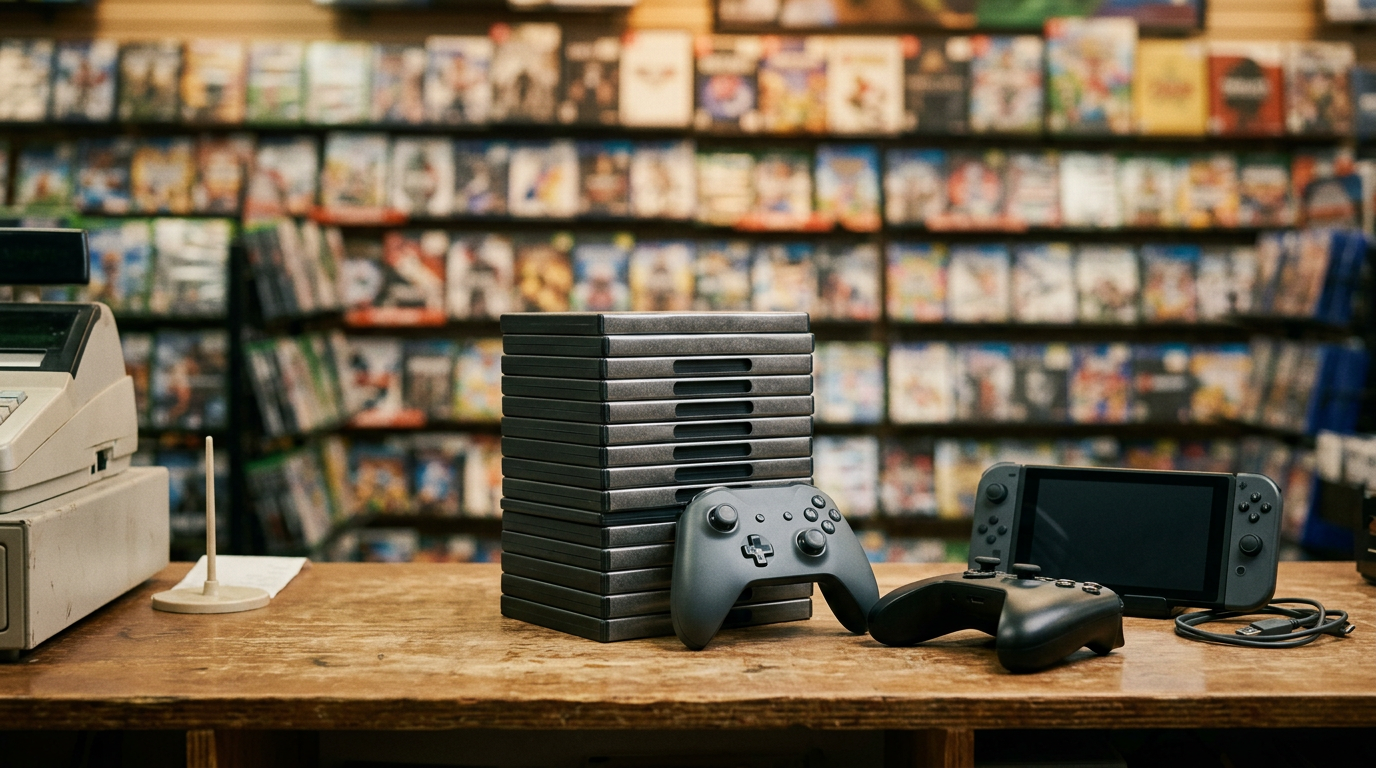
GameStop trade-in is worth it when you want store credit you will actually spend there, or when a promotion boosts the value of a specific game or console. Selling for cash to a buyback store is usually the better move when you want money in hand today, have higher-value gear like a console, phone, or laptop, or have items that are damaged or outside GameStop's categories.
This guide is written by a cash buyback company, so we have an obvious stake. We will say plainly where GameStop wins, because for some sellers it does. We will also show you exactly how to compare, so you are not guessing. Neither side publishes a fixed price for your exact item and condition, so the honest approach is to get offers from both and judge them on the same terms.
How GameStop trade-in actually works, step by step
The details change over time, so check GameStop's current trade-in terms before you go. The general flow, based on widely known public policy, looks like this:
- Check the estimate. GameStop lets you look up an estimated trade value online or in its app for games, consoles, controllers, and many phones and tablets. Treat it as an estimate, not a promise.
- Choose your route. You can bring items to a store or start a trade online. Online trades typically involve shipping your items in, and the value is confirmed after they are received.
- Bring ID for in-store trades. Trade-ins generally require valid photo identification, like most secondhand electronics purchases.
- Get inspected. An associate checks that the item works and looks at condition. Discs are checked for scratches, consoles for function and damage, and phones for lock status and screen condition.
- Choose your payout. You are typically offered store credit or cash, and the two are not valued equally.
- Finish the transaction. You receive credit on an account or card, or cash, depending on what you picked and what the store allows.
Two points matter most. First, the final number is set at inspection, so a condition issue can change the estimate. Second, the payout type you choose is the single biggest lever in the whole process.
Store credit vs cash at GameStop
GameStop has long offered a higher value if you take store credit than if you take cash. That is a standard retail trade-in model: credit keeps your money inside the store, so the retailer can afford to give more of it. The gap between the two varies by item and by promotion, so look at both numbers on the day you trade.
When store credit is genuinely the better deal
- You were already going to buy something at GameStop, like a new release, a preorder, an accessory, or a pre-owned game.
- You are trading old games toward a specific new game and the difference is small.
- A promotion adds a bonus to credit for a particular title or category.
When store credit is a trap
- You need money for rent, a repair, or a non-gaming purchase.
- You have no real plan to buy there, so the credit sits unused or gets spent on things you did not need.
- You are comparing the credit number against a cash offer as if they were the same thing. A credit offer should be discounted in your mind, because it can only be spent in one place.
A good test: if you would not spend that credit at GameStop within the next few months at full price, it is worth less to you than the headline number suggests.
Bundles, promotions, and Pro membership
This is where GameStop has a real structural advantage over a cash buyer.
Bundle and promo trades
GameStop regularly runs promotions that increase trade value when you put it toward a purchase, for example trading in a console or games toward a new system or a hot release. These are time-limited and come with conditions, so read the fine print on what qualifies and what the bonus applies to. If your plan is to upgrade inside the GameStop ecosystem, a bundled promo can beat a plain cash sale and a separate retail purchase.
Pro membership
GameStop's paid membership program has historically included extra trade-in credit as a perk, along with other benefits like discounts. Whether that perk is worth it depends on the current terms and how much you trade and buy in a year. Do not sign up just to boost a single trade unless you have done the math on the membership fee against the bonus. Membership benefits are designed to reward people who shop there repeatedly, which is a different situation from someone selling a single device once.
Where cash buyback differs
A cash buyback store does not offer loyalty tiers or credit bonuses, because there is nothing to spend. The offer is the offer, paid out as money. That simplicity is the main trade-off: less upside from promotions, but no strings attached to how you use the payout.
Side-by-side comparison
| Factor | GameStop trade-in | Cash buyback store |
|---|---|---|
| Payout form | Store credit (typically valued higher) or cash (typically valued lower) | Cash paid on the spot |
| Speed | Fast in store; slower if you trade online and wait for inspection after shipping | Fast in store: quote, inspection, payment in one visit; mail-in takes longer |
| Effort | Low for games and small items; online route adds packing and shipping | Low: get a quote, walk in, hand over the device. No appointment needed at Sell Your Gadgets |
| Risk | Estimate can change at inspection; credit value is tied to one retailer | Quote can change at inspection if the condition differs from what you described; ID required |
| Condition flexibility | Best for working, clean items; damaged or unsupported items may be declined or valued low | Broader: we buy new, used, and broken devices |
| Category range | Strong on games, consoles, accessories; narrower on cameras, drones, GPUs, and trading cards | Wide: phones, laptops, consoles, cameras, drones, VR, GPUs, monitors, trading cards, and more |
| Who it suits | Gamers reinvesting in games, promo-driven upgraders, Pro members | Sellers who want cash, have higher-value or damaged gear, or are selling across categories |
No row in this table is a price comparison, on purpose. Real offers depend on model, storage, condition, and current demand. The only reliable comparison is two actual quotes for the same item.
Hidden costs and gotchas on each side
GameStop gotchas
- Credit versus cash confusion. The big number on the screen is often the credit value. The cash value is lower, so make sure you know which one you are looking at.
- Inspection changes. A scratched disc, a worn controller, or a cracked frame can reduce the final figure, especially on online trades where you cannot discuss it face to face.
- Accessories and completeness. Missing controllers, cables, or cases can lower value or disqualify the item.
- Accounts and locks. Consoles and phones tied to a user account, an activation lock, or a carrier lock cause problems. Sign out and remove locks first.
- Promo terms. Bonus offers can have expiration dates, eligible-item lists, and requirements to put credit toward specific purchases.
- Re-buying at retail. Credit is most valuable when you buy items worth having. Impulse purchases erode it quickly.
Cash buyback gotchas
- Quotes are conditional. A quote is based on your description. If the device is in worse shape than you said, the final figure will shift. Describe it honestly and the quote tends to hold.
- ID is required. We need a valid government photo ID for every sale. That protects sellers and buyers, but bring it.
- Locked or flagged devices. We do not buy iCloud or Activation locked devices, devices reported lost or stolen, or blacklisted devices. The same problems would trip up almost any legitimate buyer.
- No promo upside. You will not get bundle bonuses or membership perks. If a retailer promotion would have applied to you, a cash sale can leave that value on the table.
- Not every shop is equal. Some buyers lowball because they are pricing for resale risk on an unknown item. See how we compare in our guides on pawn shops vs Sell Your Gadgets and ecoATM vs Sell Your Gadgets.
Which option wins for which kind of seller
GameStop is the better choice if you...
- Have a stack of older games and want to swap them toward a new release you were going to buy anyway.
- Are already a Pro member and the membership bonus applies to your trade.
- Spot a live promotion that rewards trading a console or games toward a new system.
- Want a simple, familiar mall-or-strip-center experience and expect to spend at GameStop regularly.
A cash buyback store is the better choice if you...
- Need actual money, not credit.
- Are selling a higher-value item like a current console, a recent iPhone, a laptop, a camera, a drone, or a GPU. On higher-value items, the difference between credit-only and cash-in-hand matters more.
- Have a device with a cracked screen, bad battery, or other damage that a game retailer may not want.
- Are selling things GameStop does not focus on, like trading cards, lenses, VR headsets, or monitors.
- Are clearing out several categories at once and want a single visit.
Mixed scenarios
- Console plus games. Get quotes for both routes. Sometimes it makes sense to trade the games toward a purchase and sell the console for cash, or the other way around. See our pages on selling a game console and selling video games.
- Upgrading to a new PS5 or other system. If a retailer promo is live, price the promo against a cash sale plus a separate purchase. If you are selling your current system, check what we offer for a PS5.
- Selling only a phone. GameStop is not typically the first stop. Jump to the phone section below.
Is GameStop trade-in worth it? A quick decision test
If you are asking whether GameStop trade-in is worth it, answer these four questions:
- Will I spend the credit there? If yes, credit is fine. If not, take cash or sell elsewhere.
- Is there an active promotion that applies to my items? If so, it may beat a cash sale.
- Is the item high-value or in unusual condition? Then compare a cash quote before you commit.
- Do I need the money soon for something else? Then cash usually wins, regardless of headline credit numbers.
If you answer yes to the first two and no to the last two, GameStop is probably right. If it is the reverse, selling for cash is probably right. A mix means you should collect both quotes before deciding.
The best way to sell my phone, tablet, or laptop
People searching for the best way to sell a phone usually want cash quickly without dealing with strangers or shipping. For phones, tablets, and laptops, the realistic options are a carrier or manufacturer trade-in (usually credit toward a new device), a peer-to-peer marketplace, a mail-in service, or a walk-in buyback store. GameStop handles some phones and tablets, but it is not where most people sell electronics outside of gaming.
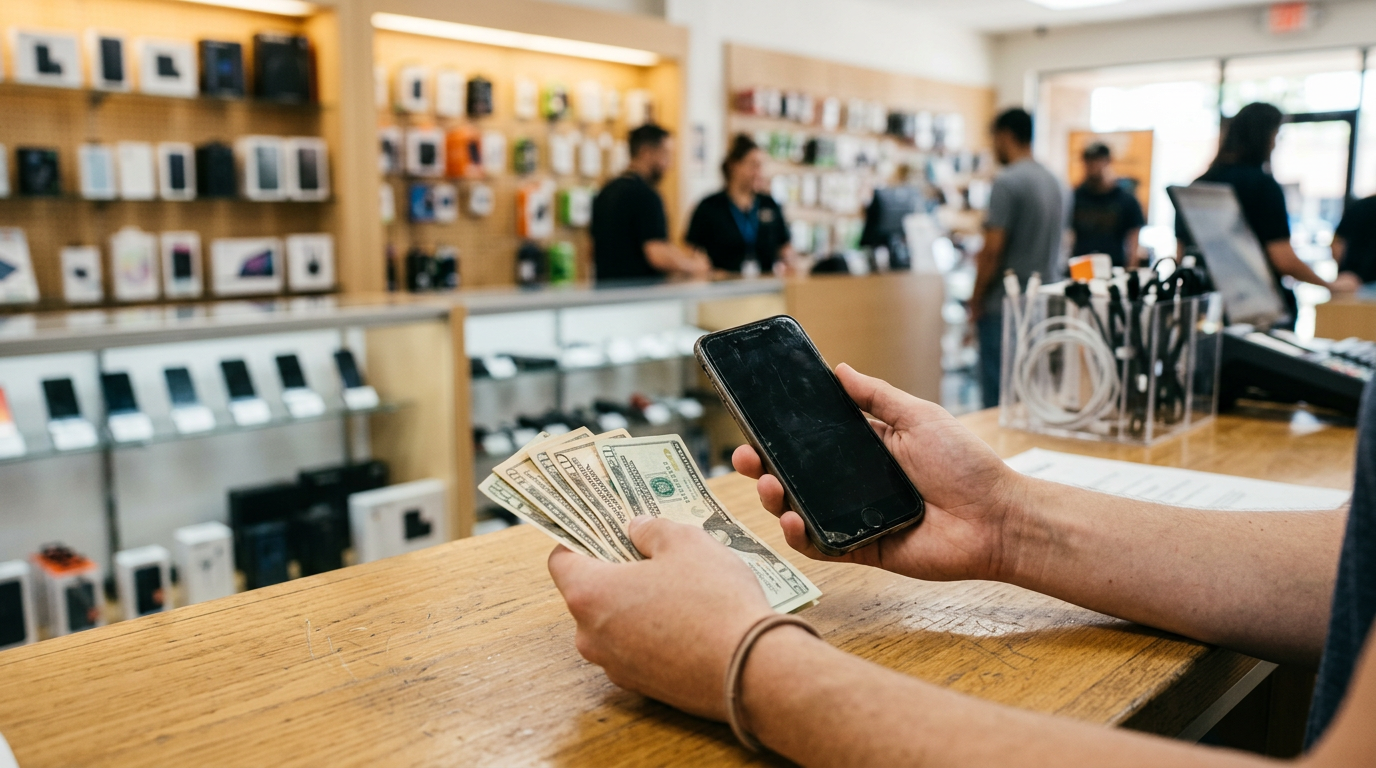
Peer-to-peer can produce a good outcome, but you handle listings, messages, no-shows, payment risk, and disputes. A walk-in buyback gives up a bit of that potential upside in exchange for a fast, predictable transaction. At Sell Your Gadgets, you can get a free quote online, by text, or in person, get a quick inspection, and be paid on the spot. We wipe data in store for free. See how selling to us works for the full process, or use our store locator to find a location. If you live far from a store, mail-in is available.
Before any sale, sign out of your accounts and turn off Find My or Activation Lock. A locked phone cannot be bought by us or by most other legitimate buyers.
How to maximize value whichever route you pick
Prep the item
- Clean it: wipe down screens, bodies, and controllers. Presentation affects inspection.
- Gather everything: original box if you have it, cables, chargers, controllers, and accessories.
- Back up your data, then sign out of all accounts, disable Find My or Activation Lock, and factory reset if you are not using an in-store wipe.
Be honest about condition
Inspectors find scratches, dents, and dead pixels fast. Describing the real condition up front makes the final number match the quote and avoids wasted trips.
Time it well
- Sell before a new model or console generation launches, when demand for the older one tends to soften.
- Watch retailer promotions if you are going the credit route, since bonuses come and go.
- For trading cards, check current market interest before you sell a single high-value card.
Get two quotes, compare apples to apples
- Ask GameStop for both the credit value and the cash value.
- Get a free cash quote from us for the same item and condition.
- Discount the credit figure if you will not fully use it.
- Factor in time, travel, and the risk of a changed inspection result.
Split the lot when it makes sense
You do not have to pick one route for everything. Trade in low-value games where a promo helps, and sell the higher-value hardware for cash. Often this captures the best of each.
Frequently asked questions
Does GameStop pay cash for trade-ins?
GameStop has offered both cash and store credit, with credit typically valued higher. Availability and rates can vary by item, location, and current policy, so ask for both figures before you decide.
Is GameStop trade-in worth it for a console?
It can be, especially if a promotion applies and you plan to buy a new system or games there. If you want cash or your console is worth a meaningful amount, compare a cash quote first, because the credit-versus-cash gap matters more on bigger items.
What are the best GameStop trade-in alternatives?
The main alternatives are a cash buyback store, peer-to-peer marketplaces, mail-in buyers, pawn shops, and kiosk buyers. Each trades speed, effort, and payout differently. Our comparisons of pawn shops and ecoATM explain where each fits.
Does the Pro membership make trade-ins worth more?
Historically, GameStop's paid membership has included trade-in credit perks. Check the current terms, then weigh the membership cost against how much you trade and buy in a year. It rarely makes sense to join for a single one-off trade.
Will GameStop take a broken or damaged device?
Policies are narrower for damaged items, and a cracked or non-working device may be declined or valued very low. We buy new, used, and broken devices, so a free quote is a quick way to see what yours is worth.
Do I need ID to sell or trade in electronics?
Yes, expect to show valid photo ID at most legitimate buyers. At Sell Your Gadgets, a valid government photo ID is required for every sale.
Can I sell a locked or blacklisted phone?
Not to us. We do not buy iCloud or Activation locked devices, devices reported lost or stolen, or blacklisted devices. Remove the lock and sign out of your account before you try to sell anywhere.
Ready to see what your gear is worth in cash? Get a free quote online, by text, or walk into a store. No appointment needed, and you can compare it against any trade-in credit offer before you decide.
Hear from a real customer
Why they chose Sell Your Gadgets. Working or broken, get a free quote and walk out with cash the same day.
Compare your options
See how selling to us stacks up against other ways to sell, side by side.