Sell Pokémon Cards Near Me in Bellerose, NY for Cash
By syedladen ·
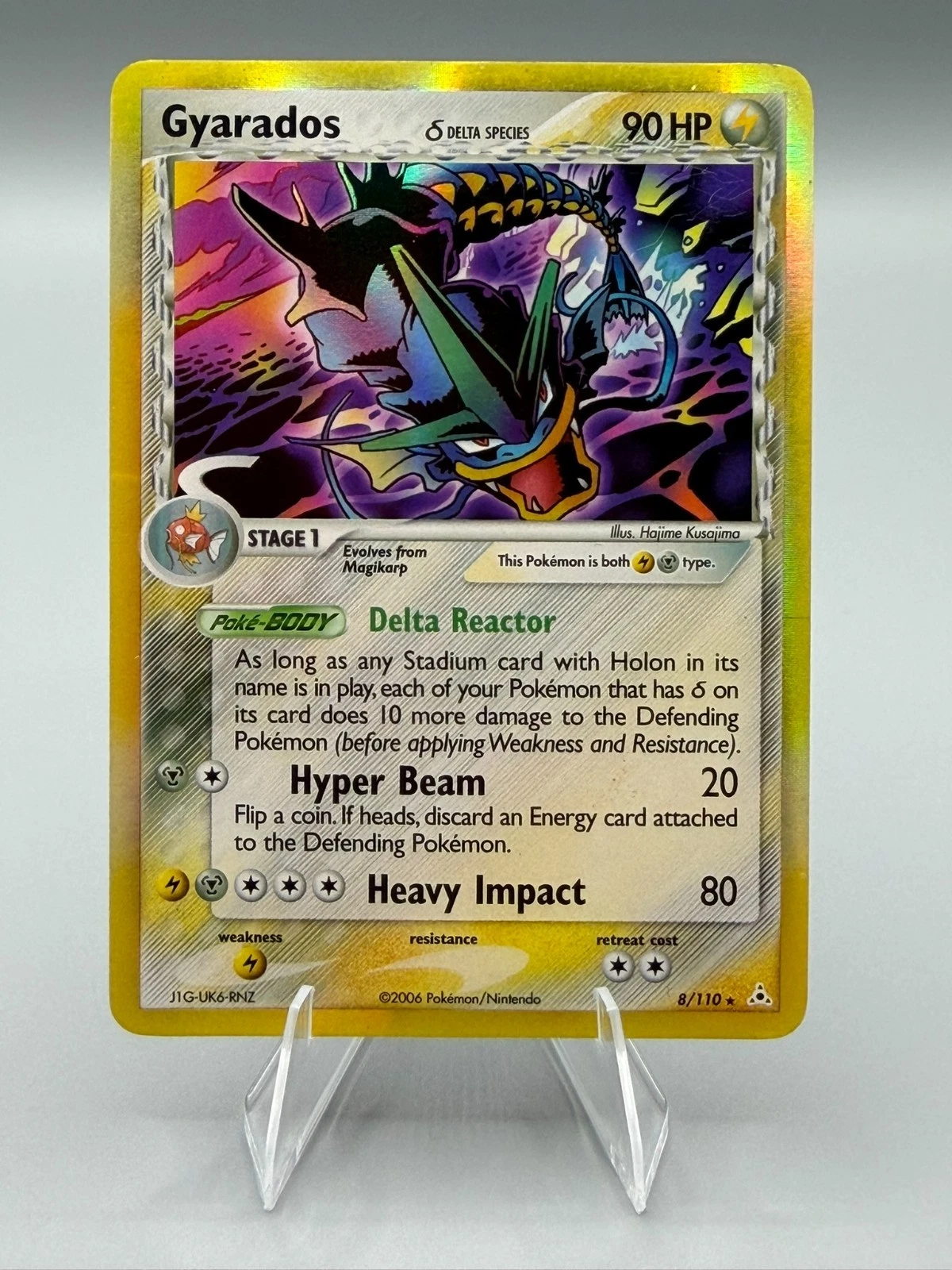
If you want to sell Pokémon cards near you in Bellerose, NY, walk into Sell Your Gadgets on Jericho Turnpike with your cards and a valid photo ID. No appointment is needed, notable cards are priced one by one against live sold comps, and you are paid cash on the spot.
That works for a single card you pulled last week, a binder you filled as a kid, or a shoebox of bulk. Here is how to sort through what you have, what condition means, and how to decide between selling raw and grading first.
Where to sell Pokémon cards locally in Bellerose
Most people searching for where to sell Pokémon cards locally have already tried the obvious routes. Online marketplaces mean photographing every card, answering messages, shipping, and waiting. Trading groups can be hit or miss. A local buyer takes that work out of it: you bring the cards, we look at them in front of you, and you leave with cash if you like the offer.
Our Bellerose store sits on Jericho Turnpike near Commonwealth Blvd, close to Belmont Park, so it is an easy stop if you are already in the area. We are an electronics buyback shop first, but we also buy trading cards, and the buyers use the same disciplined approach: check the item in person, price it from real market data, and make a clear offer. If you want to look at the details of our card buying first, see our pages on selling raw Pokémon cards and Pokémon cards and collectibles.
How selling Pokémon cards at our store works
The process is deliberately simple.
- Walk in with the cards. There is no appointment and no need to pre-sort perfectly, although a little organization helps (more on that below).
- We go through them with you. Notable singles are pulled out and priced individually. The rest is evaluated as bulk.
- Pricing uses live data. Our buyers use internal pricing tools that pull live sold comps card by card. We never apply a flat bulk rate to a collection that has real cards in it.
- You decide. If the offer works, you show valid government photo ID and get paid cash on the spot. If it does not, you walk out with your cards and nothing lost.
If you would rather have a starting point before you come in, you can request a free quote by form or text. Because condition drives so much of the value in cards, the final number is always confirmed in person.
How to spot the valuable cards in a collection
You do not need to be an expert to do a first pass. You are looking for a handful of signals that separate cards worth pulling aside from the general pile.
Set symbol and card number
Every card tells you where it came from. The set symbol is a small icon, usually near the bottom of the card on modern cards and to the right of the artwork on many older ones. The card number sits in a bottom corner and looks like a fraction, such as a number over the set total. When the first number is higher than the set total, you are often looking at a secret or special rare, which is a good reason to set the card aside.
Rarity symbol
The small rarity mark near the number tells you the printed tier. A circle is common, a diamond is uncommon, and a star is rare. Modern sets add further tiers, with special gold-style marks on the chase cards. Rarity alone does not set value, since a popular character in a lower rarity can outperform an obscure rare, but it narrows the search quickly.
Holo versus reverse holo
A traditional holo has a shiny artwork window while the rest of the card is normal. A reverse holo is the opposite: the artwork is flat and the foil covers the border and body. Many people mix them up. Reverse holos of common cards are usually not special, but holo versions of popular characters, especially from older sets, can be.
1st Edition stamp and Shadowless
On early Wizards of the Coast era cards, a small black 1st Edition stamp on the left side of the card, just below the artwork, marks the first print run. Base Set cards also come in a Shadowless version, which lacks the drop shadow along the right edge of the artwork box that later prints have. Both labels can matter a great deal, but they are also easy to misread, so bring those cards in rather than guessing.
Alt-arts and special illustration rares
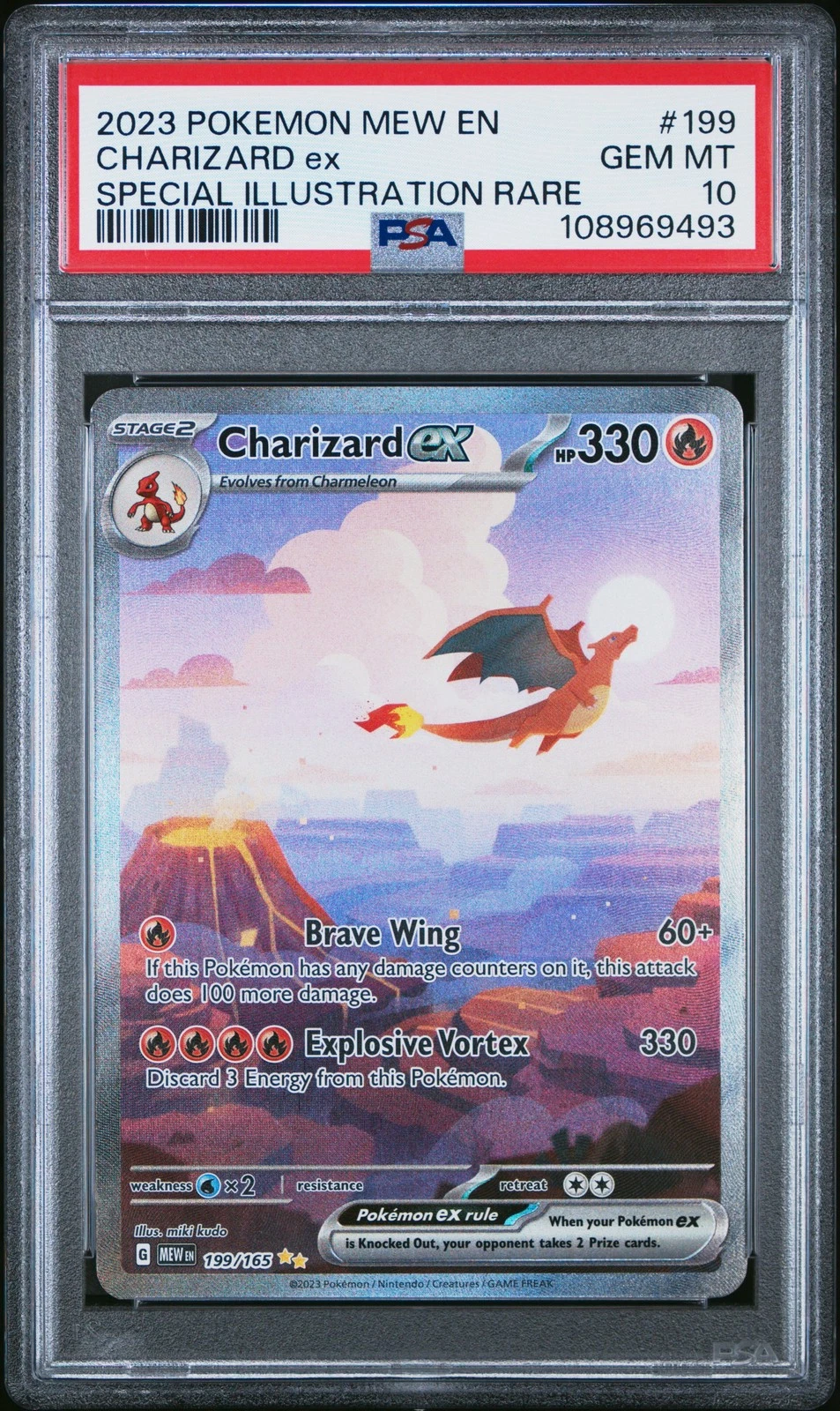
Modern chase cards are easy to recognize once you know what to look for. Alternate art cards feature a full-card scene that breaks out of the standard frame. Special illustration rares are similar, with artwork that tells a small story across the entire card and a gold-style rarity mark. These tend to be the most sought-after modern pulls, so any you find should go straight into a top loader.
Card condition: what we look at
Condition is the other half of the price. Two copies of the same card can sit far apart in value depending on wear. This table shows the standard raw-card scale and what each level looks like on a card.
| Condition | Corners | Edges | Surface | Centering |
|---|---|---|---|---|
| Near Mint | Sharp, with no visible wear | Clean, with at most a tiny speck of whitening | Glossy, with no scratches or creases | Reasonably even borders |
| Lightly Played | Slight softening or minor whitening | Light whitening along a few edges | Minor scuffs or faint scratches visible at an angle | May be noticeably off-center |
| Moderately Played | Clearly worn or rounded | Obvious whitening or small nicks | Visible scratches, scuffing, or light creasing | Often uneven, and it does not matter much at this level |
| Heavily Played | Heavily rounded or frayed | Extensive whitening, rough or chipped | Significant scratches, creases, or wear | Frequently very uneven |
| Damaged | Bent, torn, or missing material | Peeling, tearing, or heavy chips | Major creases, water damage, writing, or stains | Not a factor |
Be honest with yourself when you sort at home. Light shows wear better than dim rooms, so tilt a card under a lamp and look for scratches and edge whitening. We grade by eye in person, so there are no surprises when you come in.
How singles and bulk are priced in one visit
A typical collection has two layers, and we price each one differently, in a single visit.
Notable singles: priced one by one
Any card with real individual value gets its own look. The buyer identifies the exact card, checks set, edition, and condition, then pulls live sold comps for that specific version. Sold comps matter because they reflect what cards are actually selling for, not what hopeful sellers are asking. This is why a modern holo, a vintage rare, and a special illustration rare each get their own number instead of being lumped together.
True bulk: priced by the lot
Commons, uncommons, and most non-holo rares are priced together as a lot. Bulk is not worthless, but individual cards in it rarely justify separate pricing, so we price it as a group. This is where people sometimes confuse our approach with a flat rate. We do not use a flat rate across your whole collection. We use lot pricing for the true bulk only, after the valuable cards have been pulled out and priced individually.
If you want to sell bulk Pokémon cards, expect bulk to be noticeably lower in value per card than singles. That is simply how the market works. What it means for you is that spending ten minutes pulling out anything that looks special before you come in is worth it, even if we will double-check everything anyway.
Should you grade your cards before selling?
Grading can be worth it, but it is not automatic. Here are the honest trade-offs compared with selling raw.
- Time: Grading takes weeks to months depending on the service and tier, while selling raw can happen the same day.
- Fees: Grading costs money per card, and shipping and insurance add to it. For cards that are not already valuable, fees can eat up or exceed the gain.
- Risk: A card you hope will grade high can come back lower. A small flaw you missed on corners, edges, or centering can move the grade, and the result can fall short of the premium you expected.
- Market movement: Prices shift while your card sits in the queue, so what looked like a good bet at submission can look different when it returns.
- Upside: For genuinely clean, high-demand cards, a good grade can hold value better and open a stronger market than raw.
A reasonable rule: if a card is clearly valuable, looks Near Mint under a lamp, and you are patient, grading may be worth exploring. If you want cash without waiting, or you are unsure about condition, selling raw is cleaner. If you already hold slabs, we buy those too. See our page on selling graded Pokémon cards for details.
How to bring your cards in
A little prep protects value and speeds things up.
- Use sleeves and top loaders. Put your best cards in soft sleeves and then in rigid top loaders. Edge and corner damage can happen in a bag in minutes.
- Sort your binders. Leave good cards in their binder pages if they are secure, and keep the binder upright. If pages are crammed, take cards out gently rather than yanking them.
- No rubber bands. They dent edges and corners. Use a divider, a card box, or a clean sleeve instead.
- Separate the likely valuables. Pull aside holos, anything with a 1st Edition stamp, alt-arts, special illustration rares, and any graded slabs.
- Keep bulk in a box. A sturdy box beats a loose bag. You do not need to count it or sort by set.
- Bring your ID. Valid government photo ID is required for every sale.
Please do not clean cards or try to fix edges. Wiping a surface can leave scratches, and buyers can usually tell.
Sealed product, graded slabs, and other TCGs
Raw cards are only part of what we handle. A few notes on the rest.
Sealed product
With sealed boxes, packs, and similar items, we inspect shrink-wrap, seams, and weight in person to rule out resealing. That is standard caution in the hobby, because resealed product is a known problem. Bring the item in its original state and do not open it.
Graded slabs
For slabs, we verify the cert number and the holder in store. PSA, CGC, BGS, and SGC are all bought, and each is priced on its own comps, because the market does not treat them as interchangeable.
Other cards
We also buy Magic, Yu-Gi-Oh!, One Piece, and Lorcana, plus sports cards. If your closet has more than Pokémon in it, bring it all. If you also have old phones, tablets, consoles, or laptops lying around, our buyers handle those as well, and you can learn more on our sell electronics in Bellerose page.
Selling Pokémon cards from nearby towns
We see sellers from across the area. Here is how the trip works from each.
Thomaston
Coming from Thomaston, you can reach us by heading toward Jericho Turnpike, one of the area's major roads. It is a straightforward trip if you have a binder or two. Pack your cards in a bag or box on the passenger seat, not in the trunk where they can shift.
Searingtown
Searingtown is close to Jericho Turnpike, which makes the drive to Bellerose direct. If you are clearing out a childhood collection before a move or renovation, one trip is usually enough to get everything evaluated and paid.
Garden City
From Garden City, expect a short drive. Many people from there arrive with organized binders and some sealed items, and we are happy to go through sealed product and slabs alongside the raw cards.
Malverne Park Oaks
If you are coming from Malverne Park Oaks, plan your trip around traffic, since parkway and turnpike volume can vary. Bring everything in one trip, including bulk, so you do not have to come back to finish.
South Valley Stream
South Valley Stream sellers can use the major roads and parkways to reach Bellerose. A box of bulk and a stack of top loaders is a perfectly good load, and you do not need to count or sort before you arrive.
New York
People also come in from other parts of New York, including neighboring Queens. If you are weighing options across the city, see our New York locations page. For cards, the Bellerose store is the place to bring them.
Frequently asked questions
Do I need an appointment to sell Pokémon cards?
No. Walk in during store hours with your cards and a valid photo ID. A free quote beforehand is optional and can help you plan.
Will you buy my whole collection or only the good cards?
We look at the whole collection. Notable singles are priced individually and the true bulk is priced by the lot, so you can sell everything in one visit or just the part you want.
Do you use a flat bulk rate?
No. Our buyers use pricing tools with live sold comps, card by card, for anything notable. Only the genuine bulk is priced by the lot.
Can I sell cards that are not in perfect condition?
Yes. Lightly played, moderately played, and even heavily played cards can have value, depending on the card. Condition changes the offer, but it does not automatically rule a card out.
Do you buy graded cards?
Yes. We buy PSA, CGC, BGS, and SGC slabs. We verify the cert number and holder in store and price each on its own comps.
Do you buy sealed Pokémon products?
Yes. We inspect the shrink-wrap, seams, and weight in person to rule out resealing, so bring sealed product untouched.
How do I get paid?
Cash, on the spot, once you accept the offer and show valid government photo ID.
Ready to find out what your cards are worth? Get a free quote or just bring them to the Sell Your Gadgets Bellerose store at 247-67 Jericho Tpke, Bellerose, NY 11426. We are open Monday through Saturday from 10:00 AM to 7:00 PM and Sunday from 11:00 AM to 5:00 PM, and you can call (718) 481-3733 with questions.
Hear from a real customer
A real customer on their experience. Working or broken, get a free quote and walk out with cash the same day.
Compare your options
See how selling to us stacks up against other ways to sell, side by side.