How Much Is My iPhone 17 Pro Max Worth? Value Guide
By syedladen ·
Your iPhone 17 Pro Max is worth whatever a buyer will pay for its exact storage size, physical condition, battery health, and lock status on the day you sell it. The fastest way to find the real number is a free cash quote based on those details, because any price you read in a blog post will be out of date within weeks.
This guide covers every factor that moves an offer, ranked by impact, and shows you how to check each one on your own phone. It also compares your selling options honestly and gives you a prep checklist so nothing slows down the sale. We don't publish dollar figures, because buyback values shift with the market and with your specific unit. What we can do is show you how to get the most from whatever the market is offering.
What determines your iPhone 17 Pro Max's value
Buyers price a phone by asking one question: how easily can I resell this, and how much work will it need first? Every factor below is a version of that question. A phone that is unlocked, clean, high-capacity, and fully functional can go straight back into the market. A phone that needs a screen, a battery, or a carrier unlock has to be repaired or discounted first, and the offer drops to reflect that.
The flagship Pro Max line also tends to hold value better than smaller or base-tier models, since demand for the largest screen, best camera system, and highest storage stays strong even as newer models arrive. That's a general pattern, not a guarantee, so treat it as context rather than a promise.
The factors that move your offer, in order of impact
Storage and condition are the two biggest levers, and on a given phone either can be the larger one. A cracked 1TB model can still be worth more than a flawless lower-capacity model, while a badly damaged phone of any size will see a steep cut. After those two, the order is roughly battery, lock status, eSIM considerations, and color.
1. Storage tier
Storage is the one spec you can't change after purchase, and higher tiers carry a meaningful premium over lower ones. The iPhone 17 Pro Max is sold in multiple capacities, and the gaps between tiers are noticeable in buyback offers. The top capacities are in particular demand from buyers who shoot a lot of video or keep large libraries.
Don't guess your tier. People regularly misremember what they bought, and a wrong claim just gets corrected at inspection. Check it in Settings (steps below) and mention it when you ask for a quote.
2. Physical condition
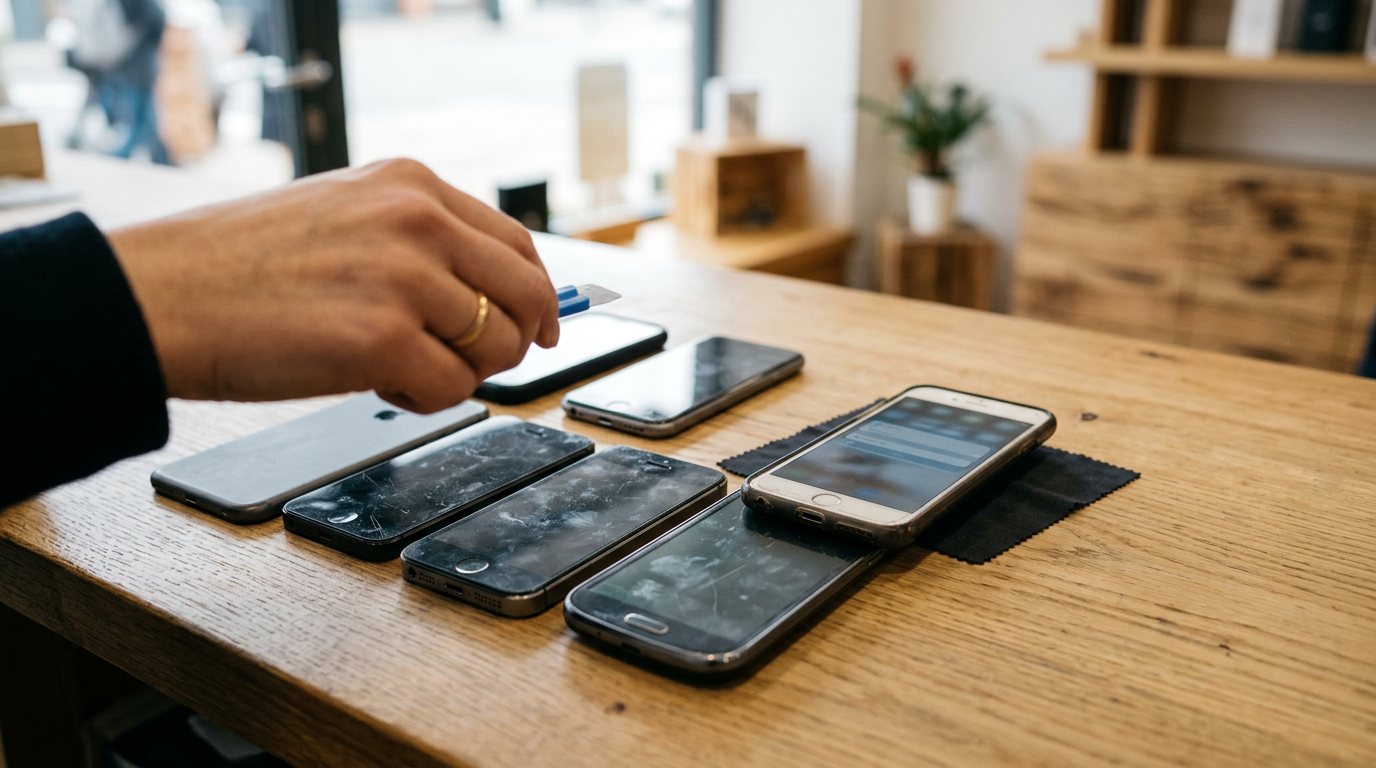
Condition is where most sellers lose or keep value. Buyers look at the screen, the frame, the back glass, the camera lens covers, and the ports. Deep scratches, dents in the frame, and cracks all reduce the offer, and cracks affecting the screen or back glass reduce it most because they require parts and labor to fix. See the grading table below for what each tier looks like.
Function matters as much as looks. Face ID, cameras, speakers, microphones, buttons, haptics, charging, and cellular all get tested. A phone that looks perfect but has a failed Face ID sensor will be graded as damaged.
3. Battery health
Battery health shows up as a maximum capacity reading on the phone. A newer model like the 17 Pro Max should still have strong battery health if you've had it a short time, and that helps you. A noticeably degraded battery lowers the offer because replacing it is a repair cost. If your phone shows a service message in battery settings, expect that to be reflected in the quote.
Battery health is usually a smaller factor than storage or cracks on a recent phone, but it can separate two otherwise identical units. Charging habits over the phone's life, heavy gaming, and heat all influence it.
4. Carrier lock vs. unlocked
An unlocked phone works on any compatible network, so it appeals to the widest pool of buyers and generally gets a stronger offer. A phone still locked to a carrier is harder to resell and is usually valued lower. Phones with an unpaid balance or an active financing plan can also complicate a sale, because the carrier may still have a claim on the device or restrict unlocking until it's paid off.
If you bought it through a carrier, check whether it's fully paid off and unlocked before you sell. Carriers have their own unlock policies, so ask yours directly if the settings don't show it clearly.
5. eSIM-only models
In the US, recent iPhones, including the 17 Pro Max models sold here, use eSIM only with no physical SIM tray. That's normal for this generation and isn't a flaw. Where it matters is in the sale process: you need to remove your eSIM plans or have your carrier release them before handing the phone over, and a buyer will confirm the phone isn't tied to an active line.
International versions of the same phone may have a physical SIM slot. If you bought your phone abroad or from a non-US channel, mention that up front, because the model number and network band support can affect who can use it.
6. Color
Color is the smallest factor. Some shades are more popular than others, and in some cases a sought-after color gets a slight edge when demand is strong, but it rarely outweighs storage, condition, or lock status. Don't hold off on a sale waiting for a color to become more desirable.
Condition grading table
Every buyer uses slightly different grades, but most phone evaluations land in these four buckets. Here is how they typically work for an iPhone 17 Pro Max, and how each affects an offer in relative terms.
| Grade | What it looks like | Effect on your offer |
|---|---|---|
| Like new | No visible scratches or scuffs under normal light. Screen, frame, and back glass are clean. All features work. Battery health is strong. | Top of the range for your storage tier. This is the benchmark the other grades are measured against. |
| Good | Light hairline scratches or faint marks on the frame, visible only at an angle. No dents, no cracks. Everything works. | A modest step down from like new. Often still close, especially if the phone was always in a case. |
| Fair | Obvious scratches, scuffs, or small dings on the frame or back. Possibly a worn battery. Still fully functional with no cracks. | A clear reduction. The buyer expects cosmetic refurbishment or a discounted resale. |
| Broken | Cracked screen or back glass, a dead pixel area, a bent frame, or a failed feature such as Face ID, camera, or charging. Water damage also lands here. | A substantial reduction that depends on the type of damage. The phone still has value, particularly at higher storage, but the offer reflects repair cost. |
A few tips on grading yourself honestly: look at the phone under bright light with the case off, check the camera lens rings for chips, and inspect the corners of the frame. If you're unsure which bucket you fit, describe the damage in your quote request or bring it in and let us inspect it. We buy broken devices too, so damage doesn't mean the phone is worthless.
How to check your exact model, storage, and battery health
It takes about two minutes to gather everything a buyer will ask about. Menu names can shift slightly between iOS versions, but these paths work on current software.
- Model and storage: Open Settings, tap General, then About. Look for Model Name, Model Number, and Capacity. The model number helps identify the regional version.
- Carrier lock status: On the same About screen, scroll to the carrier lock entry. A message saying there are no SIM restrictions generally means the phone is unlocked. If it shows a restriction, contact your carrier.
- Battery health: Go to Settings, then Battery, then Battery Health & Charging. Note the Maximum Capacity reading and any service message.
- Find My status: Open Settings, tap your name at the top, then Find My, and confirm whether Find My iPhone is on. You'll turn it off as part of prep.
- Financing or balance: Check your carrier account or Apple financing statement to confirm nothing is still owed on the device.
Write these details down or screenshot them. They make your quote more accurate and protect you if a dispute comes up about what you described.
How value changes over time and when to sell
Every phone loses value with time, and the curve is not a straight line. The steepest drops tend to cluster around specific events.
New model releases
When Apple announces the next iPhone, demand for the previous generation softens as buyers shift attention and trade-in volume rises. Offers on the outgoing model tend to decline around that window and keep easing afterward. If you upgrade every year, selling in the weeks before the new announcement typically captures more of the phone's value than selling right after it.
Seasonal demand
Demand for phones usually rises around major gift-giving periods and after new launches, when upgraders flood the market. Supply also spikes at those times, so the effect on price is mixed. The safest general rule: don't wait for a seasonal bump on a phone you plan to replace, because steady age-related depreciation usually outweighs it.
Condition decay
Keeping the phone in a case with a screen protector preserves a higher grade. A phone that goes from Good to Fair because of a drop or a bent frame can lose more value in one moment than months of waiting would.
A practical timing rule
- If you've already decided to upgrade, sell as soon as you've got your replacement set up.
- If you're undecided, get a free quote now so you know what the phone is worth today. Quotes cost nothing and don't obligate you.
- If the phone is damaged, sell sooner rather than later. Damaged phones don't appreciate, and small cracks tend to spread.
Cash buyback vs. trade-in vs. private sale
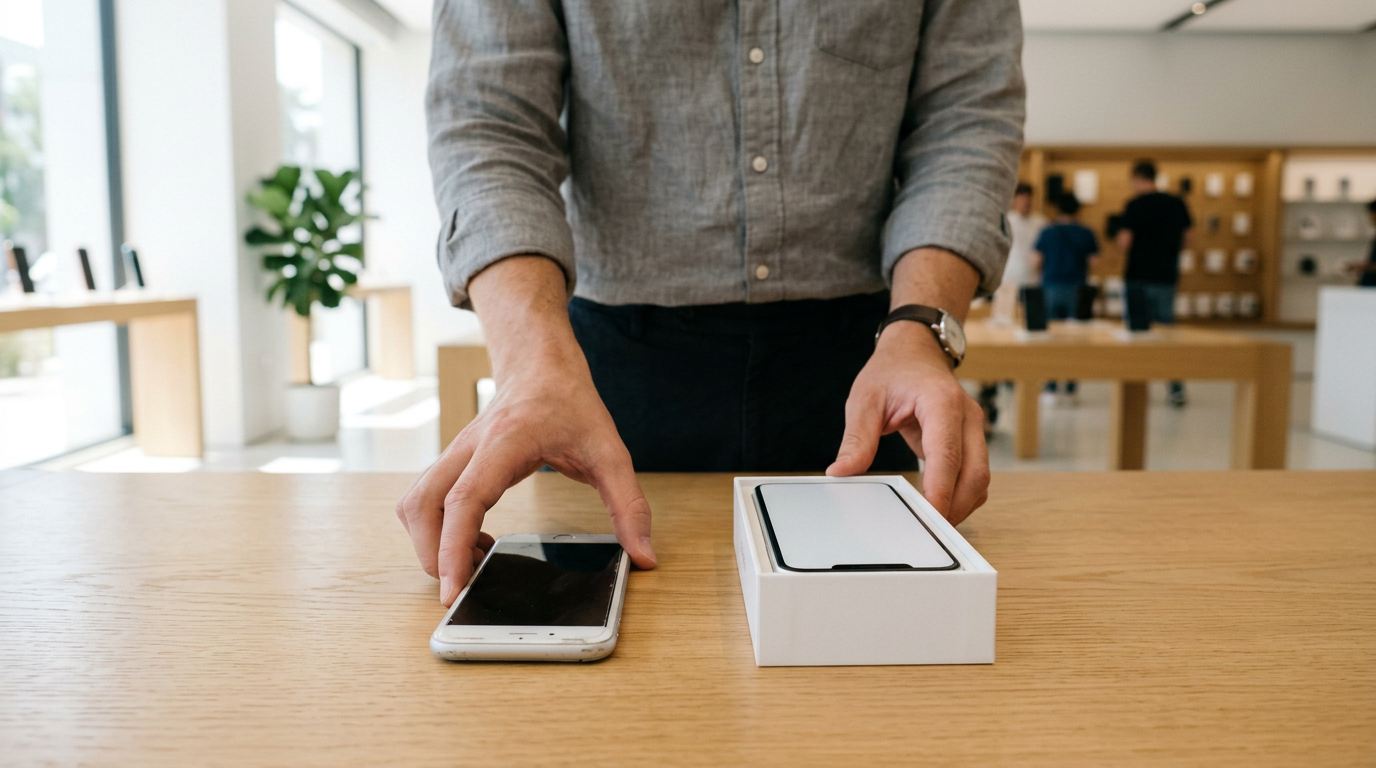
There are three main ways to turn your iPhone 17 Pro Max into money or credit. None is best for everyone. Each trades price against speed, effort, and risk.
| Option | Best for | Upsides | Trade-offs |
|---|---|---|---|
| Cash buyback (like Sell Your Gadgets) | Sellers who want cash quickly, with no haggling | Paid on the spot, quick inspection, no shipping wait or strangers to meet. Damaged phones are accepted. | Offer is below what a perfect private sale might reach, since the buyer needs a margin to resell. |
| Manufacturer or carrier trade-in | People buying a new phone from the same company | Convenient, applied directly to a new purchase. Sometimes tied to promotions. | Usually paid as credit or bill credits, not cash. Promotions may require a new plan or long commitments. Terms can be complicated. |
| Private sale (marketplace or classifieds) | Sellers willing to do the work for a potentially higher price | Highest possible price if you find the right buyer. | Time, messages, lowballers, no-shows, payment scams, and return or dispute risk. Safety concerns with meeting strangers. |
Honest notes on each
Trade-in programs from Apple and carriers are genuinely convenient, and sometimes a promotion makes them competitive. Read the fine print, because credit that arrives over many months only pays out if you stay on the plan. Compare the total value, not the headline number.
Private sales can pay the most, but the price you see in a listing is not the price you get after fees, time, and risk. Payment fraud and fake payment confirmations are common enough that you should only accept payment you can verify.
Cash buyback is the middle path. You give up the last bit of upside for certainty and speed. You can sell your iPhone with a quote first, compare it against your other options, and only take it if it beats them. If you're near one of our stores, find a location and walk in, or use the mail-in option if you're far away.
Prep checklist before you sell
Do these in order. Skipping any of them can delay your payout or expose your data.
- Back up your data. Use iCloud or a computer backup, and confirm it finished. If you're moving to a new iPhone, transfer everything before you wipe.
- Move your eSIM and number. Make sure your line is active on your new device or released by your carrier. Don't erase the phone until your number is safely moved.
- Sign out of Apple services. Go to Settings, tap your name, and sign out. This turns off Find My iPhone and removes Activation Lock. A phone with Activation Lock still on cannot be bought by us or anyone else.
- Unpair accessories. Unpair an Apple Watch and remove Bluetooth devices you won't need.
- Factory reset. Go to Settings, General, Transfer or Reset iPhone, then Erase All Content and Settings. We also offer a free data wipe in store, so you can have us double-check.
- Remove the case and screen protector. Clean the phone with a soft cloth so the real condition is visible.
- Gather accessories. Bring the original box, cable, and any included items if you still have them. They aren't always required, but they help.
- Bring valid government photo ID. We require it for every sale.
What to expect when you sell to us
The process is simple: get a free quote online, by text, or by walking in, then we do a quick inspection to confirm the phone matches what you described, and you're paid on the spot. No appointment is needed. If you're curious about each step, see how selling to us works.
There are a few things we can't buy. We don't purchase devices that are iCloud or Activation locked, reported lost or stolen, or blacklisted. If your phone is still tied to your Apple account, sign out before you come in. We also never quote prices publicly, since real offers depend on the exact device in front of us, so the only way to see a number is to request a quote.
Frequently asked questions
How much is my iPhone 17 Pro Max worth right now?
It depends on storage tier, condition, battery health, and whether it's unlocked. Higher storage and cleaner condition earn noticeably more. The quickest way to know is to request a free quote with your details.
Does the iPhone 17 Pro Max hold its value well?
Pro Max models generally hold value better than lower-tier phones, particularly at higher storage. Value still declines over time, and it drops more sharply once a newer generation arrives.
Can I sell an iPhone 17 Pro Max that is still on a payment plan?
It's complicated. A carrier may still hold a claim on a financed phone, and it may be locked until paid. Pay off the balance and confirm the phone is unlocked before selling.
Will a cracked screen make my phone worthless?
No. A cracked phone is worth less than an undamaged one, but it still has value, especially a high-storage Pro Max. We buy broken devices, so you can get a quote and decide.
Do I need the original box to sell?
Not usually. The box and accessories can help slightly, but the phone's condition, storage, and lock status drive the offer far more.
What if I forgot to turn off Find My iPhone?
Sign out of your Apple account on the phone, or remove the device from your account online. A phone with Activation Lock on can't be bought, so this must be done first.
Is it better to trade in or sell for cash?
If you want credit toward a new phone and the promotion is strong, trade-in can make sense. If you want actual cash and no strings, selling to a buyback store is simpler. Get a quote from each and compare the total value.
Ready to find out what your iPhone 17 Pro Max is worth? Get your free quote online or by text, or walk into a Sell Your Gadgets store with your phone and photo ID and get paid on the spot.
Hear from a real customer
A real customer on their experience. Working or broken, get a free quote and walk out with cash the same day.
Compare your options
See how selling to us stacks up against other ways to sell, side by side.