How to Sell a Deceased Family Member's Phone: A Gentle Guide
By syedladen ·
You can sell a deceased family member's phone, but only once it is unlocked, its accounts are removed, and the photos and information your family wants have been saved. There is rarely a deadline, so the kindest approach is to go slowly: preserve the memories first, sort out the accounts and paperwork next, and sell last.
This guide is for families who are holding a loved one's phone, tablet, or laptop and aren't sure what to do with it. It covers how to save what matters, how Apple and Google handle accounts for people who have passed, why a locked device can't be bought, and what to bring when you are ready to sell.
Start by slowing down: what to do with a loved one's old phone
Many families feel pressure to deal with devices quickly, and most of the time that pressure isn't real. A phone sitting in a drawer, charged now and then, is not causing any harm. In fact, keeping it intact for a while is often the best thing you can do, because it may still hold things you will want later.
Here is why it helps to wait before wiping, returning, or selling anything:
- Photos, videos, voicemails, and messages may exist only on that device or in an account you can't reach yet.
- Two-factor codes for email, banking, and other accounts are often sent to the phone. Losing the phone or number too early can make it harder to close or recover those accounts.
- Important documents are sometimes stored as photos, notes, or PDFs: account numbers, insurance cards, passwords written in a notes app.
- The device may be locked, and some problems are easier to solve while the phone and its linked accounts are still in their original state.
If you need to keep the phone working in the meantime, keep it charged and avoid factory resetting it. Don't cancel the phone number until you have thought through which accounts might send verification messages to it.
Save the photos and memories first
Before you think about selling, decide what you want to keep. Once a device is erased, whether by you or by a store's data wipe, the contents are gone unless they were backed up somewhere.
If you can open the phone
- Check for a cloud backup. On an iPhone, look in Photos and iCloud settings. On an Android phone, look at Google Photos and the backup settings. A backup you can reach is the safest copy.
- Copy photos and videos to a computer or external drive, then confirm you can open them there. Don't trust that a transfer worked until you have checked.
- Save voicemails and important messages. Voicemails can often be exported or recorded. Screenshots of meaningful text threads are better than nothing.
- Look beyond the camera roll. Notes, voice memos, saved documents, handwritten-style drawings, and downloaded files can all be sentimental.
- Check for contacts. Family and friends who should be told, or who might want to be at a memorial, may be listed there.
If you can't open the phone
This is very common, and it isn't a reason to panic. The photos may already be in an online account, on a tablet or laptop signed in to the same account, or on a computer the person used. Check any other devices they owned before assuming everything is out of reach. A family member who shared a photo stream, a shared family album, or a messaging group may also have copies of many of the pictures.
Be careful with websites or people who promise to unlock the phone of someone who passed away for a fee. Many are unreliable, and handing over the device or login details to a stranger puts a loved one's private information at risk. The official routes described below are slower, but they are safer.
Understand what is actually locking the device
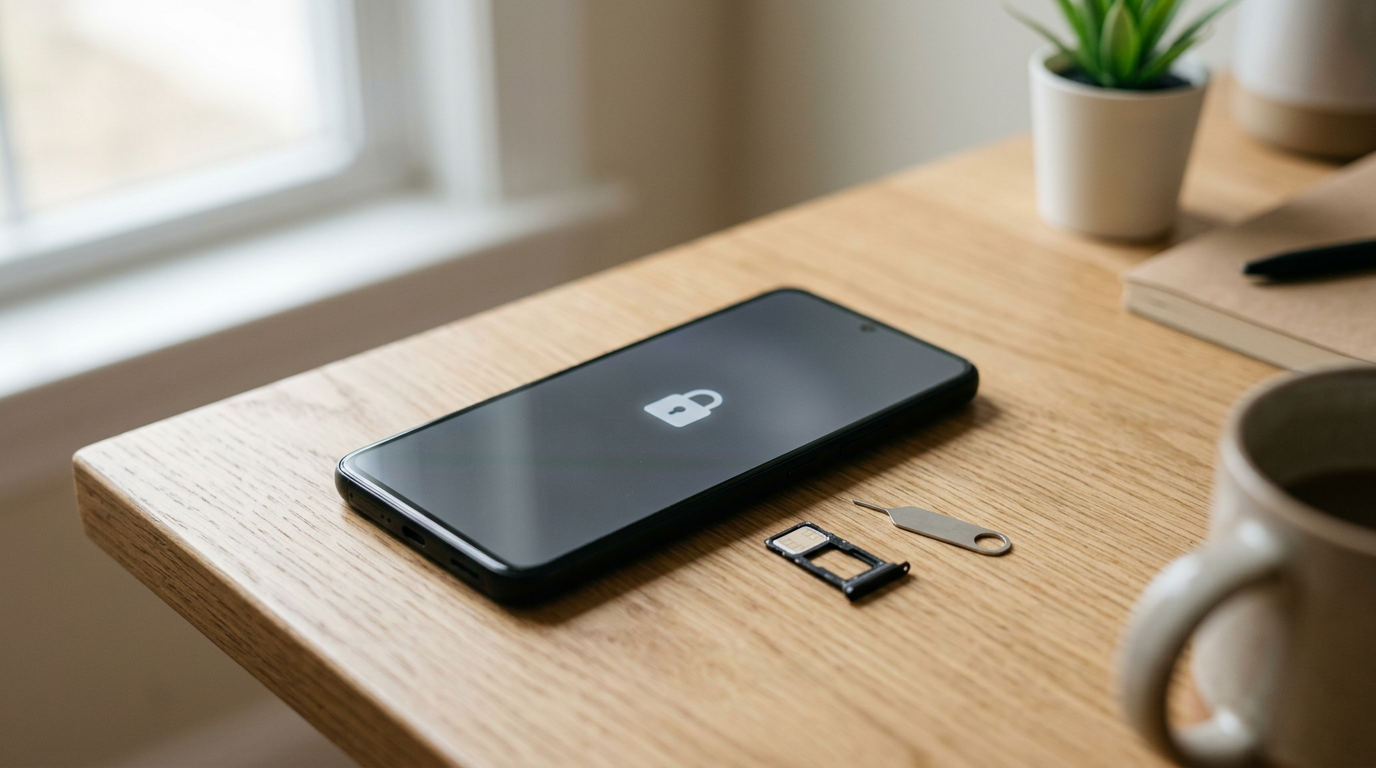
When families search for how to unlock the phone of someone who passed away, they are usually dealing with one or more of three different locks. Knowing which one helps you pick the right path.
| Type of lock | What it is | What it affects |
|---|---|---|
| Screen passcode or biometrics | The code, pattern, or face/fingerprint that opens the device | Whether you can see and save what's on it |
| Apple ID and Activation Lock | Apple's anti-theft feature tied to the account that set up the device | Whether anyone can set up the device again after it is erased |
| Google account lock (factory reset protection) | Android's protection that asks for the original Google account after a reset | Whether the phone can be reused after an erase |
| Carrier lock or unpaid balance | A restriction from the mobile carrier or an account problem | Which networks the phone works on, and sometimes its eligibility for resale |
The screen passcode and the account locks are separate. Even if you know the passcode and can browse the phone, an erased device can still ask for the original account's credentials when it is set up again. That is by design, and it is the part that matters most for selling.
If you are guessing at a passcode, go carefully. Repeated wrong attempts can temporarily disable a device, and on some phones they may eventually lead to data being erased. If you have a short list of likely codes, such as a birthday or a code the person used on other devices, stop and think before trying them, rather than guessing repeatedly.
Apple and Google both have official processes for accounts of people who have passed
Both companies recognize that families end up in this position, and both have an official route. We are not going to list exact steps or timelines here, because requirements and wording change. Check each company's current support pages, and expect to be asked for documentation.
Apple
Apple has a Digital Legacy program, which lets a person name legacy contacts who can request access to their account data after they pass away. If your loved one set that up, the legacy contact may be able to use it. If they did not, Apple has a separate process for family members or representatives to request access, which generally involves documentation such as proof of death and proof of legal authority. In some cases a court order is part of that process. Apple's support site describes what it currently asks for.
Google offers Inactive Account Manager, a setting people can use while they are alive to choose what happens to their account if it becomes inactive, including who is notified or given access to certain data. For accounts where nothing was set up, Google has a process for families to submit a request about a deceased user's account. Depending on the situation, that may involve closing the account or, in limited circumstances, requesting content. Google reviews each request, and it does not promise access in every case.
What to expect
- These processes are built to protect the person's privacy, so they are careful and can feel slow.
- You will generally need to show who you are, your relationship to the person, and your authority to act, so having paperwork ready helps (see below).
- Approval to access an account is not always the same as access to every photo or message, so it is worth saving what you can directly from any open device in the meantime.
Why a locked device can't be sold until the lock is removed
This is the part that surprises many families, so we want to explain it plainly. At Sell Your Gadgets, we do not buy devices that are iCloud or Activation Locked, reported lost or stolen, or blacklisted. That is not a judgment about your situation. A locked phone is simply a device nobody can use, including the next owner, and buyers can't responsibly pay for something they can't turn on and set up.
If you are searching for how to remove Activation Lock on an Apple device after a death, here is the honest picture:
- Erasing the phone does not remove Activation Lock. The lock stays tied to the Apple ID that set up the device, and a reset doesn't change that.
- The clean fix is for the account to be signed out properly. If your family has legitimate, authorized access to the account, signing out of the device and removing it from the account releases the lock. Only do this if you are authorized to act for the estate.
- If you can't access the account, the official Apple process above is the route. Apple's support pages explain whether and how a lock can be addressed for a family in this situation.
- Android works the same way in principle. The Google account needs to be removed from the device before it is reset, or the phone may ask for that account afterward.
We'd rather tell you this now than have you travel to a store and leave disappointed. The good news is that locks don't disappear forever. Once the account is cleared, the device can be sold like any other.
Other things that can block a sale
- Lost or stolen reports. If a phone was reported lost or stolen at any point, it can be flagged. If it was found again, the report needs to be resolved first.
- Blacklisting. Carriers can blacklist devices, sometimes because of an unpaid balance or financing issue. If the phone was on a payment plan, contact the carrier about the account before selling.
- Remote-management or work profiles. If the phone was issued by an employer, it may be managed by that organization and may need to be released by them.
The paperwork families typically keep on hand
You don't need a filing cabinet, but a small folder makes every part of this easier, whether you are dealing with Apple, Google, a carrier, or a store. Requirements differ, so treat this as a practical starting list, not a rulebook.
- Death certificate copies. Companies often ask for one, and original certified copies are sometimes needed.
- Documents showing your authority, such as letters of administration, letters testamentary, or a will naming an executor, depending on where you live and how the estate is handled. A family attorney or the probate court can tell you which applies.
- Your own valid government photo ID. We require a valid government photo ID for every sale, and it has to be the seller's own.
- Proof of relationship, if a company asks for it.
- The original box, receipt, or purchase records, if you have them. They help identify the exact model and storage and can speed up carrier or account questions.
- A list of the devices and their serial numbers or IMEI, usually found in settings or on the back of the device.
- Carrier account details, including whether the phone was paid off.
If you plan to sell in a store, call or visit and ask what they want to see for your situation. If you are acting as an executor or the estate's representative, bring whatever documentation you have so staff can tell you what is needed before you make the trip.
Keep, pass down, donate, or sell: choosing what's right for your family
Selling isn't the only choice, and it isn't always the right one. Here is a simple way to think it through.
| Option | Good fit when | Things to check first |
|---|---|---|
| Keep it | You aren't ready, or the device holds things you haven't been able to save | Keep it charged and stored safely, and keep its passcode written down in a secure place |
| Pass it down | A family member would use or treasure it | Back up and erase it, and have the account properly removed |
| Donate or recycle | It is too old or damaged to have much resale interest, and you prefer simplicity | Wipe personal data first |
| Sell it | The device is in good shape, the estate wants to turn it into cash, and nobody needs it | It must be unlocked, and you need your own photo ID and any estate paperwork |
Newer, well-kept phones, tablets, and laptops generally hold their value better than older or heavily damaged ones, but condition, model, and storage all matter. If you want to know where a device stands, a free quote tells you without any commitment.
Get each device ready: phones, tablets, and laptops
Use this checklist once you are ready to move toward a sale. It works for almost any device, and a few steps differ by type.
- Save everything you want to keep. Confirm the copies open on another device.
- Secure the linked accounts. Make sure email, banking, and social accounts that used this device for verification have been handled or have a new way of verifying.
- Sort out the account lock. Sign the device out of the Apple ID or Google account if you are authorized to do so, or follow the official company process if you are not.
- Contact the carrier about the line, any remaining balance, and whether the phone is eligible to be sold.
- Gather accessories. Chargers, cases, pencils, keyboards, and boxes can make the device easier to sell, but they aren't required.
- Note any damage honestly. Cracked screens and worn batteries don't automatically rule out a sale. We buy new, used, and broken devices.
- Bring paperwork and ID. Bring a valid government photo ID and any estate documents you have.
A note on laptops and tablets
Laptops and tablets are often overlooked, but they can hold years of photos, documents, and browser-saved passwords. Look in these places before wiping them. A MacBook may be tied to the same Apple ID as a phone, so account removal can matter just as much there. If you are selling, you can read about selling a laptop or selling an iPad or tablet to see what we look at in each.
How selling works with us when you are ready
When your family has the device unlocked and the memories saved, the process is simple. You can start with a free cash quote online or by text, or you can walk into a store. There is no appointment needed. The how it works page walks through each step.
- Get a quote. We tell you what we can offer for the device based on its model and condition. We don't publish prices in advance, because they depend on the exact device.
- Quick inspection. A team member checks the device in person.
- Paid on the spot. If you accept, you are paid right there.
- Free data wipe. We wipe the device in store at no cost. That wipe is permanent, so do it only after you have saved what you want.
- Valid government photo ID. We require it for every sale.
You can find a store near you in New York, New Jersey, Florida, Texas, Maryland, Arizona, Georgia, or Virginia. If you live far from one, there is a mail-in option. If you're selling a phone specifically, the smartphone selling page has more details on what we buy.
Gentle practical tips for the weeks ahead
- Make a short list of devices. Phones, tablets, laptops, watches, earbuds, and game consoles often turn up in separate drawers over time.
- Share the work. If more than one family member is involved, decide who will be the contact for companies and who will keep the paperwork.
- Keep a simple log. Write down who you contacted, when, and what they said. It saves repeating yourself during emotional weeks.
- Don't feel guilty about selling. Turning an unused device into something useful for the estate, or for someone who will enjoy it, is a perfectly reasonable thing to do.
- Take breaks. If looking through a phone is too hard today, it will still be there next week.
Frequently asked questions
Can I sell my deceased parent's phone?
Generally yes, if the phone is unlocked, isn't reported lost or stolen, and you have the right to sell it as part of the estate. Who has that authority depends on where you live and how the estate is handled, so ask an attorney or the probate court if you are unsure. You will need your own valid government photo ID at the time of sale.
How do I unlock the phone of someone who passed away?
If you know the passcode, you can open it directly. If not, the safest paths are the official ones: Apple's Digital Legacy and account-access process, and Google's Inactive Account Manager and deceased-user request process. Both generally ask for documentation. Avoid paying unknown services that promise a quick unlock, and avoid repeated passcode guesses.
How do I remove Activation Lock on an Apple device after a death?
Activation Lock is tied to the Apple ID that set up the device, and erasing the phone does not remove it. If your family has authorized access to the account, signing the device out of that Apple ID releases the lock. If not, use Apple's official process for families and check Apple's support pages for what it currently requires.
Will you buy a phone that is still locked?
No. We don't buy iCloud or Activation Locked devices, devices reported lost or stolen, or blacklisted devices. Once the lock is properly removed, the device can be quoted like any other.
Should I erase the phone before I bring it in?
Not until you have saved the photos, messages, and documents you want. We offer a free data wipe in store, so you don't have to do it yourself. Just remember that a wipe doesn't remove an account lock, so sign out of the account first if you are authorized to.
What if the phone is cracked, water-damaged, or won't turn on?
We buy new, used, and broken devices, so damage doesn't automatically rule out a sale. The condition does change what we can offer, and a phone that can't power on still has to be free of account locks. A free quote is the best way to find out where it stands.
What if I'm not near a store?
We have a mail-in option for people far from a location. Start with a free quote and we will explain the next step. You can also check the store locations page to see whether a visit is practical.
When you're ready, there is no rush and no pressure. Get a free quote online or by text, or walk into a Sell Your Gadgets store with the device, your photo ID, and any paperwork you have, and we will take it from there.
Hear from a real customer
Real experience, real cash. Working or broken, get a free quote and walk out with cash the same day.
Compare your options
See how selling to us stacks up against other ways to sell, side by side.