Sell PSA Graded Pokémon Cards Near Me in Irvington, NJ
By syedladen ·
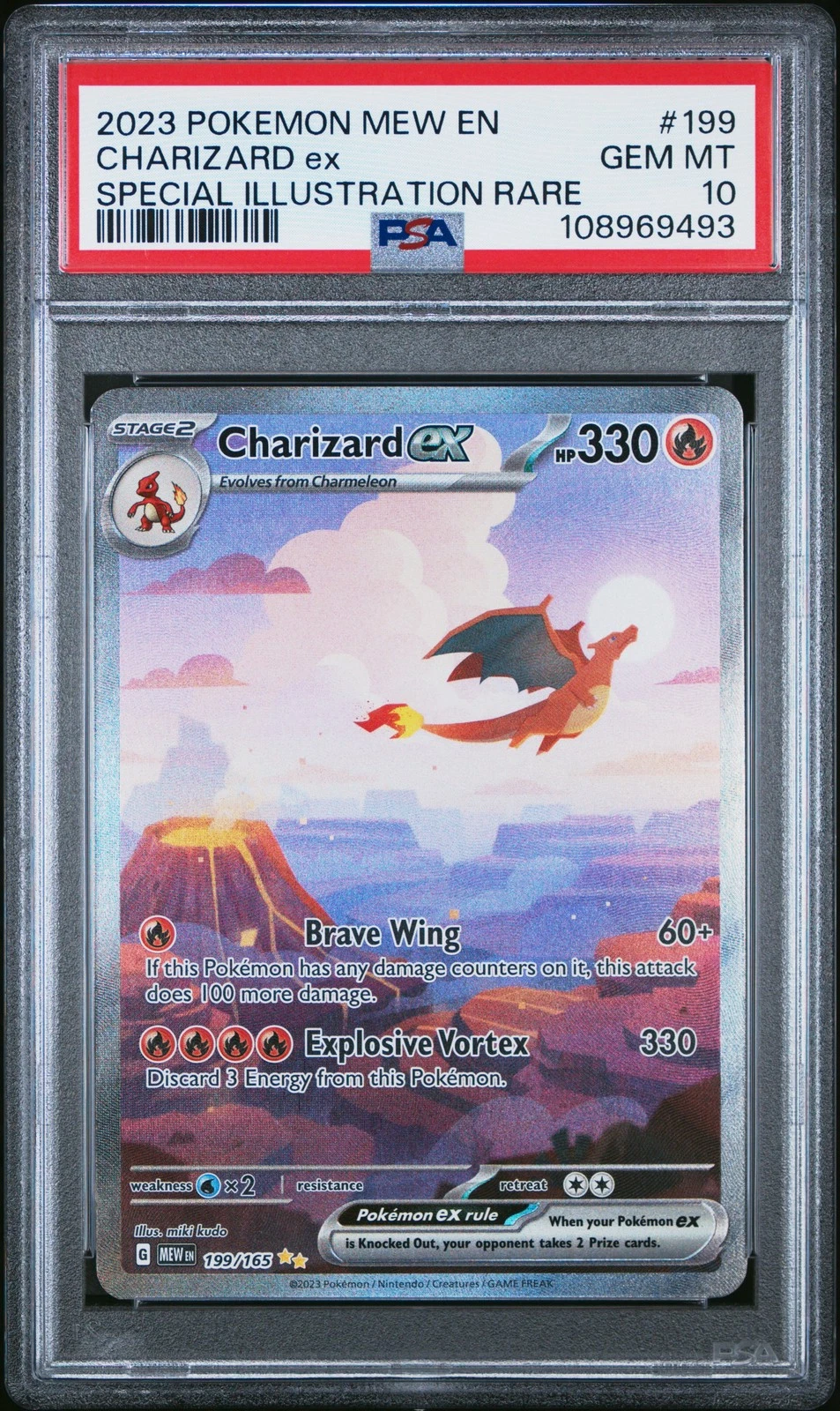
If you want to sell PSA graded Pokémon cards near Irvington, NJ, you can walk into Sell Your Gadgets on Springfield Ave with your slabs, no appointment, and leave with cash the same visit. We also buy CGC, BGS, and SGC slabs, and each one is priced on its own sold comps rather than a flat rate.
Below is how that pricing works, how we verify slabs, what to do about damaged holders, and when selling locally beats listing online. It is written the way a buyer would explain it to a friend across the counter.
How we buy graded Pokémon slabs at the Irvington store
The process is simple on purpose. You bring the cards to the Sell Your Gadgets Irvington store, a buyer looks at each slab in person, verifies it, prices it, and makes an offer. If you accept, you are paid cash on the spot. A valid government photo ID is required for every sale, which is the standard secondhand-dealer rule in New Jersey.
Nothing about this requires a shipping label, a listing, or a waiting period. You do not need to schedule a time, and you do not need to have your whole collection sorted. If you would rather get a feel for things first, you can request a free quote online or by text before you drive over, and then bring the slabs in for the in-person check.
We are an electronics buyback store at heart, and we also buy Pokémon and other trading cards: Magic, Yu-Gi-Oh!, One Piece, Lorcana, and sports cards. That matters for you because the people buying your slabs handle cards and collectibles regularly, not as an afterthought. Our dedicated page on selling graded Pokémon cards covers the basics if you want the short version.
How graded slabs are priced: card, set, grade, and grader
A graded slab is not priced as a Pokémon card. It is priced as one specific thing: an exact card, from an exact set, at an exact grade, from an exact grader. Change any one of those and the market changes with it.
Our buyers use internal pricing tools that pull live sold comps card by card. Sold comps means what similar slabs actually sold for, not what sellers are asking. We never use a flat bulk rate on slabs, because a flat rate would shortchange your best card to average out the rest.
The four things that set the number
- Card and set: The same character can be a very different card depending on the set, print run, edition, and whether it is a holo, reverse holo, promo, or full art.
- Grade: The gap between neighboring grades can be small on a common card and enormous on a chase card. A top grade on a popular card often behaves like a different product from the grade just below it.
- Grader: A PSA 10 and a BGS 10 of the same card do not necessarily sell for the same amount. Each grader has its own buyer base, which is why we price each on its own comps.
- Recent sales activity: A card with frequent recent sales gives a tighter, more reliable comp than one that rarely trades. Thin markets take more judgment.
Why we do not quote numbers in an article
Card prices move, sometimes within weeks, and any figure printed here would be out of date or misleading. Instead of a number, you get a fresh comp-based offer on the day you visit. A free quote is the honest way to find out where your slab stands right now.
PSA vs CGC vs BGS vs SGC from a seller's seat
All four graders are accepted here. They differ in how they present grades and in how deep the resale market tends to be. This comparison sticks to widely known facts; the exact value of your slab still comes from its comps.
| Grader | Label and holder | Subgrades | Resale depth (general) |
|---|---|---|---|
| PSA | Red-and-white label, 1 to 10 scale | Standard slab shows a single overall grade | Typically the deepest buyer pool for Pokémon, so slabs are widely recognized and easy to compare |
| CGC | Clear, modern holder with a clean label; known from comics before moving into trading cards | Subgrades appear on some label types, so check yours | Growing market with real demand; comps exist but are usually thinner than PSA for the same card |
| BGS (Beckett) | Thick holder with a label showing the grade | Four subgrades: centering, corners, edges, surface | Strong among collectors who value subgrades; the highest-tier labels (such as Black Label) are the most sought after, but they are a narrower market |
| SGC | Black-toned holder; long history in sports cards and vintage | Standard label shows an overall grade | Well regarded, especially for vintage; Pokémon comps are real but generally less plentiful than PSA |
What this means in practice: a deeper market usually means easier, more confident pricing, while a thinner market means the buyer is taking on more uncertainty. That does not make CGC, BGS, or SGC slabs bad. A sharp BGS with strong subgrades or a clean SGC vintage card can be excellent. It just means we look hard at the specific comps instead of assuming.
How cert verification works in store, and how to check your own first
Every graded slab carries a certification number on its label, and the grader keeps a record tied to it. When you bring a slab in, we check the cert number against the grader's records and inspect the holder itself. We are confirming that the number is real, that it matches the card and grade on the label, and that the holder looks like a genuine, untampered case.
Look up your own cert before you visit
- Find the cert number printed on the label. It is usually a string of digits, sometimes with a barcode or QR code.
- Go to the grader's website (PSA, CGC, Beckett, or SGC each offers a free cert lookup).
- Enter the number and compare the result with your slab: card name, set, year as printed, and grade.
- Take a screenshot of the result if you want a record, but it is not required. We will check it in store anyway.
If anything does not match, such as a different card, a different grade, or no record at all, stop and ask questions before selling anywhere. Checking first takes a couple of minutes and can save you from a bad surprise.
What we look at on the holder
- Whether the case seams are intact and consistent
- Whether the label looks original and sits correctly
- Whether the card inside matches the label and sits properly in the holder
- General condition: scuffs, cracks, and clouding
Cracked holders, scratches, crossovers, and resubmission
Slabs get dinged. Here is how to think about each situation honestly.
Scratched or scuffed holders
Light surface scratches on the plastic are common and generally matter much less than a flaw on the card itself. Heavy scratching, deep gouges, or cloudy plastic can lower what a buyer will pay because the next buyer cares about presentation. Do not try to buff or polish the case yourself; that often makes it worse.
Cracked holders
A cracked case is a real issue, since the holder is part of what a buyer is paying for. A crack may also raise questions about whether the slab was opened. A cracked slab can still sell, but expect a noticeably lower offer than for a clean one with the same grade. Bring it in as is, and do not try to glue or repair it.
Crossovers
A crossover means cracking a slab out of one grader's holder and submitting the card to a different grader, hoping for the same or better grade. It can make sense when a card is worth more under another grader's label and you are confident in its condition. It is a gamble: the grade can come back lower, the process takes time, and you pay fees. If you simply want cash, crossing over is usually not worth the delay.
Resubmission
Resubmitting a card to the same grader for a regrade is a similar bet. It occasionally pays off on a card that looks undergraded, but it is slow, costs money, and can go the wrong way. If you want to sell now, a slab with a solid grade is usually better sold as is. If you are curious whether a card is a candidate, ask the buyer; they see a lot of slabs and can tell you honestly.
Selling one slab versus a graded collection
One slab is a quick conversation. A buyer verifies it, checks the comps, and gives you an offer. Because each slab is priced on its own comps, selling several at once does not change the logic; every card is evaluated individually.
A collection takes a bit longer, so a few habits help:
- Sort loosely by grader. It speeds up verification and comp lookups.
- Keep slabs in a padded box or case, not loose in a bag, so holders do not get cracked on the way over.
- Know your priorities. If there are cards you may want to keep, set them aside first so you are not deciding at the counter.
- Bring any extras: raw cards, sealed product, and other TCG or sports cards. Notable raw singles are priced individually, true bulk is priced by the lot, and sealed product is inspected in person, including shrink-wrap, seams, and weight, to rule out resealing.
If your collection leans toward high-profile cards, our page on selling rare and famous Pokémon cards goes into what makes those cards move.
Local sale vs online marketplace, card shows, or consignment
There is no single best channel. Each trades money potential against time, effort, and risk. Here is an honest side-by-side.
| Option | What you gain | What you give up |
|---|---|---|
| Sell locally for cash | Same-day payment, no shipping, no buyer disputes, no listing work, and in-person verification | A buyer has to leave room to resell, so you may get less than a perfectly timed retail sale |
| Online marketplace | A larger audience and the chance to reach a specific collector | Listing fees, shipping risk, returns and disputes, payment holds, and waiting for the right buyer |
| Card show | Face-to-face deals and multiple dealers competing for attention | Table or entry costs, travel, a full day, and offers that may be lowball at the end of the day |
| Consignment | A shop or seller lists your card and may reach retail buyers | Slow payment, a cut of the sale, and your card sits unsold with no guaranteed outcome |
A fair rule of thumb: if you are patient, enjoy the process, and have a high-demand slab, a well-run online listing or consignment may bring more. If you value certainty, speed, and zero hassle, selling locally is hard to beat. Plenty of people split it, keeping the showpiece slabs to sell slowly and cashing out the rest in one visit.
What to bring when you sell
- Your valid government photo ID (required for every sale)
- The slabs, protected in a box or case
- Any receipts, grading paperwork, or screenshots of cert lookups if you have them
- Raw cards and sealed product, if you want those priced too
Walk-ins are welcome, no appointment is needed, and payment is in cash on the spot. If you are not sure whether a slab is worth the trip, send it through the free quote form first.
Selling graded Pokémon cards from nearby towns
Our Irvington location sits on Springfield Ave at New St, close to Irvington Park, Milo S. Borden Park, Philip Roth Plaza, and Vailsburg Park. Here is how it works from the towns around us.
Newark
Newark is right next door, so getting to us from most parts of the city is a short ride. If you have been wondering who buys PSA cards near me, this is a real storefront with buyers who look at your slabs in person. Our Newark page covers what else we buy if you are clearing out devices too.
Kenilworth
Kenilworth sellers come to us for a cash offer from a person rather than a machine or a trade-in credit. For slabs, that matters: someone can explain why a card is priced the way it is, tied to its comps. See our Kenilworth page for more on selling from there.
Millburn
Millburn and Short Hills sellers often bring a mix, perhaps a few high-grade slabs along with premium phones or laptops. You can sell it all in one visit and get paid in one transaction. Our Millburn page has the details on the electronics side.
West Orange
West Orange households often clear out a closet and find a box of cards next to old electronics. It is a short drive for a no-pressure quote on both. Read more on our West Orange page.
Frequently asked questions
Who buys PSA cards near me in Irvington?
Sell Your Gadgets Irvington buys PSA graded Pokémon cards for cash. Walk in with the slabs, no appointment, and a buyer verifies the cert and prices each card on its own sold comps.
Can I sell CGC Pokémon cards and BGS slabs too?
Yes. We buy PSA, CGC, BGS, and SGC, and each is priced on its own comps. A BGS slab is not priced off a PSA comp, and the reverse is also true.
Do I need an appointment to sell graded Pokémon cards?
No. Walk-ins are welcome during store hours. Bring a valid government photo ID, because every sale requires one.
Will you pay a flat rate for my whole collection?
Not for graded slabs. Each slab is priced individually from live sold comps for that exact card, set, grade, and grader. True raw bulk is the exception and is priced by the lot, while notable raw singles are still priced one by one.
Is my slab worth less if the case is cracked?
Usually, yes. A cracked or heavily scratched holder tends to bring a noticeably lower offer than a clean one at the same grade. Bring it as is and do not try to repair the case.
Do you buy sealed Pokémon product?
Yes. We inspect shrink-wrap, seams, and weight in person to rule out resealing before making an offer.
Do you buy other trading cards?
We also buy Magic, Yu-Gi-Oh!, One Piece, Lorcana, and sports cards. For broader Pokémon items, see our page on selling Pokémon cards and collectibles.
Ready to sell? Start with a free cash quote or just bring your slabs to Sell Your Gadgets Irvington at 1056 Springfield Ave Store A, Irvington, NJ 07111. We are open Monday through Saturday 10:00 AM to 7:00 PM and Sunday 11:00 AM to 5:00 PM, and you can call (862) 233-7448 with questions. Bring your photo ID and walk out with cash.
Hear from a real customer
Real experience, real cash. Working or broken, get a free quote and walk out with cash the same day.
Compare your options
See how selling to us stacks up against other ways to sell, side by side.