Sell PSA Graded Pokémon Cards Near Me in Pearland, TX
By syedladen ·
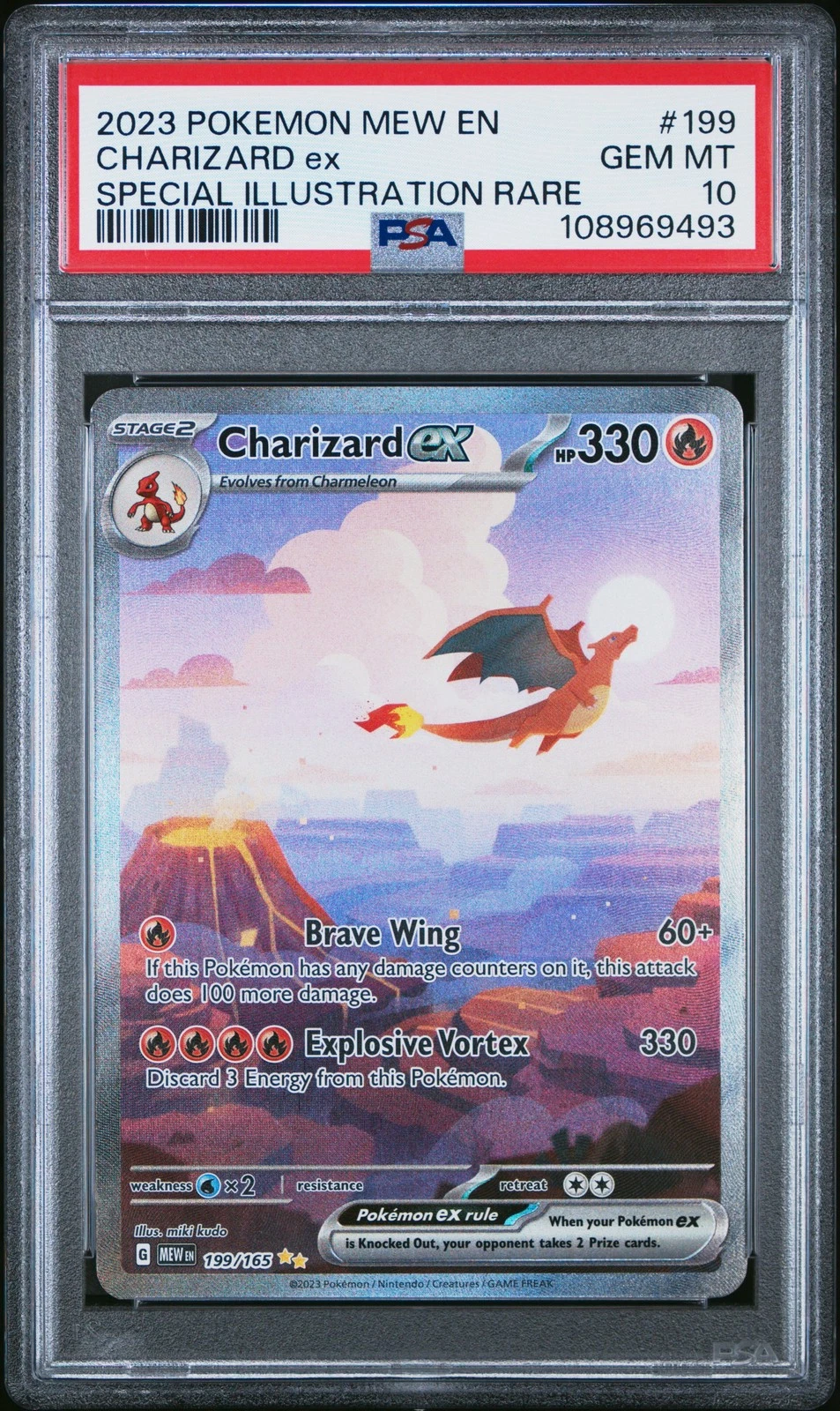
If you want to sell PSA graded Pokémon cards near Pearland, TX, walk into Sell Your Gadgets with your slabs. No appointment is needed, and a buyer prices each slab from live sold comps and pays cash on the spot. PSA, CGC, BGS, and SGC are all bought, each priced on its own comps, and a valid government photo ID is required.
Who buys graded Pokémon cards in Pearland, TX?
Sell Your Gadgets is a buyback store, so buying is what we do all day. Our Pearland store is a straightforward place to sell graded Pokémon cards: you bring the slabs, a buyer looks at them in person, and you leave with cash if the offer works for you. There is no listing to write, no shipping label, and no waiting on a stranger to click Buy.
Plenty of people searching for who buys PSA cards near them have already been burned by a lowball from a shop that quoted a flat percentage, or by an online sale that dragged on for weeks. We do it differently. Every slab is priced card by card, never at a flat bulk rate. Our Google rating is 4.8 from 103 reviews, and the common themes are an easy process, helpful service, and fair offers.
How we price a graded Pokémon slab
Our buyers use internal pricing tools that pull live sold comps. The comps that matter are for your exact slab, not for the card in general. That means four things have to match.
- The exact card. Name, number, and variant (holo, reverse holo, full art, alternate art, promo).
- The set and print. The same character can be worth wildly different amounts depending on set, edition, and print run, such as 1st Edition versus Unlimited in vintage sets.
- The grade. A 10 and a 9 of the same card are not neighbors in value. The gap can be large, and it differs card to card.
- The grader. A PSA 10 and a CGC 10 of the same card sell on separate comps, so we price them separately.
Why there is no flat rate
A flat rate only works for commodity items. Graded slabs are one-of-one assets, and two slabs that look alike in a photo can sit in very different price brackets. Pricing from real sold comps for that specific combination keeps the offer tied to what the market is actually paying, not to a guess or a rule of thumb.
What can move an offer up or down
- How recently and how often that exact slab has sold. Active, liquid comps give a firmer number.
- Popularity of the card and the character. Fan favorites tend to hold value better.
- Population of that grade, when it is publicly reported.
- Holder condition and label type.
- Eye appeal: centering, print lines, and how the card presents inside the case, especially on cards with a borderline grade.
We don't publish prices because they move constantly. For a starting point before you drive over, use our free quote form, or read more on our graded Pokémon cards page.
PSA vs CGC vs BGS vs SGC: what sellers should know
All four companies are accepted here. They are not equal in resale depth, though, and that affects how quickly a slab moves and how comps behave. This comparison uses only widely known facts and relative language.
| Grader | Label and holder | Subgrades | Resale depth for Pokémon |
|---|---|---|---|
| PSA | Red-and-white label on a clear holder; the best-known look in the hobby | Single overall grade on standard slabs | Typically the deepest pool of buyers and sold comps, so slabs tend to be the easiest to price and move |
| CGC | Clean label on a clear holder; a newer name in trading cards compared with PSA and Beckett | Subgrades appear on some labels and services | Growing steadily; comps are thinner for some cards, so values depend on the exact card and grade |
| BGS (Beckett) | Thicker holder with a distinctive label; known for the Black Label on top-tier cards | Four subgrades: centering, corners, edges, surface | Strong for high grades and collectors who value subgrades; a top-end Black Label can be a special case |
| SGC | Black-insert holder, often called the tuxedo slab | Single overall grade on standard slabs | Long history with vintage and sports cards; comps for modern Pokémon are generally thinner than PSA |
The takeaway for sellers: the number on the label is only half the story. A given grade from one company can sell differently from the same grade at another, which is exactly why we use grader-specific comps instead of treating a 9 as a 9.
How cert verification works in store
Every slab we buy is verified at the counter. A buyer checks the cert number printed on the label and confirms the holder is genuine and intact. We look for signs of tampering and confirm the card matches what the label says. Cert numbers can be checked against the grading company's public lookup, and that check is part of the process for all four graders.
How to look up your own cert before visiting
- Find the cert number on the label. Many labels also carry a barcode or QR code that leads to the lookup page.
- Open the grading company's website (PSA, CGC, Beckett, or SGC) and use its cert verification tool.
- Confirm that the card name, set, year, and grade shown online match your label exactly.
- Save a screenshot. Some lookups show images and population details, which are useful context.
- Check the holder in good light for cracks, lifted seams, or label wear, then bring it in as is.
If the lookup doesn't match the slab, that is a red flag worth knowing about before you spend time on a sale. If you can't find a cert, bring the slab anyway and we will walk through it with you.
Cracked holders, scratches, crossovers, and resubmission
Scratched or cracked holders
Light surface scratches on a clear case are common and usually matter less than people fear, because the grade belongs to the card, not the plastic. A cracked, split, or popped-seam holder is more significant. It raises questions about the card inside and can lower the offer. Do not open the slab yourself. Once you do, the grade is gone and the card is just a raw card. Bring the damaged slab in as it is, and the buyer will tell you how it affects the number.
Crossover submissions
A crossover means cracking a slab out of one company's holder and sending the card to another for regrading, hoping for an equal or better grade. It can make sense when a card sits in a holder with thinner resale demand and you believe it will hold its grade at a company with deeper comps. It is a gamble: the grade can come back lower, and you pay fees and wait. If you only want cash now, selling the slab as is will almost always be simpler.
Resubmission
Resubmitting means sending a graded card back to the same company for another look, usually when you think it deserves a higher grade. It is worth considering only for cards that are clearly strong candidates, where the upside from a higher grade is meaningful, and you can accept the wait and the risk. For most sellers who want to turn a slab into cash, the better move is to sell the slab in its current holder.
Selling one slab vs a graded collection
One slab is quick: verify the cert, check the comps, make an offer. A collection takes longer, but the process is the same. Each slab is priced individually from its own comps, and none of them gets bundled into a flat per-slab number.
- Bring everything together. It saves a second trip and lets the buyer see the whole picture.
- Sort in advance. Grouping by grader or set speeds up the count.
- Decide your keepers first. You are free to sell some and keep others. There is no all-or-nothing rule.
- Expect the headline cards to drive the offer. A few key slabs usually carry most of a collection's value, and the remainder is priced on their own comps.
If your collection includes iconic singles such as vintage holos or first-generation favorites, take a look at our page on selling rare and famous Pokémon cards.
Selling locally vs online, card shows, or consignment
Each route has real upsides. Which one is best depends on how much you value speed, certainty, and effort.
| Route | Upside | Trade-off |
|---|---|---|
| Local buyer (our store) | Cash the same visit, no shipping risk, cert checked in person, no buyer disputes | A buyer has to be able to resell, so a retail-level sale price is not the goal |
| Online marketplace | Reaches a very large audience; can suit rare or high-demand slabs | Listing time, platform fees, shipping and insurance, returns or disputes, and waiting for the payout |
| Card shows | Face-to-face with collectors and dealers; you can negotiate | Table or entry costs, a full day of your time, and dealers who also need room to resell |
| Consignment | Hands-off, and a good fit for premium slabs | The seller's cut comes out of the sale, and you wait until it sells |
The honest summary: if you have one standout slab and plenty of patience, an online sale or consignment may bring a higher gross number. If you want a clean, immediate result, or you have a stack of mid-range slabs that would each take work to list, a local cash sale is hard to beat. You can also get a quote first and compare it with other routes before deciding.
What to bring and how a visit works
- Bring your slabs, ideally in a rigid box or a protective case.
- Bring a valid government photo ID. It is required for every sale, a standard secondhand-dealer rule.
- Walk in at the Pearland counter. No appointment is needed.
- A buyer verifies each cert and holder and prices from live sold comps.
- If you accept the offer, you are paid cash on the spot.
Pokémon isn't all we buy. We also take raw cards (notable singles are priced individually, and true bulk is priced by the lot), plus sealed product. For sealed items, we inspect the shrink-wrap, seams, and weight in person to rule out resealing. Magic, Yu-Gi-Oh!, One Piece, Lorcana, and sports cards are bought too. For the broader picture, see our guide to selling Pokémon cards and collectibles.
Selling from nearby towns
Our Pearland counter serves sellers across the surrounding area. Here is how each nearby town fits in.
Fresno
Fresno households in Fort Bend County can get a free, in-person evaluation at our Pearland counter. That beats trusting a valuable slab to the mail, where one crushed corner or lost package can wipe out the value of a graded card. You can see the verification happen and hold the cash yourself.
Webster
Webster sellers in Harris County can make a quick drive west along FM 528 to our counter. If you are already clearing out upgraded phones, laptops, or gaming gear, you can bring graded Pokémon slabs along in the same trip. Read more on our Webster page.
League City
League City is a straight shot up the Gulf Freeway, so Bay Area sellers get a real person's offer at our Pearland store instead of a kiosk lowball. For graded cards that matters, because someone has to actually read the label and check the comps. See our League City page for more.
Missouri City
Missouri City residents in Fort Bend County can skip cross-town Houston traffic and head to Pearland for instant cash. It is an easy trip when you want a buyer to look at your slabs in person rather than negotiate through messages.
Sienna
Growing Sienna neighborhoods are just across the county line from Pearland. Collectors there can bring slabs in on any day of the week, get same-day cash, and skip the shipping and waiting that come with online sales.
Iowa Colony
As Iowa Colony and the Meridiana area grow, new residents bring their collections up Highway 288 to Pearland. It is a no-obligation way to find out what your slabs are worth to a buyer who prices each one individually.
Frequently asked questions
Who buys PSA cards near me in Pearland?
Sell Your Gadgets Pearland buys PSA slabs along with CGC, BGS, and SGC. Bring the cards in during store hours, and a buyer will verify the cert and price each slab from sold comps.
Can I sell CGC Pokémon cards here?
Yes. CGC slabs are bought and priced on CGC-specific comps, not on PSA numbers. The same applies to BGS and SGC, so you can sell BGS slabs near you without a separate process.
Do I need an appointment?
No. Walk in during opening hours. If you'd like a head start, you can request a free quote online first.
Will you take a slab with a cracked or scratched case?
Yes, we can look at it. Light case scratches usually matter less than a cracked or split holder. Don't open the slab yourself, since that removes the grade.
Do you pay a flat rate for graded cards?
No. Each slab is priced individually on the exact card, set, grade, and grader, using live sold comps. Flat bulk rates are not used for slabs.
What do I need to bring?
Your slabs and a valid government photo ID. It helps to look up your cert numbers beforehand, but it is not required.
Do you buy raw cards and sealed product too?
Yes. Notable raw singles are priced individually and true bulk is priced by the lot. Sealed product is inspected in person for shrink-wrap, seams, and weight to rule out resealing.
Ready to find out what your slabs are worth? Start with a free quote or just come in. Sell Your Gadgets Pearland is at 1921 N Main Street Suite 105, Pearland, TX 77581, open Monday through Saturday 10:00 AM to 7:00 PM and Sunday 11:00 AM to 5:00 PM. Bring your photo ID, call (713) 823-1269 with any questions, and walk out with cash on the spot.
Hear from a real customer
A real customer on their experience. Working or broken, get a free quote and walk out with cash the same day.
Compare your options
See how selling to us stacks up against other ways to sell, side by side.