When to Sell Your iPhone Before the New Release (Timing Guide)
By syedladen ·
The best time to sell your iPhone before a new release is usually the weeks leading up to Apple's September announcement, with August and early September being the sweet spot. Used prices tend to soften once the new lineup is official and thousands of upgraders list their old phones at the same time, so selling before that rush generally puts you in a stronger position.
This guide explains how the annual cycle works, how value changes by model age, when it makes sense to wait for trade-in promos, and how to avoid being phoneless between selling and unboxing. We never publish prices, so instead of made-up numbers you get a clear method: decide your date, get a free cash quote to see where your phone stands today, and sell before the market shifts.
How the Apple release cycle shapes used iPhone prices
Apple has followed a fairly consistent rhythm for years. The details shift a little, but the pattern is reliable enough to plan around.
- Spring and early summer: Nothing new from Apple on the iPhone front. The used market is steady, and the current flagship lineup is at its most settled.
- Summer rumor season: Leaks and analyst reports about the next model build. Casual buyers start to hold off, and upgraders begin thinking about selling.
- Early September: Apple typically sends out event invitations and then announces the new lineup. Preorders usually open within days, and phones reach customers about a week or so after that.
- Launch weekend and the following weeks: Trade-ins and sell-offs peak. Supply of last-generation phones surges while demand for them gets split with the new models.
- Late fall and holidays: The market absorbs the extra supply. Demand from gift buyers and deal hunters can steady prices for some models, but by then the new-release bump in supply has already happened.
The key insight is about supply and attention, not the phone itself. Your iPhone does not get worse on launch day. What changes is that many more identical phones hit the market, buyers have a shiny new alternative, and Apple often lowers the price of or discontinues older models, which resets what a used one is worth to the next owner.
Does iPhone value drop after a new release?
Yes, typically it does, and the drop is most noticeable for the previous-generation flagship. When the new model arrives, the phone that was "the latest" becomes "last year's," and that label matters to buyers. The value doesn't usually fall off a cliff on a single day, but it softens in the period around the announcement and continues to ease as the new model gains momentum.
Why the softening happens
- More supply: Upgraders sell or trade in at the same moment, so there are simply more used phones available.
- Anchoring: Shoppers compare a used flagship to the new one, and the gap in perceived freshness grows.
- New pricing tiers: When Apple shifts its own lineup pricing, used values reposition around it.
- Buyer timing: Some buyers wait to see if prices fall further, which can slow demand temporarily.
What doesn't change
Condition still matters more than the calendar for the exact amount. A clean, fully working phone with a good screen and solid battery health will generally hold up better than a cracked or heavily worn one at any time of year. Timing is an amplifier, not a substitute for condition. Even a broken iPhone can still be worth selling, and we do buy broken devices, but the earlier you sell, the better your odds of a stronger quote.
Value drop pattern by model age
Not every iPhone moves the same way around a launch. Age changes how much the new release affects you. Here is the general pattern, described in relative terms. For your actual number, a free quote is the only reliable answer.
| Your model's age | Typical effect of the new release | Timing advice |
|---|---|---|
| Current flagship (about one year old) | Most noticeable softening, since it becomes "last generation" overnight | Sell before the announcement if you're certain you're upgrading |
| Two years old | Moderate softening; already partly priced as older | Sell in August or early September; less urgency than a current flagship but still worth acting before the rush |
| Three years old | Gradual decline; the launch adds a smaller extra push | Timing matters less, but earlier still beats later |
| Four or more years old | Already on a slow decline; the launch barely changes the trend, while software support age increasingly shapes value | Sell when you're ready; condition and storage matter more than the calendar |
| Smaller or budget-line models | Less tied to the flagship cycle | Flexible timing; check a quote before deciding |
Two other factors shape this pattern. First, higher-storage and Pro-tier models tend to hold value better in relative terms than base models, though they can also show a visible shift when their successors arrive. Second, unlocked phones are generally easier to resell than carrier-restricted ones, which is one reason to check your lock status before you sell.
The best time to sell an iPhone: a month-by-month calendar
Use this calendar as a planning tool. It assumes the usual pattern of a September announcement; if Apple shifts its schedule, the logic still applies relative to the event date.
| Month | What's happening | Selling outlook |
|---|---|---|
| January–February | Post-holiday lull; fewer upgraders | Steady. A good time for anyone not tied to the September cycle |
| March–April | Quiet market; the current lineup is fully settled | Steady. Consider selling if you plan to skip a generation |
| May–June | Early rumors begin | Still strong. Sellers who are definitely upgrading can get ahead of the crowd |
| July | Rumors intensify; attentive buyers start to wait | Good. Still comfortably before the rush |
| August | Pre-event window; invitations likely close | Best window for most sellers. Supply is still normal, and you're ahead of the announcement |
| Early September (before the event) | Event invitation or announcement imminent | Last good moment. Sell before the keynote if possible |
| Announcement week | New models revealed; preorders open | Softening begins as sell-offs ramp up |
| Launch week and after | Peak trade-in and sell-off activity | Most competition from other sellers. Expect softer quotes than before the event |
| October–November | Supply continues to be absorbed | Settling. Stable but generally below pre-announcement levels |
| December | Holiday gifting | Demand for used phones can help, but the new-release effect is already in the price |
Selling your iPhone in August: why it's the sweet spot
If you've been searching "sell iPhone in August," you're thinking along the right lines. August combines several advantages that are hard to get at any other point in the cycle.
- Normal supply: The flood of trade-ins hasn't started, so your phone isn't competing with a wave of identical ones.
- Full-strength demand: Buyers still see your model as current or near-current.
- Time to prepare: You can back up, clean, and gather what you need without rushing.
- Flexibility: If you get a quote and it's not right, you still have time to adjust before the announcement.
The trade-off is obvious: if you sell in August, you may need a plan for the weeks until your new phone arrives. That is fixable, and we'll cover it below. For many people, the small inconvenience is worth it, especially when the phone in question is a recent flagship that's most exposed to the launch effect.
How far ahead is too far?
Selling in spring or early summer is fine if you're confident about upgrading, but it means living without your main phone for longer. The real gain comes from getting ahead of the September surge, not from selling as early as humanly possible. Most people find that the last several weeks of August and the days right before the keynote give the best balance of value and convenience.
Selling early vs waiting for trade-in promos
Every fall, carriers and retailers advertise generous-sounding trade-in offers. These can be genuinely good for some people, but they work differently from a straight cash sale, and the comparison isn't always obvious.
How trade-in promos typically work
- Credit, not cash: The value usually comes as a discount on the new phone or as bill credits, not money in your pocket.
- Conditions attached: Offers are often tied to a specific new model, a plan, a financing agreement, or staying with the carrier for a set period.
- Spread over time: Bill-credit deals may pay out month by month, so leaving early can mean losing the remaining credit.
- Condition rules: Phones with cracked screens or other damage may receive a lower credit or be rejected, depending on the program.
- Timing: You usually have to hand over the old phone when you get the new one, which keeps you phoneless for no time but also removes your flexibility.
Selling for cash instead
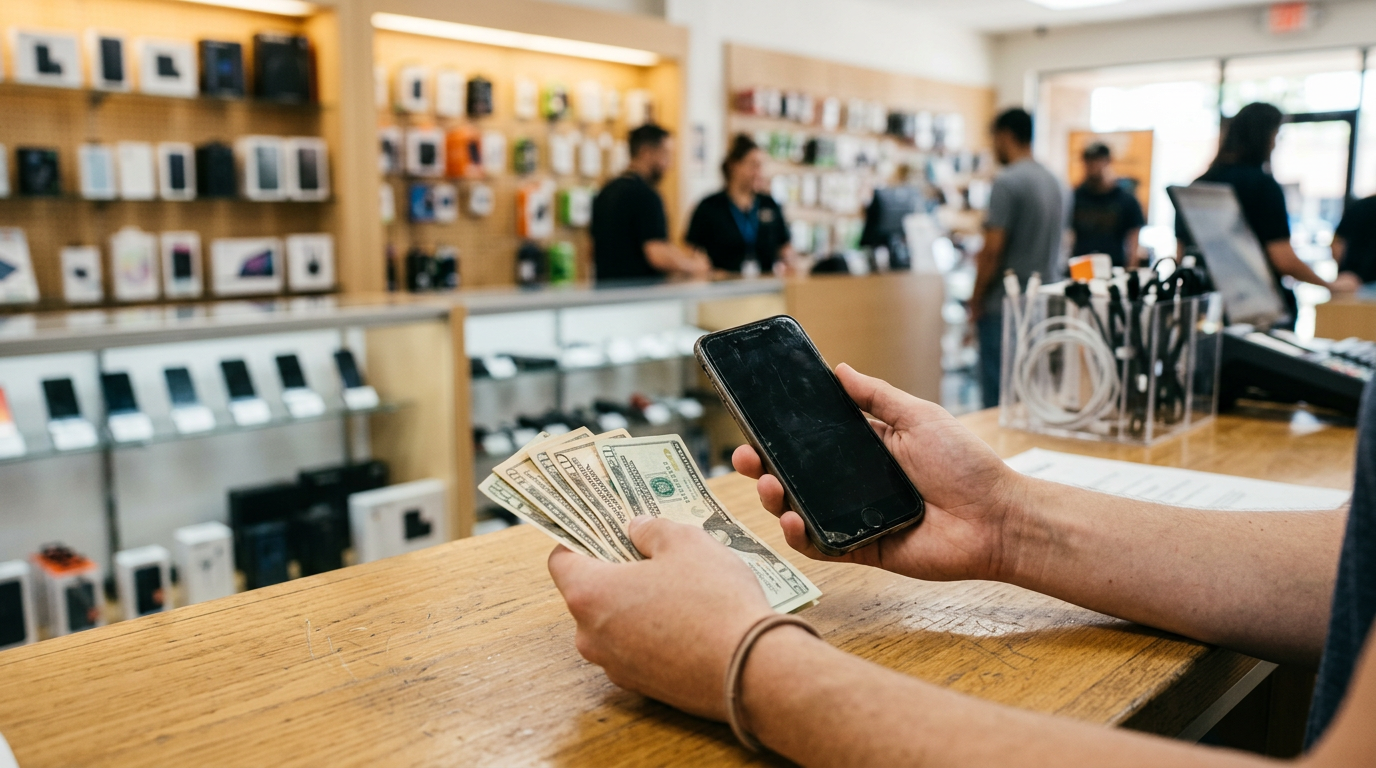
- Money is yours right away: You're paid on the spot and can use it however you like, including toward the new phone.
- No strings: No plan changes, no new contract, no multi-month credit schedule.
- Works with any purchase path: Buy unlocked, through Apple, or from a carrier, whatever suits you.
- Damaged phones welcome: We buy broken devices too.
| Factor | Sell for cash before launch | Wait for a trade-in promo |
|---|---|---|
| Form of value | Cash paid at the time of sale | Usually credit toward the new device or bill |
| Flexibility | High; choose any new phone or carrier | Often tied to a specific phone, plan, or carrier |
| Market timing | Sell before the supply surge | Promo terms are set by the provider, not by the used market |
| Damaged phone | Can still be quoted and bought | May be reduced or ineligible |
| Gap without a phone | Possible; needs a plan | Minimal; you swap at upgrade time |
The honest answer is that neither is always better. If a carrier is giving you a large credit that fits a plan you'd choose anyway, taking it can make sense. But it's worth getting a cash quote first so you have a real benchmark. A quote is free and carries no obligation, and it turns a vague "the promo seems good" into an actual comparison. You can start on our iPhone selling page.
Bridging the gap between selling and receiving your new phone
The biggest reason people wait too long is the fear of being without a phone. There are several practical ways to handle it.
Option 1: Sell after you get the new phone, but plan to do it fast
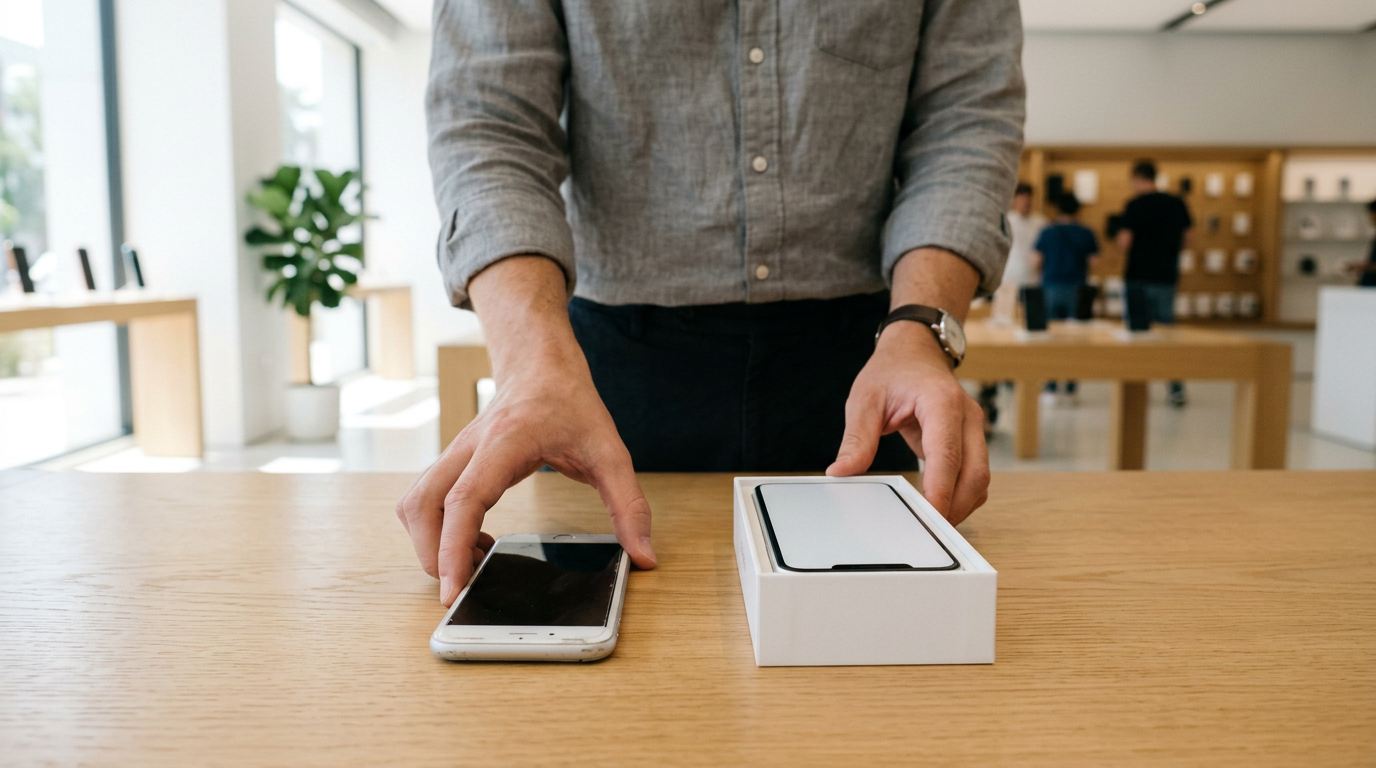
Preorder on announcement day, then sell your old phone the moment the new one arrives and is set up. This avoids any gap but means selling at launch-period softness. It's the most convenient path and usually the least lucrative.
Option 2: Sell during the preorder window
Sell right after the announcement, while your new phone is on the way. The gap is typically about a week or so, since phones ship or become available shortly after preorders open. You'll have given up the pre-announcement timing, but you'll be selling before the launch-day wave of trade-ins arrives.
Option 3: Sell in August and use a backup phone
This is the strategy for maximum value. Sell in August or just before the keynote, then cover the few weeks until your new phone arrives with:
- An older phone from a drawer, even a cracked or slow one
- A inexpensive prepaid handset
- A family member's spare device
- A temporary eSIM or SIM transfer, if your carrier supports it
Setting up the new phone without the old one
You do not need to keep your old iPhone to move to a new one. A recent iCloud backup lets you restore everything on the new phone. Just make sure the backup is complete and current before you sell. Also check for apps that need extra steps, such as authenticator apps, banking apps, and messaging apps with their own transfer processes. Sort those out before you hand over the phone, not after.
Timing the sale to the delivery
If you buy in person, you can often sell your old phone the same day you pick up the new one. Our stores are walk-in with no appointment needed, and you can find the closest one on our locations page. If you're ordering online and want to sell before delivery, plan your sale for the day or two before the expected arrival.
Your pre-sale checklist
Whenever you sell, a little preparation protects your privacy and avoids delays. Here is the sequence experienced sellers follow.
- Back up first. Make a full iCloud or computer backup and confirm it finished. Check that photos and messages are in it.
- Move your two-factor codes. Transfer authenticator apps and any other credentials that live only on the phone.
- Unpair your Apple Watch. This turns off Activation Lock on the watch and saves a fresh watch backup.
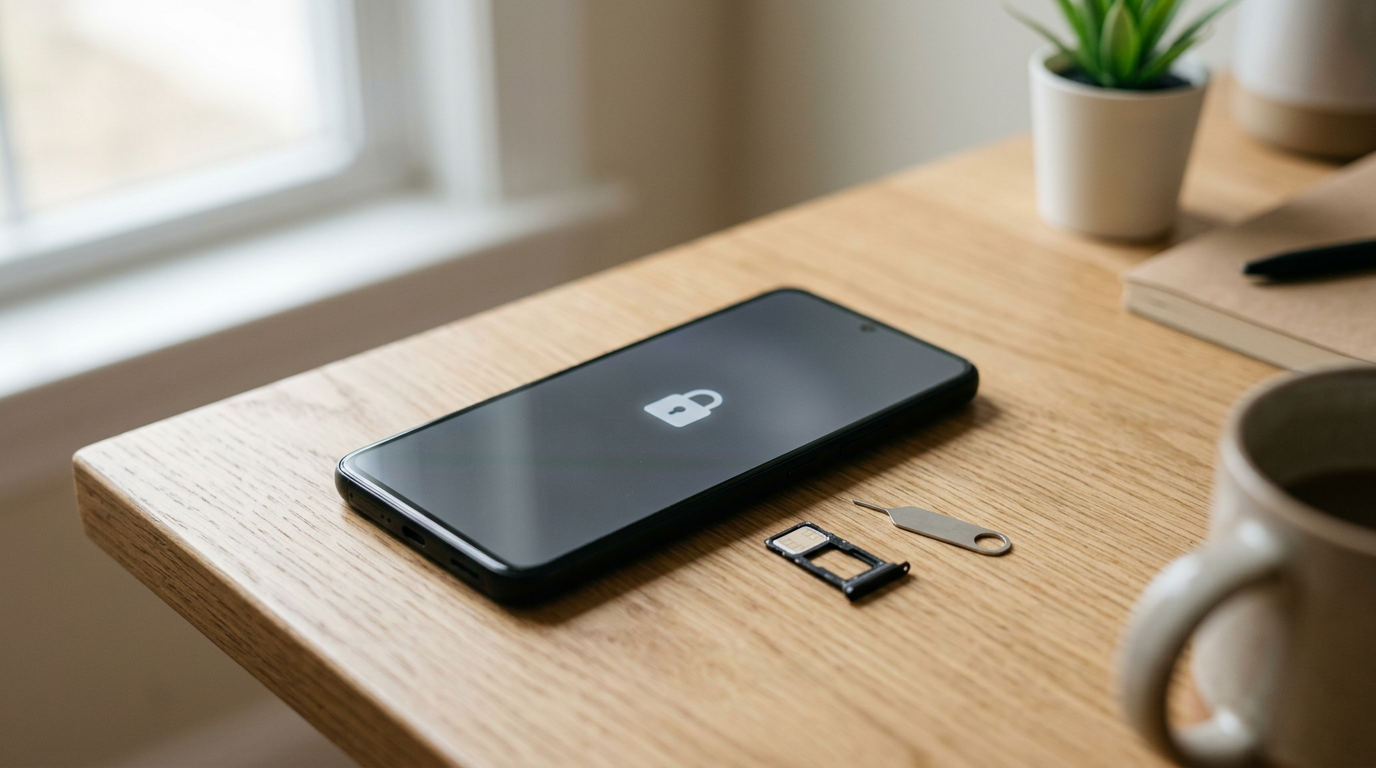
- Transfer or remove your SIM or eSIM. Confirm your number is ready for the new phone.
- Sign out of your Apple ID and turn off Find My iPhone. This is essential. We do not buy devices that are iCloud or Activation locked.
- Check carrier status. If the phone is on a payment plan, make sure it's in good standing. We cannot buy devices that are blacklisted or reported lost or stolen.
- Note the condition honestly. Look at the screen, back glass, frame, cameras, buttons, and battery. The more accurately you describe it, the closer your final offer will be to your quote.
- Bring valid government photo ID. We require it for every sale.
You don't have to factory reset the phone yourself if you'd rather not; we provide a free data wipe in store. You can read more about the full process on our how it works page.
Things that can wreck your timing
- Waiting for the "perfect" moment: The market rarely rewards waiting once the keynote has passed. A good decision this week usually beats a perfect one next month.
- Letting condition slip: Carrying a phone without a case or screen protector for another month can cost more than the calendar ever would.
- Forgetting Activation Lock: An iCloud-locked phone can't be bought. Fix it before you visit, not at the counter.
- Unpaid financing: A phone with an outstanding balance or a flag from the carrier can cause problems. Confirm its status early.
- Skipping the quote: Without a quote, you're guessing. Checking takes a couple of minutes online or by text.
A simple decision guide
If you're still unsure, use these questions:
- Are you certain you're upgrading? If yes, aim for August or before the keynote. If no, timing pressure is lower.
- Is your phone a current or one-year-old flagship? If so, it's the most exposed to the launch effect, so lean earlier.
- Do you have a backup phone? If yes, sell early. If no, sell during the preorder window or when the new phone arrives.
- Is a trade-in promo a better fit? Compare it against a real cash quote before deciding.
- Is your phone damaged? Don't wait; condition rarely improves and cash quotes for damaged devices are available.
Frequently asked questions
When is the best time to sell an iPhone?
For most people, the best time is shortly before Apple's September announcement, which makes August and early September the prime window. Used supply is still normal then, and buyers still see current models as current. If you aren't tied to the upgrade cycle, steady periods like spring also work well.
Does iPhone value drop after a new release?
Generally, yes. Values tend to soften around the announcement and launch as more used phones enter the market and the previous model loses its "latest" status. The effect is strongest for the most recent flagship and smaller for older models that are already on a slower decline.
Should I sell my iPhone before or after the new one comes out?
If you can manage without a phone briefly, before is usually better for value. If you can't be without a phone, selling right after you receive the new one is the convenient choice, though you may see softer quotes. A middle path is to sell during the preorder window.
Is it worth selling my iPhone in August?
Usually, yes, especially for a recent model. You avoid the September rush and have time to prepare. Plan a backup phone for the short gap until your new one arrives, and back up everything before you sell.
Is a carrier trade-in better than selling for cash?
It depends on the offer. Carrier trade-ins often pay in credit, sometimes tied to plans or multi-month bill credits, while a cash sale gives you money immediately with no conditions. The best way to decide is to get a free cash quote and compare it with the promo's actual terms.
Can I sell my iPhone if the screen is cracked or it won't turn on?
Yes. We buy new, used, and broken devices, so damage doesn't rule you out. Condition affects the quote, so it helps to describe the phone accurately. The phone must not be iCloud or Activation locked, reported lost or stolen, or blacklisted.
Do I need an appointment to sell my iPhone?
No. Our stores take walk-ins, and you can get a quote online, by text, or in person. Bring a valid government photo ID. If you're far from a store, a mail-in option is available.
Planning to upgrade this September? Get your free quote now, see where your iPhone stands before the launch rush, and get paid on the spot when you're ready to sell.
Hear from a real customer
A real customer on their experience. Working or broken, get a free quote and walk out with cash the same day.
Compare your options
See how selling to us stacks up against other ways to sell, side by side.