Sell Pokémon Cards Near Me in Irvington, NJ: Local Guide
By syedladen ·
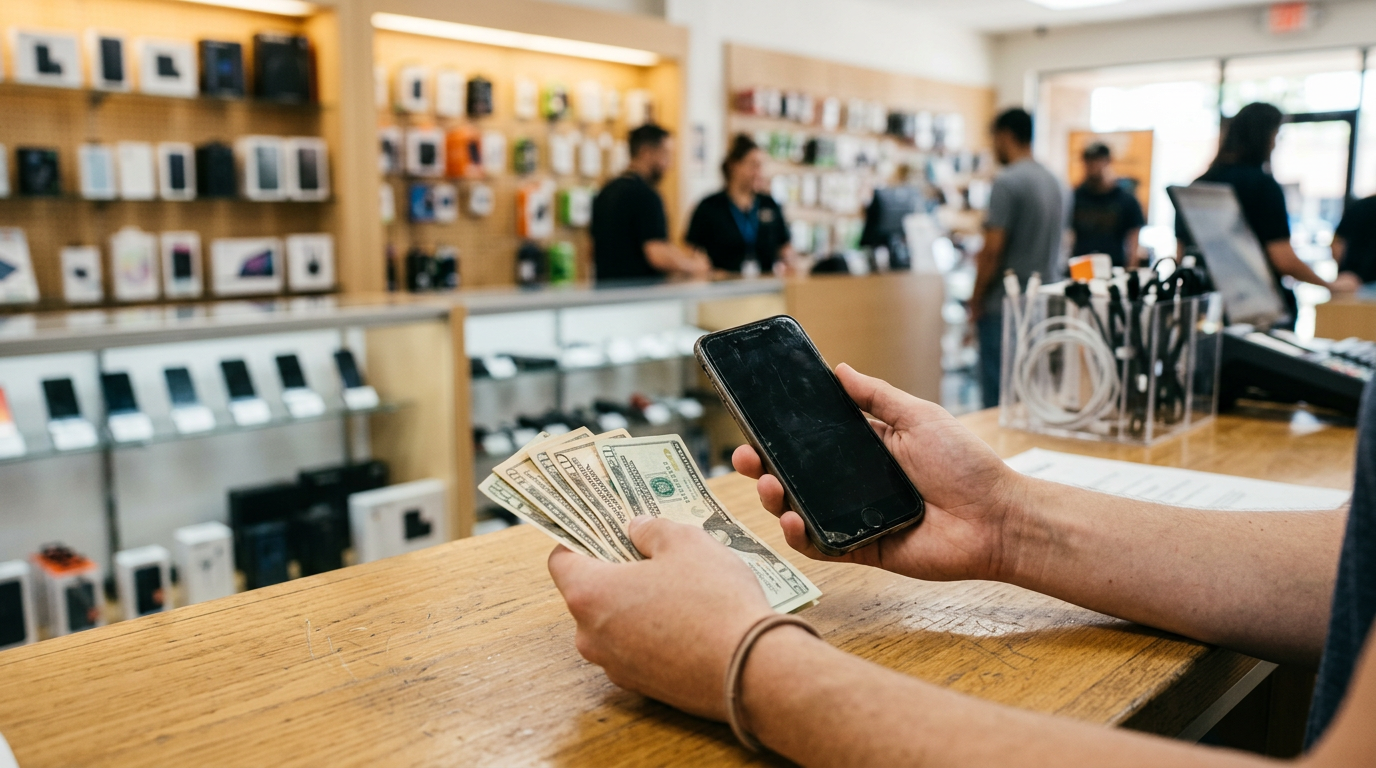
If you want to sell Pokémon cards near Irvington, NJ, bring them to Sell Your Gadgets on Springfield Ave for a free quote and a face-to-face look, with cash paid on the spot if you like the offer. Sports cards and other trading card collections follow the same process: sort them roughly, protect them, and start with a quote so we can tell you how we would handle your collection.
We are an electronics buyback store first, so we are not a card shop with glass cases and a trade wall. What we are is a local buyer who pays cash, explains the offer in plain language, and does not make you wait on an online marketplace. This guide covers who actually buys card collections, how to think about bulk versus singles versus graded versus sealed, how to spot the cards that matter, and what to bring.
Who buys card collections near Irvington?
If you search for who buys card collections, you will find four basic options, and each suits a different seller.
- Dedicated card shops. They know the hobby well and often prefer store credit or cherry-picking the best singles. Some will not touch bulk.
- Online marketplaces. Selling card by card can bring strong results for individual high-demand cards, but it means photographing, listing, packing, shipping, and dealing with buyers and disputes. It is a part-time job.
- Card shows and conventions. Good for face-to-face negotiation, but you are tied to a date, a table, and a crowd.
- A local cash buyer. This is where we fit. You walk in, we review what you have, and you leave with an answer the same day instead of a listing that may sit for weeks.
None of these is wrong. The right choice depends on whether you value speed and simplicity or are willing to spend time squeezing out every possible dollar from a handful of standout cards. Many sellers split their collection: the few chase cards go the slow route, and the rest go to a local buyer in one visit.
Bulk vs singles vs graded vs sealed
Before you call or walk in, figure out which bucket your cards fall into. The buyer will think in these categories, and the way you present them changes how smooth the conversation is.
| Category | What it looks like | How it is usually valued | Best prep |
|---|---|---|---|
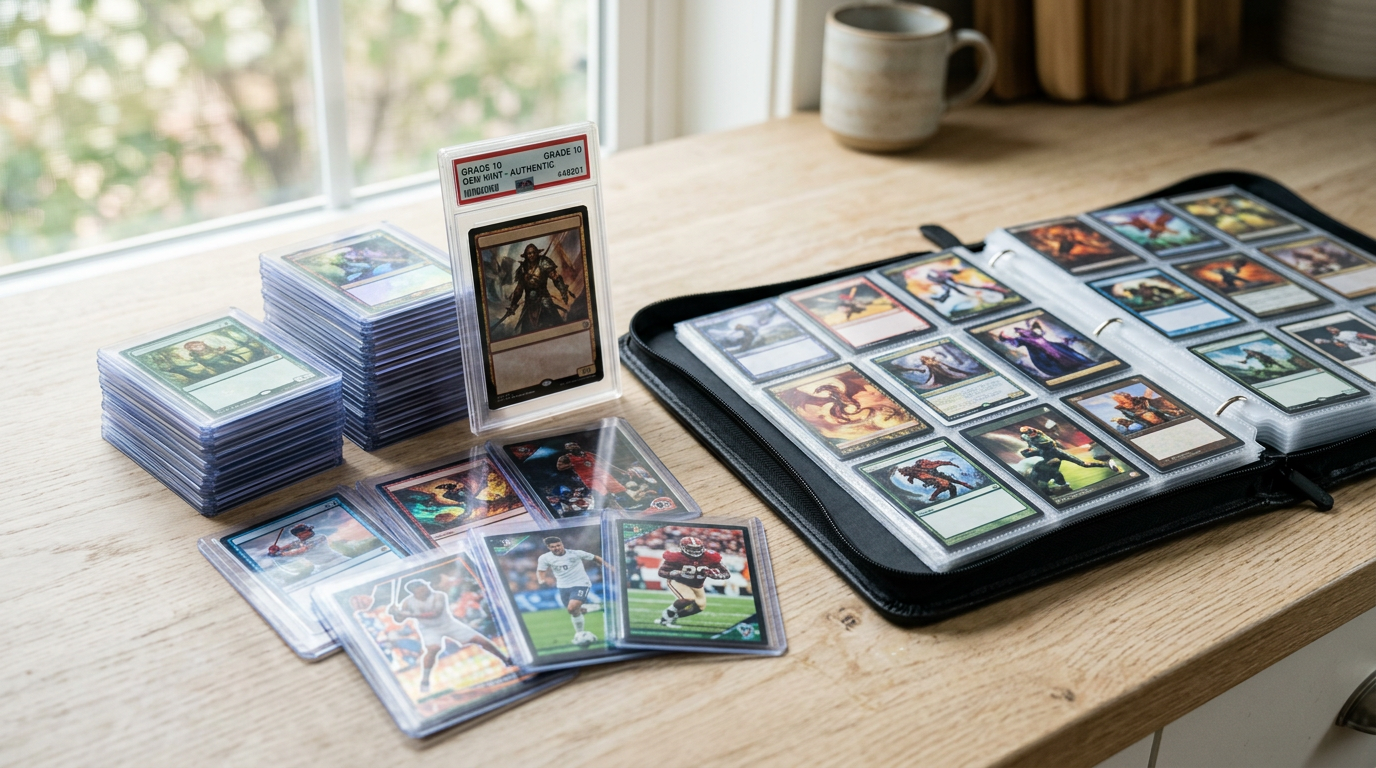
| Bulk | Boxes of commons, uncommons, and basic energy or base cards | Noticeably lower per card; often judged by volume and by whether hidden better cards are mixed in | Pull out anything you know is special, keep the rest together by game or set |
| Singles (raw) | Ungraded cards in sleeves or binders: holos, rares, rookies, autographs | Card by card, based on demand, condition, and edition | Sleeve them, sort by set or player, avoid loose stacks |
| Graded | Cards in sealed slabs from a grading company | Grade and card both matter; slabs take away much of the condition guesswork | Keep slabs in a padded case, check the label and cert number |
| Sealed | Booster packs, booster boxes, trainer boxes, factory-sealed sets | Depends on the product, the set, and how clean the packaging is | Do not open anything; protect corners and shrink wrap |
Bulk: worth selling, but set expectations
Bulk is the part of a collection most people overestimate. A box of thousands of commons usually holds modest value as a whole because any single common is easy to find. Where bulk earns its keep is when it is mixed with better cards. That is why a quick look through the box matters more than a headline number of how many cards you have.
Singles: where the real value hides
Raw singles are the heart of most collections. A holographic rare from an older set, a rookie card of a player who later became a star, or a numbered parallel can be worth far more than a whole shoebox of filler. If you have a mix, our page on selling raw Pokémon cards explains how we look at ungraded cards.
Graded: the slab does some of the talking
Cards graded by well-known companies such as PSA, Beckett, or CGC arrive with an independent condition opinion, which makes pricing more straightforward. Higher grades on in-demand cards hold value better than mid-grade slabs of common cards. If you are holding slabs, see selling graded Pokémon cards for what to have ready.
Sealed: leave it sealed
Sealed product is one place where doing nothing is the right move. Opening a pack can turn a collectible into a gamble. Keep boxes away from moisture, sunlight, and crushed corners, and bring them in as they are.
How to identify valuable cards
You do not need a price guide memorized to get a rough sense of what is in your collection. You need to know what to look for.
Pokémon and other trading card games
- Age and set. Early-era sets and discontinued printings tend to draw more interest than recent mass-printed ones.
- First edition or limited stamps. Small markings on the card can separate a common version from a far more sought-after one.
- Holographic and full-art cards. Shiny does not always mean valuable, but rare holos of popular characters usually deserve a closer look.
- Fan-favorite characters. Charizard is the famous example, but other popular characters carry a premium too.
- Promos and tournament cards. Limited-distribution cards can be scarcer than their look suggests.
Sports cards
- Rookie cards. A player's first major-set card is typically the one collectors want most.
- Autographs and game-used memorabilia. Look for on-card signatures and patch or jersey pieces, ideally with authentication.
- Serial numbering. Cards stamped with a limited run, like 10 of 25, are scarce by design.
- Older vintage cards. Condition is everything here, and even small creases change the picture significantly.
Condition is the great multiplier
Two copies of the same card can have very different values. Whitening on the edges, soft corners, surface scratches, and off-center printing all pull a card down. Hold each card under a bright light and tilt it. If you see dents, scuffs, or bends, expect that to show up in the offer. It is nothing personal; it is how the market treats condition.
What to bring when you sell
A little prep goes a long way. Collections that arrive organized are easier to review and usually get a quicker, cleaner answer.
- Valid government photo ID. Required for every sale, as with any secondhand-dealer transaction.
- Sorted binders. Cards already in binder pages can be flipped through quickly. Keep sets and players together.
- Top loaders and sleeves. Put your best singles in penny sleeves and top loaders so they survive the trip without bent corners.
- Graded slabs in a padded case. Do not toss them in a bag with keys or a phone.
- Sealed product in its original state. Bring boxes in a sturdy bag or box so the corners stay crisp.
- A short list of your chase cards. If you already know the five cards you care about, tell us up front.
- Any receipts or certificates. Proof of authentication on autographs or memorabilia helps.
Do not clean your cards
Do not wipe, polish, or press cards to fix them. Rubbing a surface can leave marks that are worse than the dust you were trying to remove. Bring them as they are.
How selling works at Sell Your Gadgets
The process is simple, and it is the same one we use for phones, laptops, and consoles.
- Get a free quote. Use the online form, send a text, or simply walk in. For a large collection, a few clear photos of your best cards help us set expectations.
- Bring it in for inspection. We look through what you brought and explain what stands out and what does not.
- Get paid cash on the spot. If you accept the offer, you leave with cash. No appointment is needed.
Reviewers often mention that the person at the counter explained everything clearly and treated them kindly, including first-time sellers. That matters with collectibles, where people are often unsure what they have. You can see the store details and hours on the Sell Your Gadgets Irvington store page.
Selling sports cards and other collections
People searching for where to sell sports cards near them usually have one of three situations: a childhood shoebox, an inherited collection, or a hobby stack they are ready to move on from. The approach is similar across all three.
- Separate by sport or game. Baseball, basketball, football, hockey, Pokémon, Magic, and Yu-Gi-Oh! each have their own markets.
- Pull out stars and rookies. Do this before you bring a long box, so the best cards get attention first.
- Keep sets together when complete. A complete set can be worth more as a set than as scattered cards.
- Start with a quote for unusual items. Because we are an electronics buyback store, send us a message or photos first if your collection is very specialized, like vintage memorabilia or large sealed wax lots. We will tell you honestly whether it is a fit.
Local cash vs online vs a card shop
Here is a fair comparison so you can choose what suits you.
When a local cash sale makes sense
It is a good fit if you want a same-day answer, do not want to ship anything, or have a mixed collection that would take weeks to list one card at a time. You trade a little of the theoretical top-of-market value for speed, certainty, and zero hassle.
When another route might win
If you have a small number of very high-demand cards, especially graded ones, patient selling online or at a specialty shop may net more, because you can reach collectors searching for that exact card. Just remember the real costs: fees, shipping, time, and the risk of a dispute. A reasonable strategy is to sell the prize pieces the slow way and the rest in one visit locally.
Why trade-in credit is not the same as cash
Some shops offer store credit that looks higher than a cash offer. That can be great if you will spend it there. If you want money for rent, a new device, or anything else, credit is worth less to you than its face value. Ask which one you are being offered and compare like with like.
Selling from nearby towns
Irvington sits at a convenient crossroads, and we see sellers from all around Essex and Union counties. Here is how it tends to work for each.
Newark
Newark is right next door, so it is one of the easiest trips for anyone clearing out a collection. If you are carrying binders and slabs, the short ride means less time with valuable cards in transit. We also cover selling electronics in Newark, so you can bring an old phone or console along with the cards.
West Orange
West Orange households tend to have a mix of things in the attic or basement: old cards, consoles, tablets, and more. The drive is short, and there is no pressure, just a quote and a straight answer. Take a look at selling electronics from West Orange if you are cleaning out more than cards.
Kenilworth
Kenilworth sellers come for a person, not a kiosk or an automated offer. With collectibles, that human conversation matters, because someone has to actually look at condition and explain the offer. See selling electronics in Kenilworth for the rest of what we buy.
Millburn
Millburn and Short Hills sellers often bring premium gadgets, but many also have a kid's or a collector's card binder sitting at home. Combine both into one trip and one conversation. Our page on selling electronics in Millburn covers the device side.
Mistakes that cost collectors money
- Selling before sorting. A quick pass to pull out rookies, holos, and slabs can change the whole conversation.
- Loose cards in a bag. Corners and surfaces get damaged in transit, and condition is most of the value.
- Opening sealed product. Once it is open, you cannot undo it.
- Assuming old means valuable. Age helps, but print runs and demand matter more than the date on the card.
- Forgetting ID. No valid government photo ID, no sale.
- Expecting a number before anyone has seen the cards. Honest offers depend on the actual condition in hand, which is why we point you to a free quote instead of posting a figure.
Frequently asked questions
Where can I sell Pokémon cards near me in Irvington, NJ?
You can bring them to Sell Your Gadgets at 1056 Springfield Ave Store A. Start with a free quote online, by text, or by walking in. We review the cards in person and pay cash on the spot if you accept.
Do I need an appointment to sell trading cards?
No. Walk-ins are welcome during store hours. If you have a very large collection, sending a few photos ahead of time can help us prepare.
Should I get my cards graded before selling?
Not necessarily. Grading takes time and has fees, and it only makes sense for cards that are likely to come back in high condition and have solid demand. If you are unsure, bring the cards raw and ask for a quote first. A buyer can often tell you which, if any, are worth grading.
Can I sell sports cards and Pokémon cards in one visit?
Yes. Sort them by sport or game and bring them together. Mixed collections are common, and it is easier to look through everything in a single visit than to spread it over several.
What ID do I need to sell?
A valid government-issued photo ID is required for every sale. This is a standard secondhand-dealer rule and applies to every customer.
Should I take cards out of their binder or sleeves?
No, leave them as they are. Pages and sleeves protect the cards and make it quicker to look through them. Only remove a card if it is stuck or damaged by where it is stored.
How do I find out what my collection is worth?
The most reliable way is to have someone inspect it. We do not publish prices because condition and demand change the answer card by card. A free quote is the fastest way to find out.
Ready to sell? Request your free quote at our quote page, then visit Sell Your Gadgets Irvington at 1056 Springfield Ave Store A, Irvington, NJ 07111, near Springfield Ave at New St. We are open Monday through Saturday from 10:00 AM to 7:00 PM and Sunday from 11:00 AM to 5:00 PM, or call (862) 233-7448 with questions before you come in.
Hear from a real customer
Why they chose Sell Your Gadgets. Working or broken, get a free quote and walk out with cash the same day.
Compare your options
See how selling to us stacks up against other ways to sell, side by side.