Sell Pokémon Cards Near Me in Astoria, NY (Cash, Walk-In)
By syedladen ·
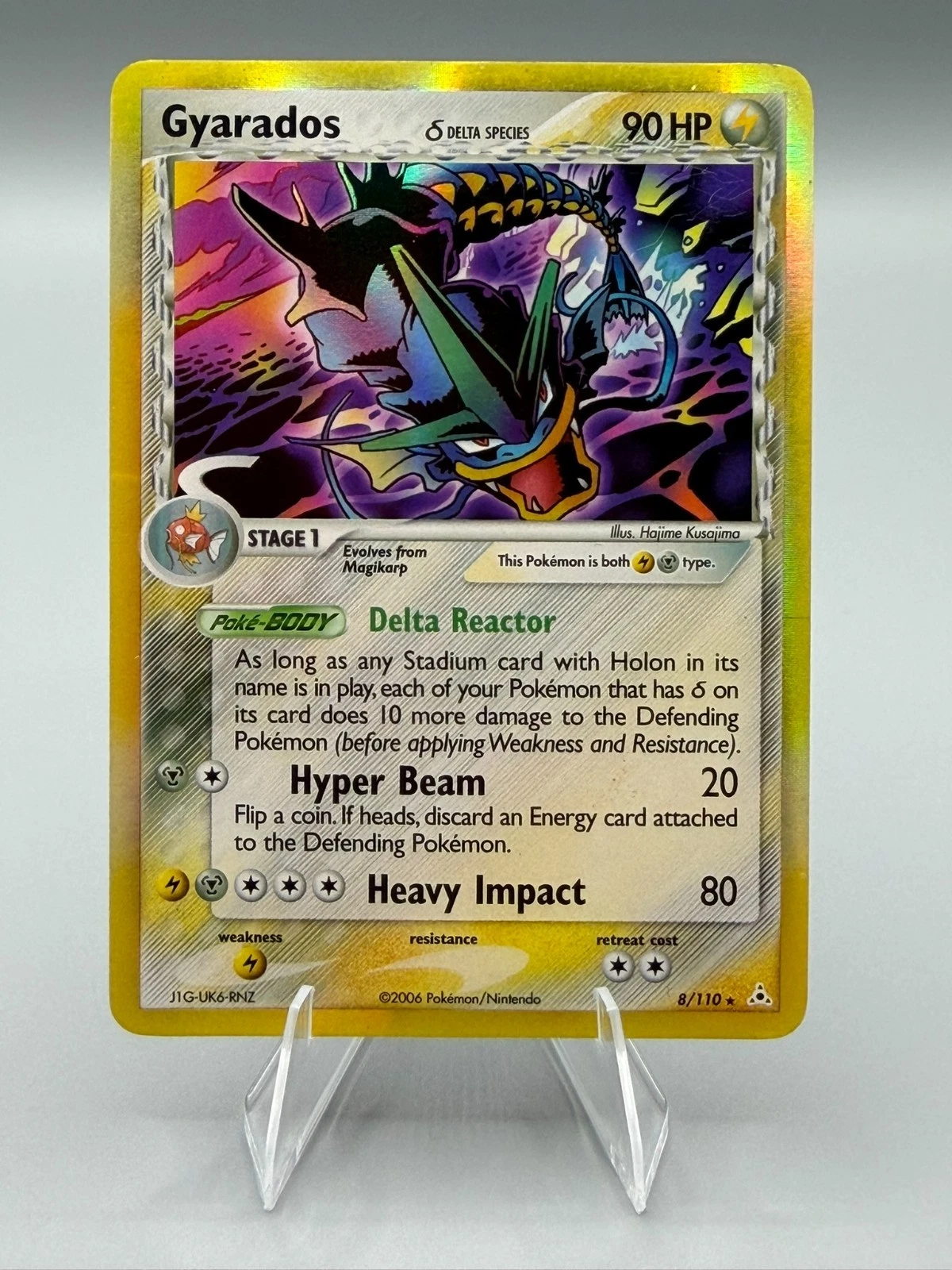
If you want to sell Pokémon cards near you in Astoria, NY, walk into Sell Your Gadgets Astoria on Steinway St with your cards and a valid photo ID. No appointment is needed, a buyer prices your cards one by one from live sold comps, and you are paid cash on the spot.
How selling Pokémon cards works at our Astoria store
We are an electronics buyback store, and we buy trading cards the same way we buy devices: in person, quickly, and with a clear explanation of the offer. You bring the cards, a buyer goes through them with you, and if you like the number, you walk out with cash. There is nothing to ship and no waiting on a mailed check.
Here is the short version of how we handle Pokémon:
- Walk in with the cards. No appointment, no minimum collection size.
- Card-by-card pricing. Our buyers use internal pricing tools that pull live sold comps. We never use a flat bulk rate on cards that are worth more than bulk.
- Notable raw singles are priced individually. True bulk, meaning the commons, uncommons, and played-out filler, is priced by the lot.
- Graded slabs and sealed product are handled separately, which is covered below.
- Valid government photo ID is required for every sale. That is the standard secondhand-dealer rule, not something specific to you.
If you would rather get a feel for things before you travel, you can send details through our free quote form. Final numbers on cards always depend on seeing them in hand, since condition decides a lot.
How to spot the valuable cards in a collection
Most people who bring in a childhood collection are surprised by which cards matter. The cards with the biggest art or the highest hit points are often not the ones that carry value. Here is what to look at first.
Set symbol and card number
The small set symbol sits in the lower corner of the card, usually near the card number on the bottom edge. Together, the symbol and the number tell you exactly which printing you hold. The same Pokémon can exist in a dozen sets with very different demand. Card numbers also matter: if the number is higher than the set total printed beside it (for example, a number that exceeds the set size), you are usually looking at a secret rare, alt-art, or special illustration card, and those deserve a closer look.
Rarity symbol
Next to the set number you will find a rarity symbol on most cards: a circle for common, a diamond for uncommon, a star for rare. Newer sets use more detailed rarity markings, and the top tiers are where the strongest singles tend to live. A star on its own is not a jackpot, but a card with a rare symbol and a special finish is worth setting aside.
Holo versus reverse holo
A traditional holo has the shiny effect inside the art window, with the rest of the card flat. A reverse holo is the opposite: the art is flat, and the shine covers the border and body of the card. Reverse holos are usually more common than the holo version of the same card, though there are exceptions in older sets. Keep both versions in your pile and let the comps decide.
1st Edition stamp and Shadowless
Early English-language sets carry a small 1st Edition stamp on the left side of the card, just below the art. Right after that early print run, there was a version known as Shadowless, where the art box has no drop shadow along its right edge and the border looks flatter. Both of these generally command a premium over later unlimited prints of the same card, assuming condition holds up. If you spot either one, do not sort it into a shoebox and do not let anyone flip through it carelessly.
Alt-arts and special illustration rares
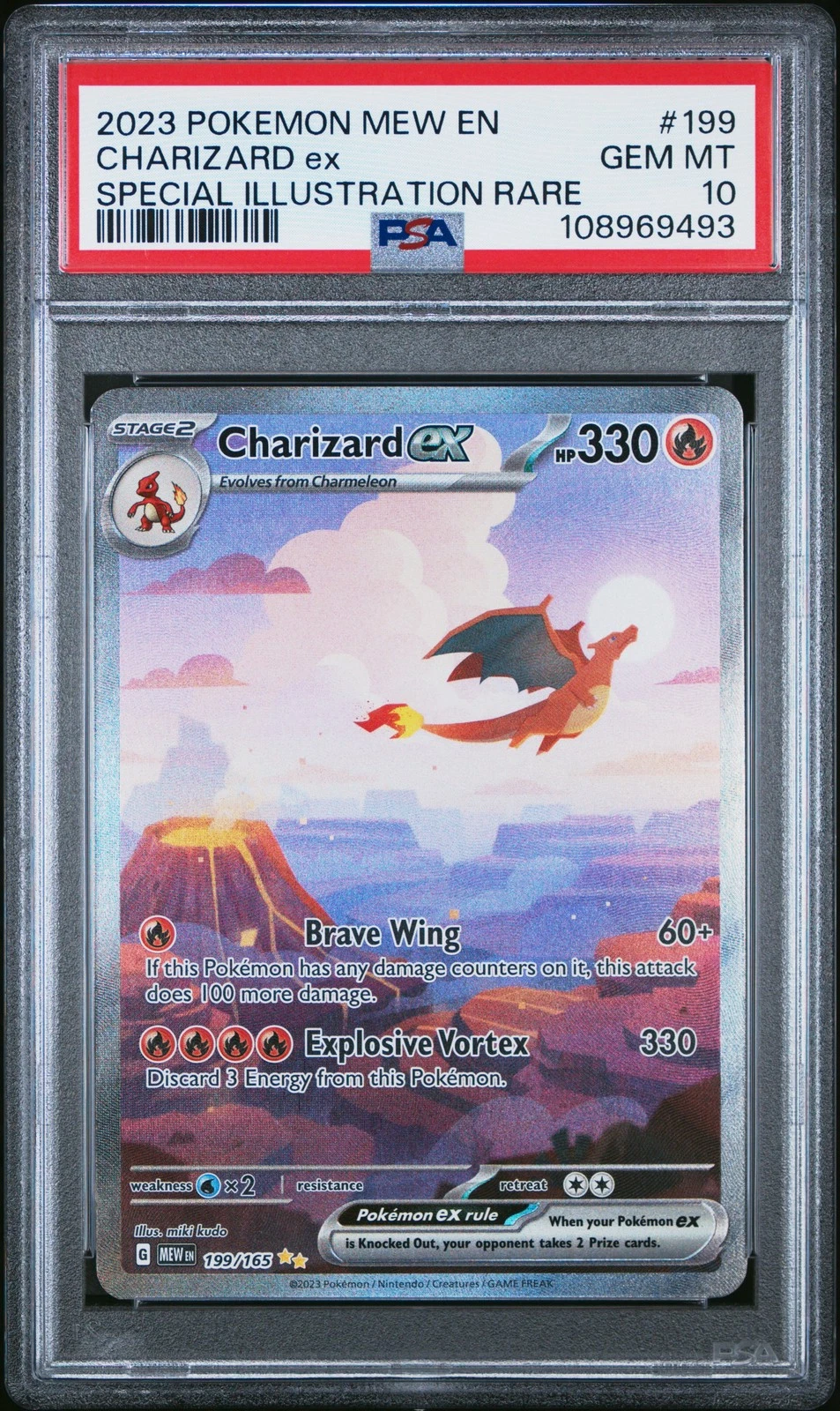
Modern sets include full-art cards where the illustration spills across the whole frame, sometimes telling a small scene around the Pokémon. These alt-arts and special illustration rares are some of the most sought-after modern cards. They are easy to spot because the art looks different from everything else in the binder. They are also easy to damage, since their surfaces scratch and their edges whiten with handling, so protect them first.
Condition guide: what buyers look at
Condition is the second half of every price. Two copies of the same card can sit far apart in value depending on how they have aged. This table shows what each grade level generally looks like, which is the same lens a buyer uses at the counter.
| Condition | Corners | Edges | Surface | Centering |
|---|---|---|---|---|
| Near Mint | Sharp, with at most a barely visible touch of wear | Clean, with little to no whitening | Glossy, with no scratches or creases; maybe a tiny print line | Reasonably even borders; minor offset is normal |
| Lightly Played | Slight rounding or small white flecks | Light whitening along a few edges | Minor scuffs or light scratches visible in angled light | May be noticeably off, but the card is still sound |
| Moderately Played | Visibly rounded or softened | Obvious whitening on most edges | Clear scratching, scuffing, or light dents; no deep creases | Often uneven; can be obvious at a glance |
| Heavily Played | Heavily worn, bent, or frayed | Widespread whitening, nicks, or chipping | Creases, heavy scratches, or surface wear across the art | Often significantly off-center |
| Damaged | Torn, crushed, or missing material | Peeling, tearing, or severe chipping | Water damage, deep creases, writing, stickers, or residue | Not a useful factor at this stage |
A quick home test: hold the card under a bright lamp and tilt it. Scratches, dents, and print lines show up much better in angled light. Do not try to clean or rub a card to improve it, because that usually makes the surface worse.
How singles and bulk are priced in one visit
People often ask whether we will just buy everything for one number. We do not price valuable cards that way, because that would shortchange the cards that matter. Here is what a typical visit looks like:
- Quick sort. The buyer goes through your binder or box and separates notable singles from bulk.
- Singles priced one by one. Each notable card is identified by set, number, and finish, then checked against live sold comps in our pricing tools and adjusted for condition.
- Bulk priced by the lot. What is left, the true bulk, is counted or weighed as a group and priced together, because individually pricing thousands of low-demand cards is not meaningful.
- One combined offer. You see how the singles and the bulk add up, and you decide whether to accept.
If you are specifically asking how to sell bulk Pokémon cards, expect bulk to be priced noticeably lower per card than singles, since there is far less demand behind it. The best thing you can do is pull out anything you suspect is a good single before you come in, or at least keep your binder organized so the buyer can find them quickly. Details on our approach live on our raw Pokémon card page.
Sealed product and graded slabs
Sealed product
Booster boxes, packs, and tins are inspected in person. Our buyers look at the shrink-wrap, the seams, and the weight to rule out resealing, which is a real problem in the sealed market. That is why sealed items need to be seen at the counter rather than priced from a photo.
Graded cards
If you already own slabs, we buy PSA, CGC, BGS, and SGC. The cert number and holder are verified in store, and each slab is priced on its own comps, because a grade from one company does not sell exactly like the same grade from another. You can read more on our graded Pokémon card page, or see everything we take in on the broader Pokémon cards and collectibles page.
Should you grade your cards first?
This is the question we hear most, and the honest answer is: sometimes, but not as often as people hope. Grading can raise the value of a strong card in clean condition, but it comes with trade-offs:
- Time. Grading turnaround can stretch from weeks to months depending on the service and demand. Selling raw can be done today.
- Fees. You pay per card for grading, plus shipping and insurance. On a card that is not worth much, fees can eat the whole upside. On a card worth a lot, they matter less.
- Risk. A card you believe is Near Mint may come back with a lower grade because of a centering issue, a surface line, or a soft corner. A lower grade can leave you with a slab worth little more than the raw card, after you have paid to find out.
- Market movement. Prices shift between the day you submit and the day you get the slab back.
A fair rule of thumb: grading is worth thinking about for high-demand cards in genuinely sharp condition. For mid-range singles, lightly played cards, and anything you would rather turn into cash quickly, selling raw is usually the simpler path. If you are on the fence, bring the card in and ask. A buyer can tell you how it looks raw and what the relative upside might be, and you can also request a free quote without committing to anything.
How to bring your cards in
Good prep makes the visit faster and protects your cards on the way over.
- Sleeve your better cards. A soft sleeve is a cheap way to avoid new scratches and edge wear.
- Use top loaders for the standouts. Holos, 1st Editions, alt-arts, and anything older and pricey should ride in a rigid top loader.
- Keep binders organized. If your cards are already in pages, leave them there. Set them in order if you can, and pull out the cards you think are special.
- Sort boxes loosely. Separating holos from non-holos and older sets from newer ones saves time.
- No rubber bands, ever. They dent edges, leave marks on surfaces, and can pull a card out of condition in a single trip. Use a box or a binder instead.
- Bring your ID. Valid government photo ID is required for every sale.
- Bring everything. Sealed packs, slabs, toploaders, and the odd card tucked inside an old game case all count.
We also buy other trading card games, including Magic, Yu-Gi-Oh!, One Piece, and Lorcana, as well as sports cards. If your collection is mixed, you can bring it all in one trip.
Coming to Astoria from nearby towns
Our store is at 30-13B Steinway St in Astoria, close to the Steinway St and 30 Av area, and many people come from across the city. Here is how it tends to work for each area we serve.
Long Island City
Long Island City sits right next to Astoria, so a trip to Steinway St is a short hop for most people there. It makes a binder drop-off easy to fit into a normal day, and you can leave with cash instead of mailing cards off. Bring your ID and the cards, and no appointment is needed.
Manhattan
If you are in Manhattan, the trip to Astoria means crossing the East River, but plenty of sellers make it for a straightforward in-person deal. One of our reviewers described having a quote elsewhere in Manhattan fall through before they stopped here and had a better experience. Card collections are priced differently, but the same idea holds: an in-person look and a clear explanation beat a vague number.
New York
For those elsewhere in New York City and the surrounding area, we are a reasonable stop if you have a collection worth taking a real look at. Sorting your cards ahead of time keeps the visit quick. Our New York locations page shows all our stores if another one is closer to you.
Port Morris
Port Morris is in the South Bronx, so you will be coming across the river to reach Astoria. If you are making the trip, bring everything in one go, including sealed product, slabs, and any sports or other TCG cards, so you only need to make it once. Your cards will be priced in person, and cash is paid on the spot.
East Elmhurst
East Elmhurst is one of our closest neighbors, which makes a quick walk-in visit easy. If you have a shoebox from a closet or a binder from a family member, you can stop in and have it looked at without scheduling anything. Check our Astoria store page for the address and hours before you head over.
Flushing
Flushing is farther east in Queens, so a trip to Steinway St takes some planning. It is worth packing your best cards in top loaders, keeping your binder sorted, and bringing everything together in a single bag. That way the buyer can price singles and bulk in the same visit.
Frequently asked questions
Do I need an appointment to sell Pokémon cards?
No. You can walk in during store hours with your cards and a valid government photo ID. A buyer will go through them with you.
Do you pay a flat rate for bulk Pokémon cards?
No. Notable singles are priced individually from live sold comps, while true bulk is priced by the lot. That keeps the valuable cards from being lumped in with commons.
Can I sell a whole Pokémon card collection for cash?
Yes. Bring the full collection, including binders, boxes, sealed product, and graded slabs. Cash is paid on the spot once you agree to the offer.
Do you buy graded Pokémon cards?
Yes. We buy PSA, CGC, BGS, and SGC slabs. We verify the cert number and holder in store and price each slab on its own comps.
How do you check sealed Pokémon products?
We inspect the shrink-wrap, seams, and weight in person to rule out resealing. That is why we want to see sealed product at the counter.
What ID do I need?
A valid government photo ID is required for every sale. It is the standard secondhand-dealer rule.
Do you buy other card games and sports cards?
Yes. Along with Pokémon, we buy Magic, Yu-Gi-Oh!, One Piece, Lorcana, and sports cards.
Ready to see what your cards are worth? Start with a free quote or just walk in. We are at 30-13B Steinway St, Astoria, NY 11103, open Monday through Saturday from 10:00 AM to 7:00 PM and Sunday from 11:00 AM to 5:00 PM. You can also call (347) 396-5094, or find more details on the Astoria store page.
Hear from a real customer
Why they chose Sell Your Gadgets. Working or broken, get a free quote and walk out with cash the same day.
Compare your options
See how selling to us stacks up against other ways to sell, side by side.