Sell Pokémon Cards Near Me in Naples, FL | Same-Day Cash
By syedladen ·
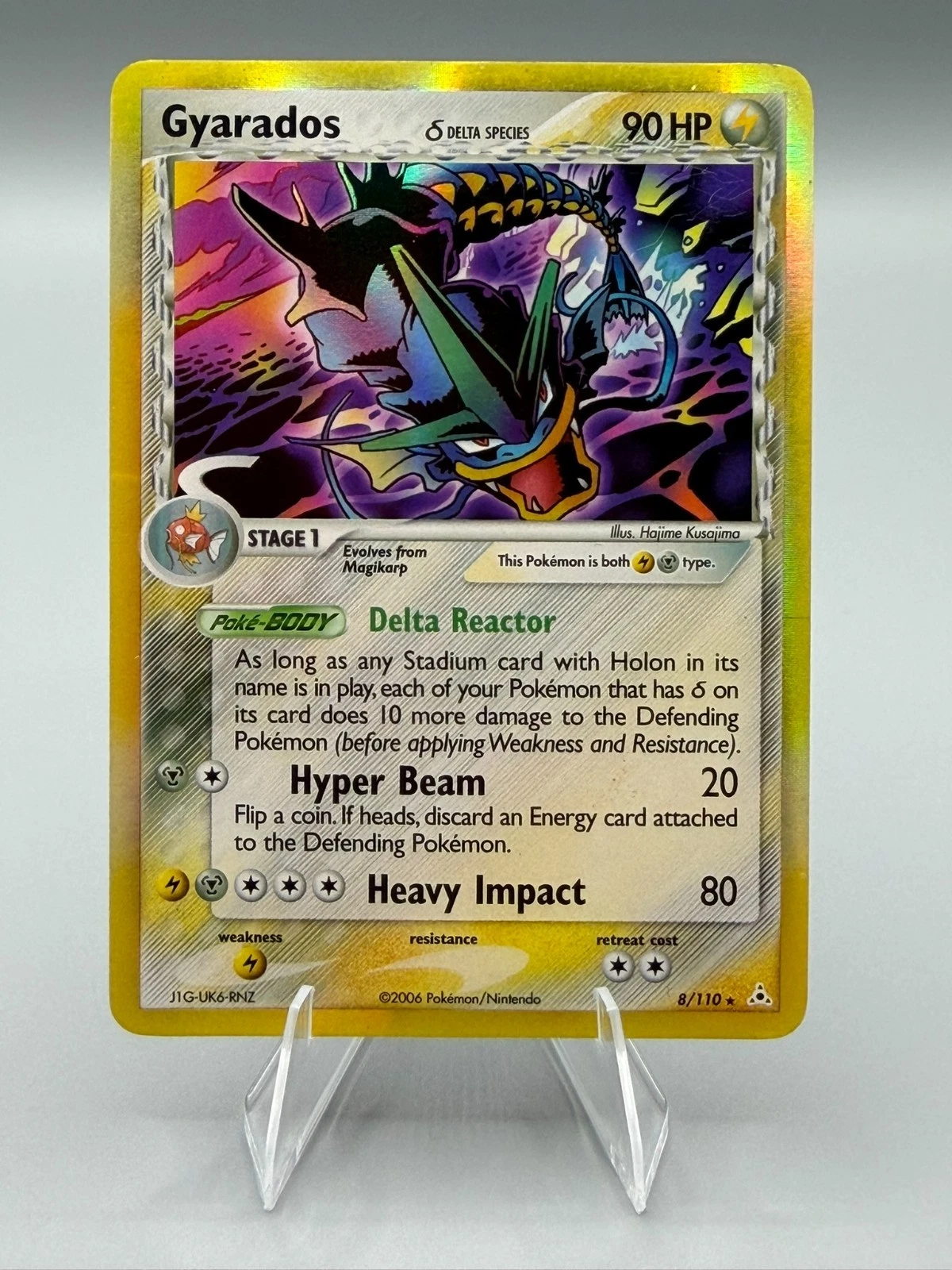
If you want to sell Pokémon cards near you in Naples, FL, walk into Sell Your Gadgets with your cards, with no appointment, and a buyer will go through them in front of you and pay cash on the spot. Notable singles are priced one by one against live sold comps, true bulk is priced by the lot, and you only need a valid government photo ID.
How selling Pokémon cards works at our Naples store
We are a buyback store, so buying is what we do all day. For Pokémon, the process is simple: bring the cards to the Sell Your Gadgets Naples store, hand them over at the counter, and a buyer goes through them with you. There is no appointment, no drop-off, and no waiting for an email a week later.
Our buyers use internal pricing tools that pull live sold comps card by card. That means we do not apply a flat per-card or per-pound bulk rate to your whole collection. A card that is actually selling for real money gets looked up and priced as itself. The leftover commons and uncommons get priced together as bulk. You see the offer, you decide, and if you accept, you are paid cash right there.
If you like to know your options before you drive over, you can also use the free quote form or send a text. For a big collection, a quick message describing what you have can help you decide how to sort it before you arrive.
How to spot the valuable cards in a collection
You do not need to be an expert to sort a binder into a keep-aside pile and a bulk pile. A few details on the card tell you most of what you need to know. Check these before you come in, so you know what is worth setting apart.
Set symbol and card number
Look at the bottom of the card. Older cards have a small set symbol next to the art or near the bottom corner, and newer cards show a set code and symbol beside the collector number. The card number is usually written as a fraction, like 25/102. The number tells you which card it is and the total tells you how big the set is, which helps identify the set quickly if you search it online.
Rarity symbol
A small symbol near the card number shows rarity. A circle usually means common, a diamond uncommon, and a star rare. Newer sets add other markers for ultra-rare and special rarities. Rarity does not equal value on its own, since some rares are everywhere, but a non-circle symbol on a popular character is worth a second look.
Holo vs reverse holo
A holo has foil in the art window only. A reverse holo has foil over the rest of the card and a flat art window. Reverse holos are usually a different print of a regular card and are often worth less than the true holo of the same card, though there are exceptions. If you have both versions of a card, set them together so the buyer can compare them.
1st Edition stamp and Shadowless
On early Wizards-era cards, a small black 1st Edition stamp sits just left of the art window. Those prints are very sought after and are priced separately from unlimited prints of the same card. Shadowless cards are an early print of the base-era set where the right edge of the art box has no drop shadow. Compare against a normal copy if you are not sure. Both details can change a card's value dramatically, so always pull these out of the pile.
Alt-arts and special illustration rares
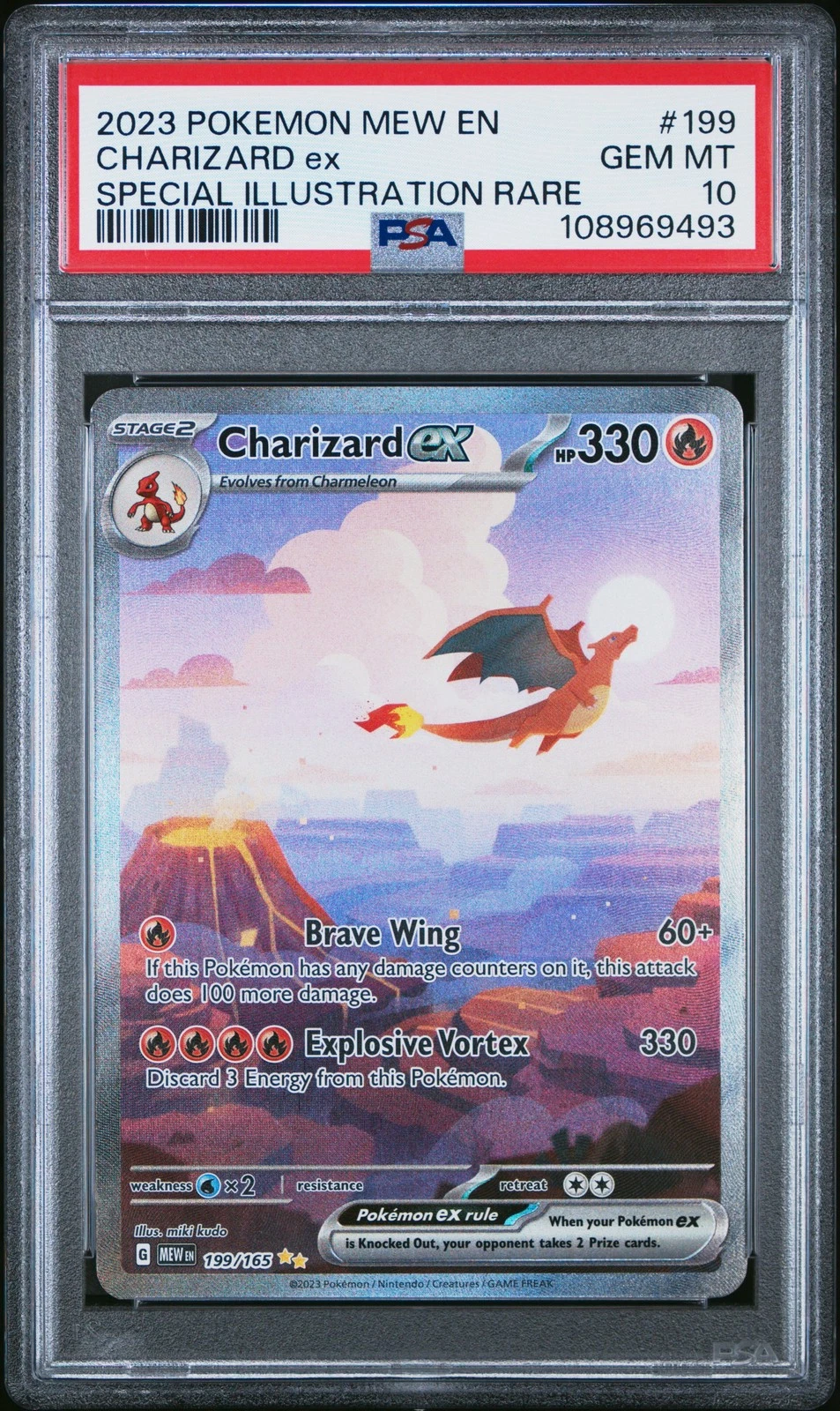
Modern sets include full-art cards where the illustration spills past the frame and tells a small story. Alternate arts and special illustration rares are often numbered higher than the printed set total, such as 190/165. That is a good clue. If your card number is bigger than the set size, put it aside. These chase cards tend to hold value better than ordinary holos from the same set.
Raw card condition: what buyers look at
Condition is the biggest factor after the card itself. Buyers check the card under good light and tilt it to catch surface wear. Here is a simple guide to what each grade looks like.
| Condition | Corners | Edges | Surface | Centering |
|---|---|---|---|---|
| Near Mint | Sharp, with no visible wear | Clean, with at most a tiny speck of white | Glossy, with no scratches or creases | Reasonably even borders |
| Lightly Played | Slight softness or minor fraying | Light whitening in a few spots | A few faint scuffs or very light scratches | May be slightly off |
| Moderately Played | Visibly rounded or worn | Noticeable whitening along several sides | Obvious scuffing, light creasing, or foil scratches | Often noticeably off |
| Heavily Played | Heavily worn or bent | Widespread whitening or chipping | Creases, dents, or heavy scratching | Can be badly off |
| Damaged | Torn, folded, or missing pieces | Peeling or tearing | Water damage, writing, large creases, or bends | Not a deciding factor |
Condition affects offers a lot. A Near Mint copy of a card sits in a very different place than a Heavily Played copy of the same card. Be honest with yourself while sorting. Cards that lived loose in a shoebox or a backpack usually land lower on this scale than people expect, and that is normal. For more on how we handle singles, see our page on selling raw Pokémon cards.
How singles and bulk are priced in one visit
You can sell a whole collection in one stop. Here is how that usually goes:
- Sorting at the counter. The buyer splits your cards into notable singles and true bulk.
- Single-by-single lookups. Notable cards are checked individually against live sold comps, then adjusted for condition and print version.
- Bulk by the lot. The commons, uncommons, and low-demand holos are priced together as a lot, since looking up each one would not make sense for anyone.
- One combined offer. You get a clear breakdown of the singles and the bulk, and you can take all of it, or pull a card back if you would rather keep it.
- Cash on the spot. If you accept, you show your valid photo ID and get paid on the spot.
The reason we do it this way is simple. A flat bulk rate tends to underpay the cards that are truly worth something, and it overpays the ones that are not. Pricing the good cards on their own comps is fairer to you. If you are selling a very large pile, do not worry about prepping every card. A quick sort into three stacks (keepers, probable singles, and bulk) is plenty.
Should you grade first?
This is one of the most common questions, and the honest answer is that it depends on the card. Grading can make sense for a clean copy of a high-demand card, but it comes with trade-offs worth weighing.
- Time. Grading takes a while, from shipping to the service's turnaround to the return trip. Cash today is on a very different timeline.
- Fees. Every card you submit costs a grading fee, plus shipping and insurance. For lower-value cards, those costs can outweigh the bump a slab might bring.
- Risk. The grade is unknown until you get it back. A card you think is Near Mint may come back with a grade that is lower than you hoped, and the extra value you were counting on may not show up.
- Market movement. Prices shift while your card is away, up or down.
A fair rule of thumb is that grading mainly helps top-condition copies of cards that are already worth a lot raw. For everything else, selling raw is faster, simpler, and carries no risk. If you are unsure, bring the card in and we will tell you how it looks. And if you already own slabs, we buy those too, which we cover next.
Sealed product and graded slabs
We buy more than loose cards. Here is how we handle the other two categories.
Sealed product
Sealed boxes, booster bundles, and packs are inspected in person. We check the shrink-wrap, the seams, and the weight to rule out resealing, which is a real issue in the hobby. Bring sealed items in their original condition and avoid opening or handling them more than necessary.
Graded slabs
We buy PSA, CGC, BGS, and SGC slabs. In store, we verify the cert number and check the holder. Each grading company is priced on its own comps, so a PSA 9 and a CGC 9 of the same card are not treated as identical. If you have slabs to sell, our page on selling graded Pokémon cards has more detail, and our Pokémon cards and collectibles page covers the wider range of what we take.
How to bring your cards in
A little care before you drive over protects the value of your cards and speeds up the visit.
- Use sleeves and top loaders. Put your best cards in soft sleeves, and use top loaders for the valuable ones. Bare cards scuff and ding in transit.
- No rubber bands. They dent edges and corners, and they can leave marks on the surface. Use a box or a binder instead.
- Keep binders as they are. If your cards are already organized in a binder, bring the whole binder. Pulling cards out only risks bending them.
- Sort loosely. Put the cards you think are valuable in one place and the rest in another. Do not spend hours alphabetizing.
- Bring sealed items safely. Keep boxes and packs in a sturdy bag or box so the corners do not get crushed.
- Bring your ID. A valid government photo ID is required for every sale.
Selling Pokémon cards from nearby towns
We are on Tamiami Trail North in Naples, near Old US 41, and we see people from all over the area. Here is how it works for the neighborhoods around us.
Pelican Bay
If you are coming from Pelican Bay, it is a straightforward trip along Tamiami Trail to reach us. Many people there have kids' old collections tucked away in closets or storage, and a walk-in visit is an easy way to find out what is in them. Bring the whole box, and we will sort it with you.
North Naples
North Naples is close, and this is the part of town our store sits in. Plenty of locals stop by after errands along US 41 with a binder or a bin in the car. If you want more on how we work in the area, see our page on selling electronics in North Naples.
Urban Estates
From Urban Estates, you can reach Tamiami Trail through the main roads heading west. If you have a collection that has been sitting in a garage or a shed, check for moisture damage or warped cards before you leave. We can still go through it, but it helps to know what condition to expect.
Park Shore
Park Shore residents can head up Tamiami Trail to reach us. Cards that have been stored in a humid coastal home sometimes pick up curl or surface wear, so it is worth keeping them in sleeves for the drive. Bring any sealed items too, since we inspect those in person.
Corkscrew
If you are coming from the Corkscrew area, plan on a longer drive, so it makes sense to bring everything in one trip. Sort your cards into a keeper pile and a bulk pile, bring the sealed product and any slabs, and we can handle all of it in a single visit.
Coquina Sands
People in Coquina Sands can take Tamiami Trail north to reach us. A binder, a few top loaders, and your ID are all you need. If you are not sure whether your cards are worth the trip, text us or send a note through the quote form first.
Other cards we buy
Pokémon is not the only thing we take. We also buy Magic: The Gathering, Yu-Gi-Oh!, One Piece, and Lorcana cards, plus sports cards. If you have a mixed collection, bring everything together. Beyond cards, we also buy used, new, and broken electronics, so if you have old phones, consoles, or tablets to clear out at the same time, see our guide to what we buy at the Naples store.
Frequently asked questions
Do I need an appointment to sell Pokémon cards?
No. You can walk in during store hours with your cards. A buyer will look through them while you are there.
Do you pay a flat rate for bulk Pokémon cards?
No. Notable singles are priced individually against live sold comps. True bulk is priced by the lot. That way valuable cards are not lost in a flat rate.
Can I sell a whole binder at once?
Yes. Bring the binder as it is. We will go through it page by page, pull out the notable cards, and give you one combined offer.
Do you buy graded cards?
Yes. We buy PSA, CGC, BGS, and SGC slabs. We verify the cert number and holder in store and price each company on its own comps.
Do you buy sealed Pokémon boxes and packs?
Yes. We inspect the shrink-wrap, seams, and weight in person to rule out resealing, so bring sealed product in its original condition.
What do I need to bring?
Your cards and a valid government photo ID. Sleeves and top loaders help protect them, but do not use rubber bands.
How much will my collection be worth?
It depends on the cards, their condition, and current sold comps, so we do not quote numbers in advance. The fastest way to find out is a free quote or a walk-in visit.
Ready to sell? Get your free quote or just bring your cards to Sell Your Gadgets Naples at 12980 Tamiami Trl N Ste 2, Naples, FL 34110. We are open Tuesday through Friday 10:00 AM to 6:30 PM, Saturday 11:00 AM to 5:00 PM, and Sunday 11:00 AM to 4:00 PM, and closed Monday. Call (239) 325-9193 with any questions, and see the Naples store page for details.
Hear from a real customer
Real experience, real cash. Working or broken, get a free quote and walk out with cash the same day.
Compare your options
See how selling to us stacks up against other ways to sell, side by side.