Sell Pokémon Cards Near Me in Trenton, NJ: Cash for Raw Cards
By syedladen ·
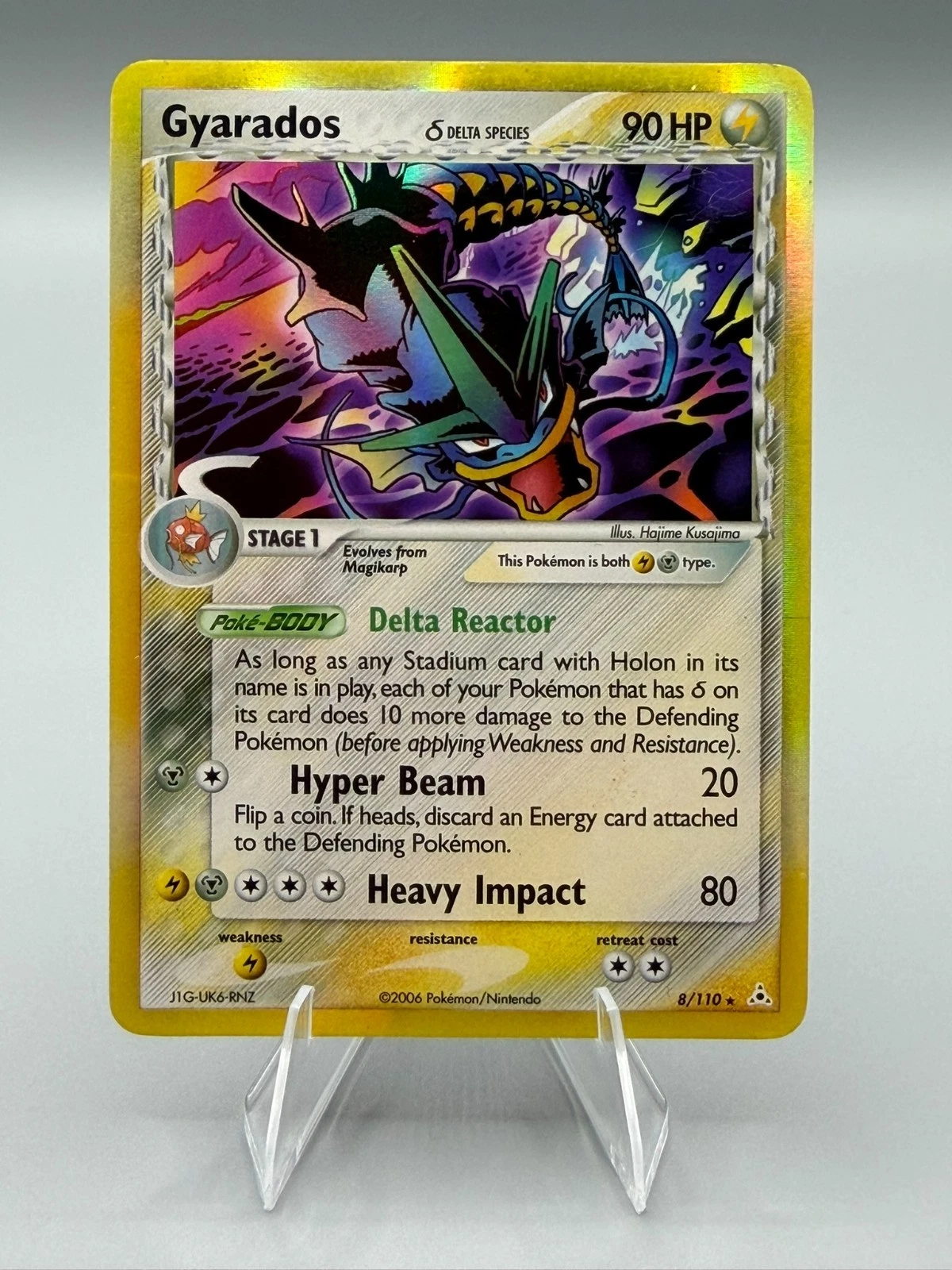
If you want to sell Pokémon cards near you in Trenton, NJ, walk into Sell Your Gadgets Trenton with your cards, no appointment needed, and a buyer will price them in person and pay cash on the spot. Notable raw singles are priced one by one against live sold comps, and true bulk is priced by the lot, so you get a real answer instead of a flat guess.
Where to sell Pokémon cards locally without the guesswork
Most people who search for where to sell Pokémon cards locally end up choosing between three bad-feeling options: a marketplace listing that takes weeks of messages and shipping, a mailer where you hand over your cards and wait, or a shop that glances at a binder and quotes one number for everything. A local counter fixes most of that. You see the cards being looked at, you can ask why a card is priced the way it is, and you leave with cash instead of a tracking number.
Our Trenton store is an electronics buyback shop that also buys trading cards, so the buying process is built around inspection, verification, and fair pricing rather than retail markup. We buy, we do not sell, which means the only thing we are trying to do with your collection is price it accurately and make you an offer you can say yes or no to. There is no obligation, and you can walk out with your cards if the number is not right for you.
If you want a deeper look at how we handle ungraded cards specifically, see our page on how to sell raw Pokémon cards.
How we buy Pokémon cards at this store
The process is deliberately simple:
- Walk in with the cards. No appointment, no form required first. Bring a binder, a box, a stack of top loaders, or a single card you are curious about.
- A buyer goes through them with you. Notable singles are pulled out and looked up individually. The rest is sorted for bulk evaluation.
- Pricing comes from live sold comps. Our buyers use internal pricing tools that pull recent sold comparables card by card. We never apply a flat bulk rate across a whole collection.
- You get an offer. Accept it and you are paid cash on the spot. Decline and you keep your cards.
One requirement applies to every sale: a valid government photo ID. That is the standard secondhand-dealer rule, and it applies whether you are selling a phone or a binder of cards.
How to spot the valuable cards in a collection
Before you come in, it helps to know what you are looking at. You do not need to price anything yourself, but a ten-minute sort can tell you which cards deserve extra attention and which are almost certainly bulk.
Set symbol and card number
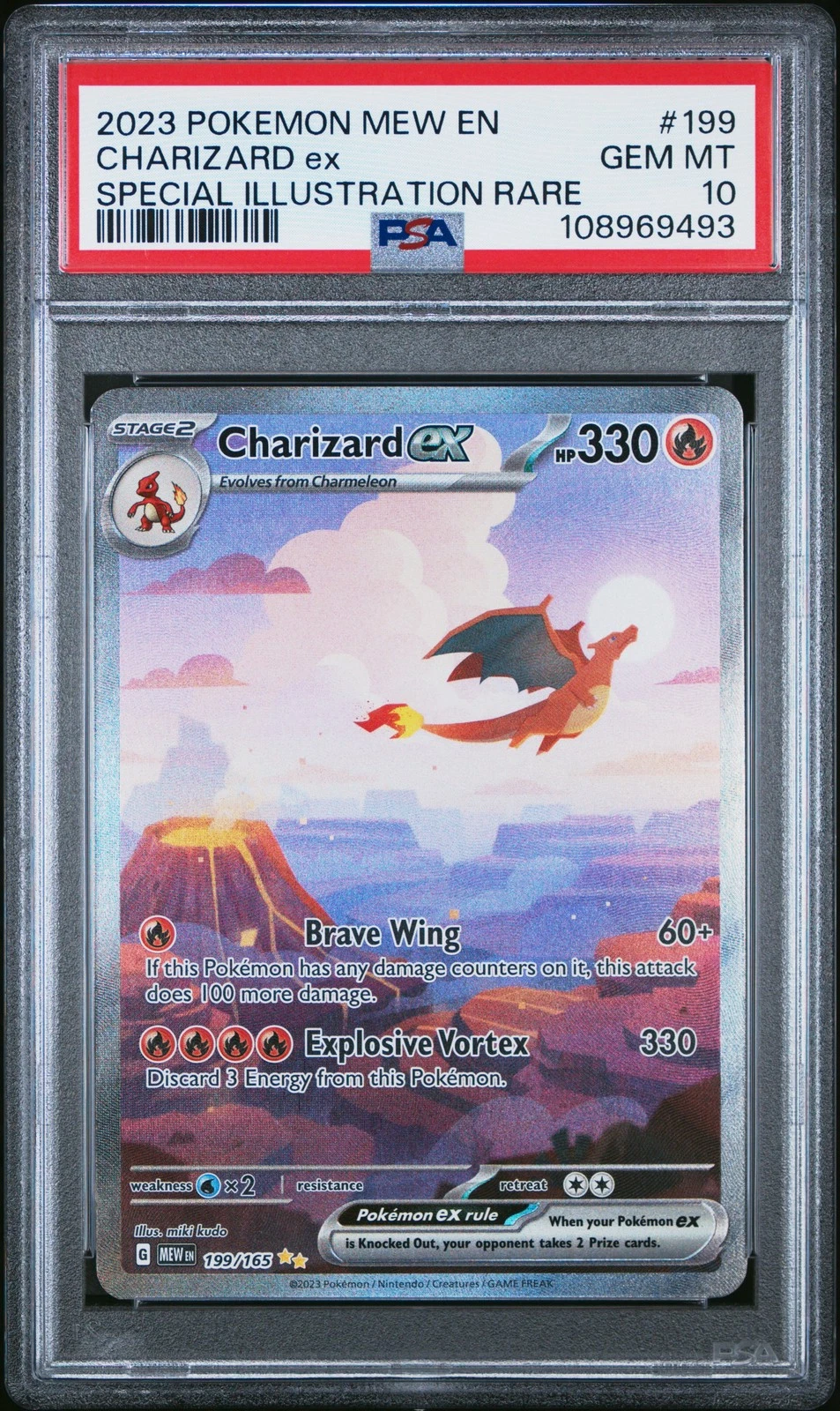
Every Pokémon card carries a small set symbol, usually near the bottom of the card, and a card number such as 025/165. The symbol tells you which set it came from, and the number tells you where it sits in that set. When the first number is higher than the second, for example a card numbered past the printed set total, that is usually a secret or special rarity and worth setting aside. Older cards from the original era have the symbol on the right side of the card, below the art.
Rarity symbol
Next to the card number on most cards you will see a small rarity symbol: a circle for common, a diamond for uncommon, and a star for rare. Star-marked cards are where the individual pricing begins, though plenty of rare cards are still ordinary. Modern sets add further rarity tiers with their own markings, and a buyer will read those quickly, but your job is simply to separate the stars and anything shiny from the circles and diamonds.
Holo versus reverse holo
A standard holo has a foil-patterned art window with a regular matte border. A reverse holo is the opposite: the foil effect covers the card body and border, while the art window is not foil. Many people lump them together, but they are different printings and can be priced differently. Do not assume a shiny card is a rare one, since reverse holos exist for common and uncommon cards too.
1st Edition stamp and Shadowless
On early English Base Set era cards, look for a small 1st Edition stamp on the left side of the card, just below the art window. Also look at the art box: Shadowless cards lack the drop shadow on the right edge and bottom of the art frame that later printings have. These two details can make a big difference in how a card is priced, which is exactly why we look them up individually rather than grouping old cards together.
Alt-arts and special illustration rares
Newer sets include full-art cards where the illustration stretches across the whole card, and special illustration rares that tell a small scene around the Pokémon. These typically carry card numbers beyond the printed set total. Collectors chase them, so they often hold their value better than standard rares from the same set. If you pulled one of these, keep it out of the bulk box and sleeved on its own.
Condition: what each grade looks like on a raw card
Condition matters because two copies of the same card can be priced very differently. Here is how we think about raw cards, and what a buyer is looking at on corners, edges, surface, and centering.
| Condition | Corners | Edges | Surface | Centering |
|---|---|---|---|---|
| Near Mint | Sharp, no visible wear | Clean, little to no whitening | Glossy, no scratches or creases; very minor print lines at most | Reasonably even borders; slight off-center is common |
| Lightly Played | Slight softness or tiny whitening | Light whitening along a few edges | Minor scuffs or faint scratches, no creases | May be noticeably off-center |
| Moderately Played | Visible rounding and whitening | Obvious whitening or small nicks | Clear scratches, scuffing, or light creasing | Off-center does not change much at this level |
| Heavily Played | Heavily worn or rounded | Broad whitening, rough edges | Major scuffing, bends, or creases | Often uneven; condition issues dominate |
| Damaged | Bent, torn, or missing material | Peeling, tears, or heavy chipping | Water damage, writing, heavy creases, or marks | Not a deciding factor |
Tilt a card under a light to see surface scratches, and look closely at the back, where whitening shows up first on dark blue borders. Most cards that spent years loose in a shoebox land in the middle of this table rather than at the top, and that is normal. A buyer would rather see an honest copy than a card you have tried to clean up, so please do not rub, polish, or press cards before bringing them in.
How singles and bulk are priced in one visit
When you bring in a mixed collection, it gets split into two piles. The first is notable singles: cards with a recognizable rarity, a collector following, or an early-era print. Each of these is looked up on its own using live sold comps and adjusted for its condition. The second pile is true bulk: commons, uncommons, and low-demand rares that do not move the needle individually. That pile is priced by the lot.
This split is why we never use a flat bulk rate. A flat rate would underpay you on the one card in the box that matters and overpay on the pile that does not. Splitting the collection lets the valuable cards earn their own price while the rest is handled quickly. Both parts happen in the same visit, and you get a single combined offer you can accept or decline.
We do not publish prices on the website, because card values move with the market and with condition. For a sense of scale before you travel, you can send details or photos through the free quote form, and the final number is always confirmed with the cards in hand.
Should you grade your cards before selling?
It is a fair question, and the honest answer is that it depends on the card and on how patient you are. Here are the trade-offs in relative terms:
- Time: Grading means sending cards out and waiting, sometimes for a long stretch depending on the service tier and how busy the grader is. Selling raw to a local buyer takes one visit.
- Fees: Grading costs money per card, and shipping and insurance add to it. For a card that is not worth much, those costs can consume the gain, and for a valuable card they are a smaller share of the outcome.
- Risk: A card you believe is Near Mint may come back with a grade lower than you hoped, because graders look at centering, corners, and surface more strictly than most owners do. A lower grade can leave a card worth less than you expected relative to the fees you paid. Cards can also be damaged or lost in transit.
- Upside: A high grade on a sought-after card can help it hold value better and sell more easily to collectors who want slabs.
A practical rule: if a card is clearly high-demand, crisp in person, and you are comfortable waiting, grading can be worth exploring. If you have a big mixed collection, an average-condition card, or simply want cash now, selling raw is usually the cleaner route. We are happy to give you a straight opinion at the counter, and you can always get a raw offer first and decide afterward.
Graded slabs and sealed product
If you already have graded cards, we buy PSA, CGC, BGS, and SGC slabs. Each is priced on its own comps, because a grade from one company does not trade the same way as a grade from another. We verify the cert number and inspect the holder in store, so bring the slab in its case and we will check it with you. More detail is on our page for how to sell graded Pokémon cards.
Sealed product, such as booster boxes, bundles, and tins, is inspected in person. We look at the shrink-wrap, the seams, and the weight to rule out resealing, which is a real issue in the sealed market. Original, undisturbed packaging is what a buyer wants to see, so please do not open or re-wrap anything. We also buy other trading card games, including Magic, Yu-Gi-Oh!, One Piece, and Lorcana, along with sports cards. If you are clearing out more than Pokémon, our overview of how to sell Pokémon cards and collectibles covers what else to bring.
How to bring your cards in
A little preparation makes the visit faster and protects the value of what you have.
- Use sleeves and top loaders. Put your better singles in soft sleeves and, for anything notable, a rigid top loader. Loose cards sliding around in a bag pick up edge wear quickly.
- Sort your binders. If cards are already in a binder, bring the binder as it is. Pull out any cards you think are special and place them in front so they are easy to find.
- Keep bulk in boxes. Standard card boxes work well. Stack cards upright rather than flat in a pile to prevent bending.
- No rubber bands. They dent edges and corners and can leave marks on the surface. Use a sleeve, a divider, or a plain box instead.
- Bring your ID. A valid government photo ID is required for every sale.
- Do not clean the cards. Wiping or polishing can add surface damage that is worse than light dust.
You do not need to organize by set, but if you have a few cards you already suspect are valuable, keep them separate. That simple step saves time and reduces the chance a good card gets lost in the pile.
Selling from the towns around Trenton
Our counter is on Nottingham Way, reachable by car along Route 33, and NJ Transit bus routes run along Route 33 and Nottingham Way. It is also about ten minutes from NJ Transit Hamilton Station on the Northeast Corridor Line. Here is how it works for people coming from nearby.
Hamilton Township
Our Hamilton Township neighbors are the closest of all, since the store sits in Hamilton Township itself. A binder you found in the attic can be priced in person minutes from home, with no mailer and no waiting on a check.
Hamilton Square
Hamilton Square is just up Route 33 from our counter, which makes a card sale an easy errand. Bring the box or binder, have it priced in one stop, and leave with cash rather than listing cards one at a time online.
Mercerville
Mercerville is right around the corner on Nottingham Way. A five-minute drive from Mercerville is enough to get a buyer to look through your collection and put a real number on it.
Yardville
Yardville households come a few minutes up Route 130 for a firm, no-obligation offer. It beats shipping cards into the unknown, since you can watch them being looked at and keep anything you decide not to sell.
Allentown
Allentown residents make a quick trip up Route 539 to sell in person instead of boxing items for a mailer. For Pokémon cards, that means you can sort and ask questions face to face, which matters when a collection has both singles and bulk.
Chesterfield
Chesterfield households in rural Burlington County get a firm, no-obligation cash offer a short drive north instead of shipping valuables away. Bring your cards in protective sleeves and a sturdy box, and we will take it from there.
Frequently asked questions
Do I need an appointment to sell Pokémon cards?
No. Walk in during store hours with your cards and a valid government photo ID. A buyer will go through them with you and give you an offer on the spot.
Do you pay a flat rate for bulk Pokémon cards?
No. Notable singles are priced individually using live sold comps, and true bulk is priced by the lot. A flat per-card rate would shortchange the valuable cards, so we avoid it.
Can I sell a whole Pokémon card collection for cash at once?
Yes. Bring the whole collection, including binders, boxes, and loose stacks. The singles and the bulk are evaluated in the same visit, and you receive one combined offer with cash paid on the spot if you accept.
Do you buy graded cards and sealed product too?
Yes. We buy PSA, CGC, BGS, and SGC slabs, verifying the cert number and holder in store, and each is priced on its own comps. Sealed product is checked in person for shrink-wrap, seams, and weight to rule out resealing.
Do you buy other card games and sports cards?
Yes. Along with Pokémon, we buy Magic, Yu-Gi-Oh!, One Piece, Lorcana, and sports cards. The same walk-in process and card-by-card pricing approach apply.
Should I take my cards out of sleeves or binders first?
No. Leave them as they are. If you have a few you think are special, put those in front or in top loaders. Avoid rubber bands, and do not clean or polish any card before the visit.
What if the offer is lower than I expected?
You are never obligated to sell. Ask the buyer how the cards were priced, and if you would prefer to try grading or another route, you can take everything home with no cost.
Ready to see what your cards are worth? Get a free cash quote or just stop by Sell Your Gadgets Trenton at 1469 Nottingham Way #5, Trenton, NJ 08609. We are open Monday through Saturday from 10:00 AM to 7:00 PM and Sunday from 11:00 AM to 5:00 PM. Bring your valid photo ID, or call 609-900-7867 with questions first.
Hear from a real customer
Real experience, real cash. Working or broken, get a free quote and walk out with cash the same day.
Compare your options
See how selling to us stacks up against other ways to sell, side by side.