Is My Card Worth Grading? A Pre-Grading Decision Guide
By syedladen ·
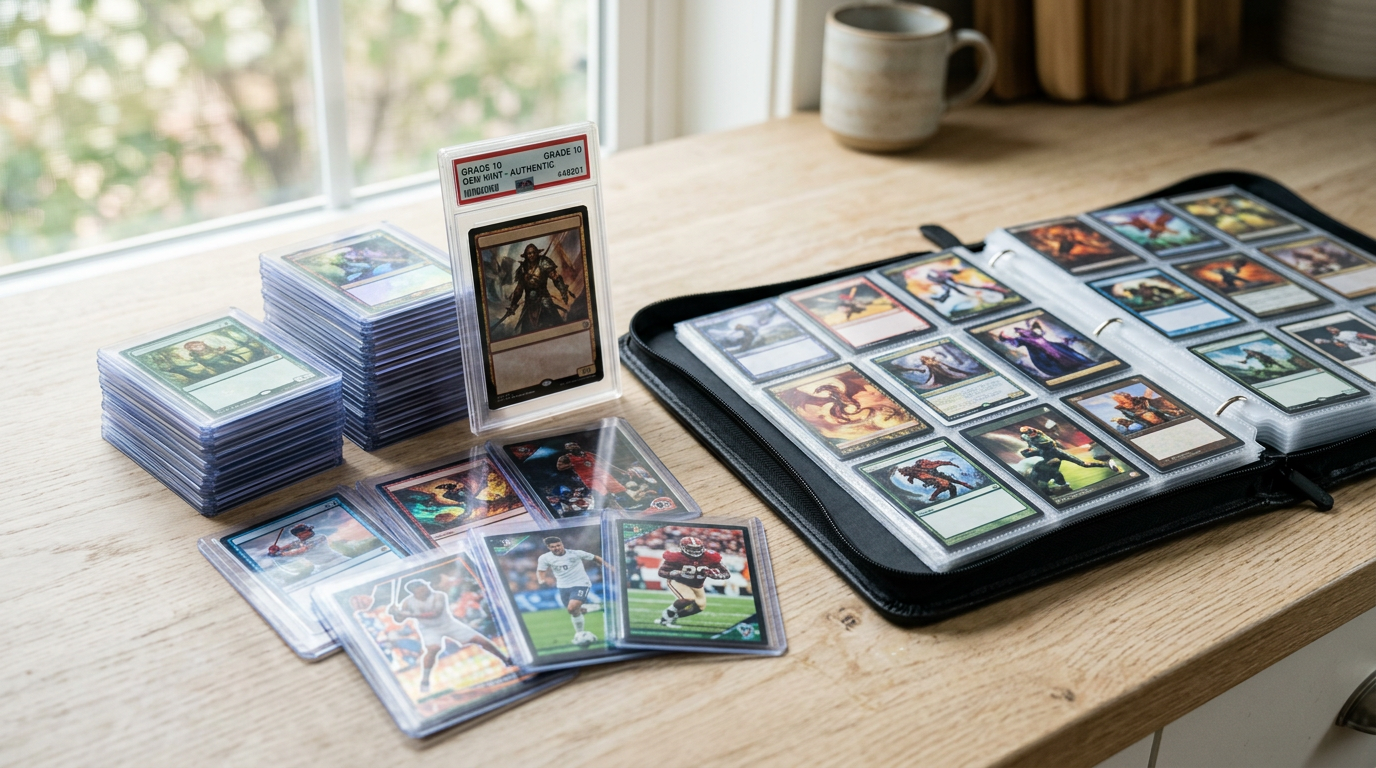
Your card is worth grading only if it is likely to earn a top-tier grade and the gap in value between a graded and a raw copy is clearly bigger than the total cost of grading, shipping, insurance and waiting. If it has visible wear, off-center borders, or it is a common card that sells for modest amounts raw, grading usually loses money, and selling raw is the smarter move.
This guide walks you through the decision the way an experienced buyer would: what graders actually do, how to pre-grade a card at your kitchen table, how PSA, CGC and BGS differ, where the real risks are, and when it makes more sense to skip the slab and sell the card as it is.
What grading companies actually do
A grading company does three things: it authenticates your card, assigns a condition grade, and seals the card in a tamper-evident plastic case, usually called a slab, with a label showing the grade and a serial number. Buyers pay attention to that label because it replaces the need to trust a seller's description. A slabbed card can be bought sight-unseen with more confidence, which is where a graded premium comes from.
How grades work
Most major companies grade on a 1 to 10 scale, where 10 is the top grade and lower numbers reflect more wear. The grade reflects four things: centering, corners, edges and surface. Graders examine each under magnification and lighting most of us do not have at home. Two points matter for your decision:
- The top grade carries most of the premium. For many cards, the jump between a 9 and a 10 is far larger than the jump between an 8 and a 9. If your card only lands a 9, the math can look very different from what you pictured.
- Grades are opinions applied to a standard. The same card can come back with different grades from different companies, or even from the same company on a different day. You are paying for a judgment, not a measurement.
PSA vs CGC vs BGS: how the big three differ
Every collector asking "psa vs cgc vs bgs" is really asking which slab helps a card sell best. There is no universal answer, but the differences below are widely known and worth understanding before you submit.
| Factor | PSA | CGC | BGS (Beckett) |
|---|---|---|---|
| Grade presentation | Single overall grade on the label | Overall grade, with subgrades offered on some tiers | Overall grade plus four subgrades (centering, corners, edges, surface) |
| Market recognition | Very widely recognized, especially for Pokémon and sports | Established in other collectibles and growing in cards | Strong reputation, especially for modern sports and high-end cards |
| Top-grade naming | Gem Mint 10 | Pristine 10 and Gem Mint 10 tiers | Pristine 10 (Black Label) and Gem Mint 9.5 |
| Best for | Resale liquidity and broad buyer recognition | Collectors who like detailed grading and clear labels | Buyers who want to see subgrades before paying for a high-end card |
A practical way to choose: if your priority is selling quickly to the widest pool of buyers, the most recognized slab tends to help. If you want to show a buyer exactly where a card is strong or weak, subgrades help. Fees, tiers and turnaround change often, so check each company's current pricing page rather than relying on an old forum post.
Pre-grade your card at home, step by step
Pre-grading is the single most valuable free step. It costs nothing and filters out cards that would come back with grades too low to justify the expense. You need a clean desk, bright diffuse light, a magnifying loupe or phone macro lens, a microfiber cloth, a soft surface, and a penny sleeve.
Step 1: Handle the card safely
Wash and dry your hands, or use clean cotton gloves. Hold the card by the edges. Do not wipe it aggressively, and never use liquids or chemicals. Rubbing a card can create surface damage that was not there before.
Step 2: Check centering
Look at the borders on the front. Compare the left border to the right, and the top to the bottom. Borders should look close to even. Then flip the card over and do the same on the back. Off-center cards are one of the most common reasons a card misses the top grade, and it is one problem you cannot fix. Each company publishes its own centering tolerances, so look up the current standard for the company you plan to use.
Step 3: Inspect the corners
Use a loupe and look at all four corners from the front and the back. You are looking for whitening, fuzziness, soft points, or any bend. A sharp corner looks crisp and clean. Even tiny corner wear can be enough to cost a grade on cards with dark borders, where white flecks stand out.
Step 4: Run the edges
Look along all four edges on the front and back. Dark-bordered and holographic cards show chipping more easily. Check for silvering (white flecks), rough cut edges, or nicks. Factory cut imperfections count against the card even though you did not cause them.
Step 5: Examine the surface
This is where most hopeful cards fail. Tilt the card under a single bright light and rotate it slowly. Look for:
- Scratches and scuffs, especially on holofoil areas
- Print lines, which are thin lines running across the card from the printing process
- Dents, indentations and pressure marks
- Stains, residue or fingerprints
- Focus or ink issues, such as small print dots or color bleed
Check the back too. Whitening and scuffing on the back often gets missed by sellers, but graders do not miss it.
Step 6: Score it honestly
Give the card a rating on each of the four categories and be conservative. Your card is only as strong as its weakest category. If any single category is clearly flawed, assume the final grade will be limited by it. If every category looks clean under magnification and the card still seems perfect, it is a real candidate.
When grading adds value
Grading tends to make sense when several of these are true at the same time:
- The card is desirable on its own. Iconic characters, chase cards, rookies, vintage cards and scarce variants have buyers who specifically search for graded copies.
- Your pre-grade looks clean. All four categories hold up under a loupe, and you have no doubts about centering.
- The graded premium is large relative to the raw price. Compare recent sold listings for raw copies with listings for graded copies at the grade you realistically expect, not the grade you hope for.
- Authentication matters. For high-end vintage cards, a slab proves the card is real and unaltered, which can make a card far easier to sell.
- You are in no hurry. Grading is a patient person's game, since you are trading time for a potentially higher resale value.
When grading loses money
Searches like "card grading cost worth it" exist because plenty of people find out too late that it was not. Grading is usually a poor bet when:
- The card is common or modern and plentiful. If raw copies sell for modest amounts, the grading fee, shipping and supplies can eat the entire gain even on a top grade.
- The realistic grade is mid-range. A card that comes back with a middling grade can be worth less graded than it would have been raw, because buyers of graded cards often only want the top of the range.
- Centering is visibly off. You cannot improve it, and it caps the grade no matter how clean the rest is.
- The market is flooded with top-grade copies. When many high-grade copies already exist, the premium shrinks. A top grade is less impressive when it is common.
- You would need a fast sale. Money tied up in a grading queue is money you do not have.
Count every cost
Before you decide, write down each line item for the total cost of grading:
- The grading fee for the service tier you need
- Shipping to the grader, plus insured return shipping
- Insurance and declared value charges
- Supplies: sleeves, top loaders, a shipping box, and your time to prepare the submission
- Marketplace and payment fees if you sell the slab online
- The cost of waiting, including market movement while the card is away
Then compare the total against the likely difference between raw and graded value. If the margin is thin, it is not worth the risk. Ask for a quote on the raw card first, so you know what selling as-is actually looks like.
Quick decision table
| Your situation | Usual best move |
|---|---|
| Desirable card, clean on all four checks, large gap between raw and graded prices | Consider grading |
| Desirable card, but with one clear flaw such as off-center borders or surface scratches | Sell raw, or grade only if authentication matters |
| Common or bulk card, even in great condition | Sell raw |
| Vintage card with unclear authenticity | Grading can be worth it for authentication alone |
| Need cash soon | Sell raw |
| Already graded, and the market for that grade is strong | Sell the slab |
Turnaround and risk
Grading is not a quick process. Turnaround depends on the service tier you pick and on how busy the company is. Faster tiers cost more, and backlogs can shift. Plan for the card to be out of your hands for a while, and do not count on an old estimate you saw online. Check the company's current turnaround before submitting.
Risks to weigh
- Grade risk. The grade can come back lower than you expected, which can leave you holding a slab that is worth little more than the raw card.
- Transit risk. Cards can be damaged or lost in shipping. Sleeve them properly, use a rigid holder, pack tightly, and insure the package.
- Market risk. Prices move. A card that looked like a good grading candidate when you mailed it may sell differently when it returns.
- Authenticity and alteration risk. Graders reject cards they consider altered or counterfeit, and you typically will not get your full outlay back.
- Opportunity cost. Cash tied up for weeks is cash you cannot use elsewhere.
Selling raw vs graded
Selling raw is faster, simpler, and carries no grade risk. You can get a quote today and be paid the same day. Selling graded can reward a clean, desirable card, but only after you have paid for the process and waited.
| Factor | Sell raw | Sell graded |
|---|---|---|
| Speed | Fast, no queue | Slower, since you wait for the grade first |
| Upfront cost | None | Grading, shipping and insurance |
| Risk | Low | Grade, shipping and market risk |
| Upside | Steady | Higher on top-grade, desirable cards |
| Buyer confidence | Buyer must judge condition | Grade and authentication are on the label |
If you are leaning toward raw, you can sell raw Pokémon cards to us with a free quote and a quick in-person inspection. If your cards are already slabbed, you can sell graded Pokémon cards too, without dealing with marketplace fees or waiting for a buyer.
Should I grade my Pokémon card? Specific things to check
Pokémon cards have quirks that make pre-grading especially important:
- Holo scratching. Holographic surfaces show scratches that are hard to see under normal room light. Tilt the card under a bright lamp.
- Print lines. Modern holo cards can have factory print lines that are hard to fix and that can limit the grade.
- Edges and corners on dark borders. Yellow-bordered cards show white wear easily. Dark backs reveal edge chipping quickly.
- Vintage variations. Older sets have variants and print differences that affect demand. If you are unsure which version you own, identify it before choosing a path.
- Pack fresh is not guaranteed. Newly pulled cards still have centering and surface defects, so do not assume a card is ready for a top grade just because you opened it yourself.
A simple rule of thumb: if the card is a sought-after one and you cannot find a single flaw under magnification, it may be worth grading. If you find one flaw and start rationalizing it, treat the card as a raw sale.
How to get a reality check before you commit
You do not have to guess. Before paying a grading fee, do these three things:
- Check recent sold listings. Look at sold results, not asking prices, for raw copies and for graded copies at each likely grade.
- Pre-grade with a partner. A second pair of eyes catches what you miss. Ask someone who is not emotionally attached to the card.
- Get a free raw quote. Get a free cash quote online or by text, and you will have a real number to compare against your projected graded outcome. If the raw offer is close to what you would net after grading costs, selling raw wins on time and certainty.
You can also bring your cards to a store. Find a Sell Your Gadgets store near you for a walk-in inspection. No appointment is needed, and you are paid on the spot. A valid government photo ID is required for every sale. If you are far from a store, see how selling to us works, including the mail-in option.
Frequently asked questions
Is my card worth grading if it looks perfect to me?
Not necessarily. Your eyes miss what a loupe and a grader see. Check centering, corners, edges and surface under magnification. If it passes all four, then compare raw and graded sold prices. A clean card of a common type may still be better sold raw.
Is grading worth it for a low-value card?
Usually not. Fees, shipping and supplies are fixed costs that do not shrink when the card is cheap. Unless the graded version sells for much more than the raw one, the economics tend to fail.
Which is best, PSA, CGC or BGS?
It depends on the card and your goal. PSA is very widely recognized and is often chosen for resale liquidity. BGS shows subgrades, which some buyers like. CGC has a strong reputation in other collectibles and is growing in cards. Compare current fees, turnaround and what buyers of your specific card prefer.
Can a grade be lower than the raw card is worth?
Yes. If a card earns a middling grade, the slab may be worth about the same as, or sometimes less than, what a clean raw copy would fetch, especially when you also paid grading costs. That is why pre-grading matters.
Do you buy cards that are already graded?
Yes. We buy raw, graded and sealed trading cards, including Pokémon, sports and Magic: The Gathering. Request a free quote and we will tell you what we can pay.
Can I sell a card if I am still deciding about grading?
Yes. A free quote costs nothing and does not commit you to selling. It gives you a real raw number to weigh against the cost and risk of grading.
Should I crack a graded card out of its slab?
Usually no. Breaking a slab removes the authentication and the grade, and you cannot fully reverse that. Unless you are planning to resubmit to a different company for a clear reason, keep it slabbed and get a quote on it as it is.
Ready to see where your cards stand? Get a free cash quote online, by text, or walk into a store, and find out what your raw or graded cards can earn today.
Hear from a real customer
Real experience, real cash. Working or broken, get a free quote and walk out with cash the same day.
Compare your options
See how selling to us stacks up against other ways to sell, side by side.