Where to Sell Pokémon Cards for Cash: Every Option Compared
By syedladen ·
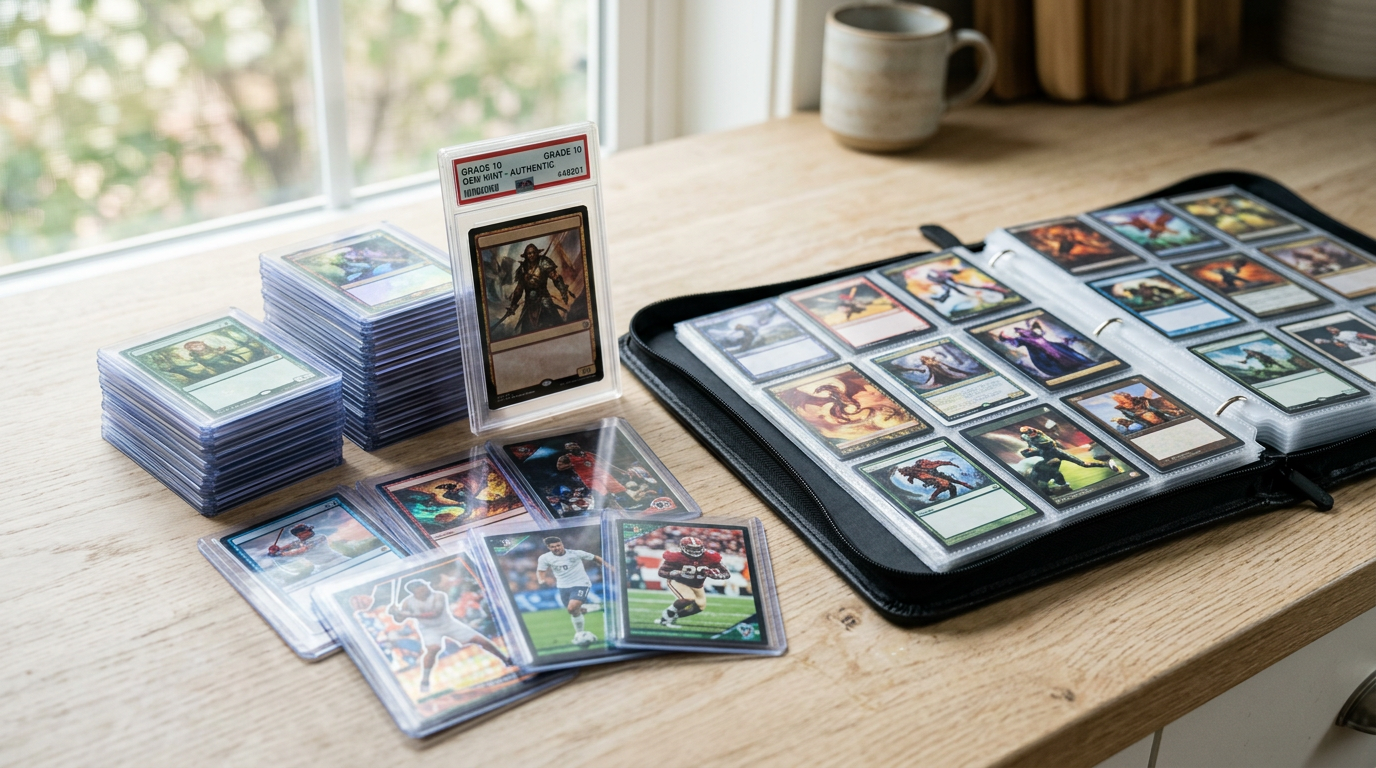
The best place to sell Pokémon cards for cash depends on what you actually have: a local buyer is usually best for bulk, big collections and anyone who wants money today, while marketplaces, card shows and consignment can reward patience on individual high-value singles and graded slabs. Most people end up using two routes, selling the few standout cards where buyers compete and moving everything else in one quick deal.
This guide walks through how each type of Pokémon product is valued, how to spot the cards that matter, how to judge condition honestly, how to use sold comps instead of wishful asking prices, and what each selling route really costs you in time, fees and risk.
How bulk, singles, graded and sealed are valued differently
Before you pick a place to sell, sort your stash into these four buckets. Each is priced by a different logic, and mixing them up is the most common way sellers leave money on the table.
Bulk
Bulk is commons, uncommons, and non-valuable rares and holos. Buyers value it by volume and convenience, not by card. Individually, these cards are worth very little, and the work of listing them one at a time rarely makes sense. The value in bulk comes from a buyer who can sort it, sell the occasional hidden gem, and move the rest in lots. That is why a bulk sale is about speed and a fair all-in offer, not chasing a price per card.
Singles
Singles are individual cards worth pulling out and pricing on their own: chase holos, full arts, secret rares, popular characters, vintage staples, and competitive-play cards. Value is driven by the exact card (set, number, variant), its condition, and current demand. Demand moves: a card can jump when a new set, a tournament result, or a nostalgia wave hits, and cool off later. Singles reward research, which is why this is where sold comps matter most.
Graded
Graded cards are sealed in a slab by a third-party company such as PSA, Beckett, or CGC. The grade turns a subjective condition call into a standard label, so buyers can price with more confidence. A higher grade on the same card is often worth dramatically more, but a low grade on a common card may not cover the cost of grading. Grading company and grade both affect value, and buyers usually price each combination separately. If you hold slabs, see our page on selling graded Pokémon cards.
Sealed
Sealed product means booster boxes, elite trainer boxes, booster bundles, tins, and collection boxes that are still in factory shrink. Value depends on the set, how long it has been out of print, how popular the pulls are, and whether the packaging is clean and the shrink intact. Older sealed product tends to hold value better than current-print product, which is widely available at retail. Dents, tears, and opened shrink reduce value noticeably. More on that at selling sealed Pokémon product.
How to identify which of your cards are actually valuable
You do not need an expert eye to triage a collection. You need to read five things on every card you think might matter.
1. The set symbol and card number
Look at the bottom of the card. Older cards show a small set symbol on the right side of the art or near the bottom, and newer cards print a set code or symbol near the collector number. The collector number looks like a fraction, for example a number over the set total. When the first number is higher than the set total, it is usually a secret rare or special-art card, and those are frequently the most sought-after pulls in a set.
2. Rarity marks
A circle, diamond, or star near the number signals common, uncommon, or rare on many eras of cards. Newer sets add special rarity designations and alternate art styles. Rarity alone does not make a card valuable, but rarity plus a popular character usually does.
3. Holo vs. reverse holo
A holo card has a shiny art window. A reverse holo has a shiny card body with a non-foil art window. They are different versions of the same card and can be priced very differently. Many sellers lump them together and miss that one version is scarcer or sells noticeably higher. Check comps for the exact version you own.
4. 1st Edition and Shadowless (vintage Base Set era)
For early cards, two details matter a great deal:
- 1st Edition: a small stamp on the left side, under the art box on early sets. The stamp is what separates it from the far more common unlimited print.
- Shadowless: an early Base Set print where the art box has no drop shadow along its right edge. Shadowless cards come between 1st Edition and unlimited and are generally scarcer than the later prints.
These details can change value dramatically between otherwise identical cards, so it is worth looking closely before you sell anything from that era. Also be alert to counterfeits: wrong fonts, flat or glossy texture, off colors, and misprinted energy symbols are common tells. A reputable buyer will check authenticity, and so should you before listing.
5. Promos, stamps, and error cards
Promo cards, prerelease stamps, tournament stamps, and special event cards can be very valuable or nearly worthless depending on the card. Do not assume either way. Look them up by name and number.
Condition basics: what buyers check first
Two identical cards can be worth very different amounts because of condition. Buyers look at four things, usually in this order.
- Centering: how even the borders are. Compare left to right and top to bottom. Noticeably lopsided borders hurt value, especially on cards collectors want to grade.
- Edges: look for white specks along the edges, especially on the back where the blue border shows wear most. Edge wear is one of the first things to drop a card out of top condition.
- Corners: sharp, clean corners matter. Soft, rounded, or frayed corners indicate play or handling wear.
- Surface: scratches, print lines, dents, scuffs, and creases. Tilt the card under a bright light to spot scratches on holo surfaces. A crease is a major value hit, and it is hard to hide.
Whitening (the white showing through on edges and corners) is the most common issue and is easiest to see on the back. When in doubt, grade yourself one step harder than you want to. A buyer who finds more wear than you described will adjust the offer, and an online buyer might file a dispute.
A quick honest grading routine
- Use a bright, neutral light and a dark surface.
- Check the front, then the back, then each edge.
- Take clear photos of front and back, plus close-ups of any flaw.
- Sort into near-mint-looking, lightly played, and played piles. Be skeptical of your own favorites.
Never try to clean, press, or repair a card. Wiping a surface can leave marks, and altered cards are a red flag for serious buyers.
Use sold comps, not asking prices
Asking prices are what sellers hope for. Sold comps are what buyers actually paid. The difference can be large, especially on hyped cards where listings sit unsold for months at optimistic prices.
How to pull good comps
- Search the exact card: name, set, card number, and variant (holo, reverse holo, 1st Edition, Shadowless, promo).
- Filter to sold or completed results. Major marketplaces offer a sold-listings filter, and price-tracking sites show sales history for many cards.
- Match condition. For raw cards, compare against sales described in a similar condition. For graded cards, match both the grading company and the grade.
- Look at several recent sales. One outlier sale can be a bidding war or a mistake. A cluster of similar sales is your real range.
- Check the date. Prices on trending cards can shift quickly, so weight the latest sales more.
Traps to avoid
- Using the highest sale as the price you will get.
- Comparing a pristine card to your played copy.
- Ignoring shipping, fees, and time when comparing a net payout to a buyer offer.
- Trusting a single market price figure without checking recent sold listings.
Comps give you a realistic range. A buyer who quotes you below the top of that range is often accounting for condition risk, resale time, and their own costs, which is why you should compare the net result of each route, not just the headline number.
Every realistic way to sell Pokémon cards, compared
Here is how the main routes stack up. Relative terms are used on purpose: what you net will depend on your cards, the market, and the buyer.
| Option | Best for | Speed | Effort | Main trade-off |
|---|---|---|---|---|
| Local buyer / buyback store | Bulk, mixed collections, sealed product, quick cash | Same day | Low | A buyer must resell, so offers sit below top retail on individual chase cards |
| Online marketplace (auction or fixed price) | Individual singles and graded cards with clear comps | Days to weeks | High: photos, listings, shipping | Seller fees, shipping risk, disputes, and unsold listings |
| Card shows and local meetups | Mid-to-high-value singles, trading up, face-to-face negotiation | One event day | Medium to high | Table or entry costs, dealers negotiate hard, and you may not sell everything |
| Consignment or auction house | High-value graded cards and rare vintage | Weeks to months | Medium | Commission, waiting for payout, and less control over timing |
| Selling to friends or social groups | Specific wanted cards in a community | Varies | Medium | Payment and trust risk, plus endless haggling |
Selling to a local buyer: what to expect
If you search for where to sell Pokémon cards near me, a local buyer is the fastest path from box to cash. The upside is simplicity: no listings, no shipping, no waiting for a buyer to show up. The trade-off is that the buyer has to resell, so you are paying for speed and certainty. For bulk, that trade is almost always worth it. For a handful of high-value singles, it is worth getting a quote and comparing it with your comps before deciding.
At Sell Your Gadgets, the process is straightforward. You can get a free quote online or by text, or walk into a store without an appointment. We inspect the cards, and you are paid on the spot. A valid government photo ID is required for every sale. We buy raw, graded, and sealed product across Pokémon and other trading card games. Find the nearest store on our locations page, or see how selling to us works before you go. If you are far from a store, there is a mail-in option.
How to prepare for a walk-in sale
- Bring everything together: binders, boxes, slabs, and sealed product.
- Pull out any cards you believe are valuable and know your comps.
- Keep graded cards in their slabs and sealed items in their shrink.
- Bring your government photo ID.
For a breakdown by type, see our pages on selling raw Pokémon cards and Pokémon cards and collectibles.
Online marketplaces, card shows, and consignment: honest trade-offs
Online marketplaces
Marketplaces like eBay and TCGplayer put your card in front of a large pool of buyers, which can help a rare single find a motivated collector. The downsides are real: seller fees reduce your net, shipping requires careful packaging, and buyer disputes can go either way. Every card needs good photos and an accurate condition description, and a sale is never guaranteed on your schedule. If you have a few strong singles and time, it can be the route that gets the most for them. If you have thousands of cards, listing them is usually a second job.
Card shows and meetups
Card shows let dealers handle your cards and make offers in person. That removes shipping risk and lets you see competing offers within an hour. The trade-off is that dealers are buying to resell and expect to negotiate. Go with comps in hand, bring your best cards in protective sleeves, and be ready to walk away. Shows can also cost you a table fee or entry, plus a day of your time.
Consignment and auction houses
For genuinely high-value graded cards or rare vintage, consignment can reach serious collectors and let experts present the card well. The cost is a commission, a longer wait, and less say over when it sells. It rarely makes sense for modest cards, and payout timing may stretch well beyond a cash sale.
A step-by-step plan to sell a Pokémon collection
- Sort into four piles: bulk, potential singles, graded, and sealed.
- Identify your top singles using set symbol, number, rarity, and variant details.
- Check condition on those singles under good light and note any flaws.
- Pull sold comps for each one and write down a realistic range.
- Get a free quote for the whole collection from a local buyer, so you have a real number to compare against.
- Decide what to split. Many sellers list a few standout cards and sell the rest in one quick deal.
- Protect what you keep for sale. Use sleeves and top loaders, and don't let cards get bent in a box or bag.
You can start the quote step anytime with our free cash quote form.
Which route fits your situation?
| If you have... | Consider |
|---|---|
| Boxes of mixed commons and uncommons | A single buyer who will take the lot, since listing is not worth it |
| A full collection with a few good cards | Quote the whole thing, then decide whether to pull out standout singles |
| A handful of high-demand singles with strong comps | Marketplace or card show, weighed against a buyer quote |
| Graded slabs | Compare a buyer quote against marketplace comps for the same grader and grade; consider consignment only for top-tier cards |
| Sealed boxes or ETBs | A buyer who checks shrink and packaging; keep them sealed and undamaged |
| A need for money soon | A walk-in sale where you are paid on the spot |
Mistakes that cost sellers money
- Selling before sorting. A binder sold as bulk can hide a card worth pulling out.
- Opening sealed product to see what is inside, which can lower its value compared with leaving it sealed.
- Grading everything. Grading fees and wait times only make sense for cards with strong potential.
- Overstating condition. This leads to returns, disputes, or a buyer revising the offer.
- Cleaning or pressing cards. It can reduce value and raise suspicion.
- Ignoring net proceeds. A higher sale price can net less after fees, shipping, and time.
- Skipping ID and safety. Use reputable buyers and never meet strangers in unsafe places.
Frequently asked questions
Where is the best place to sell Pokémon cards?
There is no single best place. A local buyer is best for speed, bulk, and large collections. Marketplaces and card shows can work for individual cards with clear demand. Consignment suits high-end graded and vintage cards. Compare a real quote to your sold comps before choosing.
Can I sell Pokémon cards near me without an appointment?
Yes, at Sell Your Gadgets you can walk into a store with no appointment, get a quick inspection, and be paid on the spot. Bring a valid government photo ID. Check the store locations for one near you, or use the mail-in option if you are far away.
Should I sell my Pokémon card collection as a whole or split it up?
It depends on the mix. If it is mostly bulk with a few good cards, selling it whole is faster. If you have several high-value singles, it can make sense to sell those separately and let the rest go in one deal. A free quote on everything shows you what the whole lot is worth to a buyer.
Are graded Pokémon cards worth more than raw ones?
Often, for the same card in strong condition, a high grade can be worth noticeably more than a raw copy. But grade, grading company, and the card itself all matter, and grading costs time and money. A low grade on a common card may not justify the expense.
Do I need to know what my cards are worth before selling?
You do not need exact prices, but you should know your top cards and their recent sold range. That way you can judge whether an offer is fair. For everything else, a free quote gives you a solid benchmark.
Is it better to sell sealed Pokémon product or open it?
That depends on the product and what you hope to pull. Older, popular sealed product tends to hold value better when left sealed, and opening it is a gamble. If you are selling for cash, keeping the shrink intact is usually the safer choice.
Will you buy Pokémon cards that are damaged or played?
Yes. Condition affects value, but played and imperfect cards can still be sold. Be upfront about flaws, and a quote will reflect them.
Ready to see what your Pokémon cards are worth? Get a free cash quote online, by text, or walk into a store and get paid on the spot.
Hear from a real customer
Real experience, real cash. Working or broken, get a free quote and walk out with cash the same day.
Compare your options
See how selling to us stacks up against other ways to sell, side by side.