Where to Sell Sports Cards Near Me: Value & Sell Guide
By syedladen ·
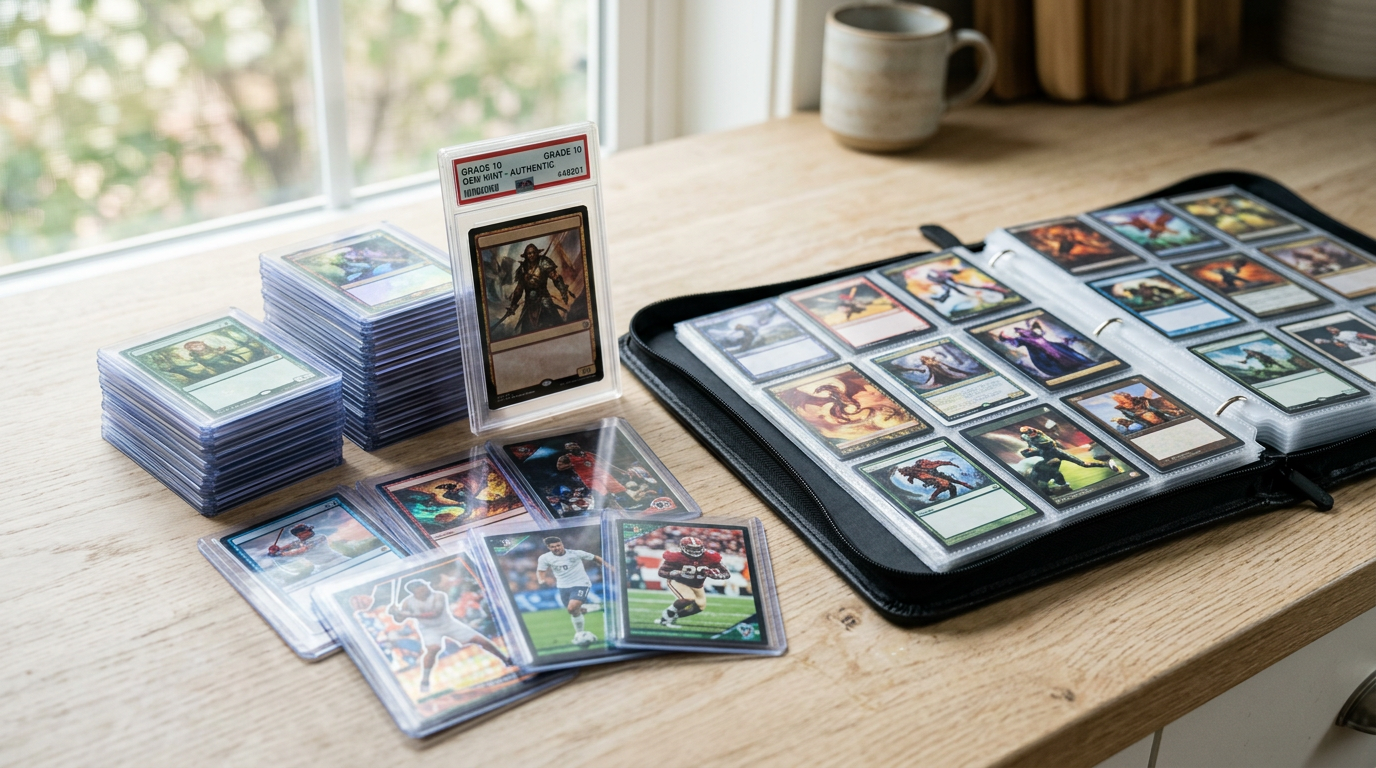
The best place to sell sports cards near you is a local buyer that inspects the cards in person and pays on the spot, such as a Sell Your Gadgets store. That works especially well for mixed collections, because you skip listing, shipping, and waiting. If you only have a handful of high-end cards, marketplaces and auctions can sometimes return more, but they cost time, fees, and risk. The right choice depends on what is actually in your boxes, so this guide walks through how to sort, value, and sell everything from bulk commons to graded slabs.
What decides where you should sell
Before you search for a buyer, answer three questions. They matter more than which shop is closest.
- How many cards do you have? A few dozen cards can be listed one at a time. Several thousand cannot, at least not without losing weeks of your life.
- How concentrated is the value? Most collections have a small group of cards that carry most of the worth and a large pile that carries very little. Sell those two groups differently.
- How fast do you want to be paid? If you need cash this week, an in-person buyer beats any auction that runs for days and then has to clear payment and shipping.
A common pattern among experienced sellers is to pull the best ten or twenty cards, research them carefully, and sell the rest as a lot to a buyer who will take everything at once. That gets you the benefit of patience where it matters and convenience where it does not.
Selling options compared
Every route has a trade-off. Here is how the common ones stack up for a typical sports card collection.
| Option | Speed | Effort | Fees and costs | Best for |
|---|---|---|---|---|
| Walk-in buyback store | Same day, paid on the spot | Low: bring cards and ID | No listing fees; the buyer needs room to resell, so offers sit below full retail | Mixed collections, bulk plus a few good cards, anyone who wants cash now |
| Online marketplace listing | Days to weeks | High: photos, descriptions, shipping, buyer questions | Platform fees, shipping supplies, possible returns or disputes | Individual cards with solid sales history |
| Auction house or online auction | Weeks, sometimes longer to be paid | Medium: consignment paperwork | Seller commissions and sometimes other charges | High-end vintage, rare graded cards, big rookies |
| Card show dealer | Same day | Medium: travel, table hopping | Dealer needs margin; offers vary widely between tables | People who enjoy shopping offers around in person |
| Local buy/sell/trade groups | Varies | High: meeting strangers, haggling | Low fees but safety and no-show risk | Low-stakes single cards |
| Mail-in buyer | Days, including transit | Medium: packing and shipping | Shipping and insurance considerations | Sellers far from a store |
A buyer paying cash is always buying to resell, so the honest expectation is an offer below what a patient collector might eventually pay. What you get in return is certainty, speed, and no work. Whether that is a fair trade depends on how much your time is worth and how soon you want the money.
Junk wax, vintage, and modern: what usually has value
Sports cards fall into rough eras, and each behaves differently in the market. Knowing which pile you are holding is the fastest way to set expectations.
Junk wax era (late 1980s to early 1990s)
This period saw enormous print runs across baseball, basketball, football, and hockey. Because so many cards survived, most commons carry little value, and whole boxes of them are usually treated as bulk. That does not mean everything is worthless. Look for:
- Star rookies and key rookies in strong condition, especially from well-known sets.
- Graded gem copies of popular cards, which are scarcer than the raw supply suggests because so many cards were poorly stored.
- Error and variation cards that collectors specifically chase.
- Sealed product that is verifiably factory sealed, though demand varies a lot by set.
If you are hoping to sell baseball cards for cash from a childhood shoebox and most of it is from this period, expect the bulk to move as a lot and a small number of cards to carry the real value.
Vintage (roughly before the late 1970s)
Older cards were printed in smaller numbers and had a much harder life, stuck in bicycle spokes, rubber-banded, and stored in attics. Even cards of lesser players can have meaningful value, and condition has a huge effect. Stars, rookies, and complete or near-complete sets deserve a careful look, and anything with creases, writing, or trimmed edges should be disclosed honestly because it changes everything about the valuation.
Modern (mid-1990s to today)
Modern cards are where parallels, serial numbering, autographs, and memorabilia patches live. Value concentrates heavily in a few categories, covered next. Base cards from recent years are plentiful and usually low in value unless they feature a player with current hype, which can cut both ways since hype fades.
Rookies, parallels, numbered cards, autos, and patches
Within any era, certain features separate a card worth a closer look from one that belongs in bulk.
Rookie cards
A true rookie card, usually marked by an RC logo in modern sets or recognized as the first mainstream card in older ones, is generally the most sought-after version of a player. Later reprints, updates, and second-year cards usually trade for less. When you sell basketball cards or football cards, check that you actually have the flagship rookie and not a lower-demand variant.
Parallels
Parallels are alternate versions of a base card with a different color, pattern, or finish. Some are common and only slightly scarcer than base. Others are rare and highly valued. The name of the parallel and, where present, the serial number help identify which tier you have. Confirm the exact parallel name against the set checklist before you assume it is a premium version.
Numbered cards
A stamped number such as 25/99 tells you the print run. Lower numbers generally mean more scarcity, and cards numbered to one (1/1) are unique. Numbering by itself does not guarantee value, since the player, the set, and the condition all matter, but it is a strong signal to look up sold comps.
Autographs
Not all autographs are equal. The most desirable are on-card signatures certified by the manufacturer, with sticker autographs generally less appreciated by collectors. Cards signed by the player in person with no authentication are harder to sell because buyers cannot verify them. Third-party authentication helps.
Patches and memorabilia
Relic cards include a piece of a jersey or equipment. A plain white swatch is usually seen as less exciting than a multicolor patch, a logo, or a piece with a clear design. Combination cards that feature an auto, a serial number, and a patch tend to attract attention, but the player and set still drive the result.
| Feature | Usually points to | What to check |
|---|---|---|
| RC logo or first-year flagship card | Stronger collector demand | Is it the flagship rookie or a lesser variant? |
| Colored or patterned parallel | Scarcer than base, varies widely | Exact parallel name and checklist |
| Serial number stamp | Limited print run | Print run size and player demand |
| On-card auto | Preferred by collectors | Authenticity and signature quality |
| Multicolor or logo patch | More appealing than plain swatch | Patch design, card number, set |
| Base card from the junk wax era | Typically bulk | Star players, errors, or high grades |
Condition and grading basics
Two cards with the same name, year, and number can be worth very different amounts because of condition. Buyers look at four things, and you should too.
- Centering: Are the borders even on all sides? Off-center cards lose appeal quickly.
- Corners: Sharp points are ideal. Softness, fuzzing, or rounding indicates wear.
- Edges: Look for chipping, especially on dark borders where white shows easily.
- Surface: Scratches, print lines, dents, creases, stains, and loss of gloss all count. Tilt the card under a light to see flaws.
Third-party grading companies assign numeric grades and seal the card in a tamper-evident holder, often called a slab. Widely recognized graders include PSA, Beckett, and SGC, each with its own scale and reputation. A grade takes the guesswork out of condition for buyers, which is why graded cards often have clearer, more consistent market pricing than raw ones.
Cards that look perfect to you may grade lower than you expect. Collectors frequently overestimate their own copies, so treat your own grading as optimistic until a professional confirms it.
Raw versus graded when selling
Grading costs money and takes time, and a low grade can leave a card worth less than you hoped. For many cards it is not worth grading just to sell. If you are not sure, a buyer can assess raw cards and tell you whether grading looks worthwhile for your best ones. If you already own slabs, keep them intact in their holders, and note the grader, grade, and certification number. Our team handles graded cards of many kinds; for a sense of how we treat slabs in another category, see how we approach selling graded Pokémon cards.
Use sold comps to set expectations
Asking prices are opinions. Sold comps, meaning completed sales for the same card, are evidence. Using them correctly is the single most valuable habit in this hobby.
How to pull good comps
- Search for the exact card: player, year, set, card number, parallel name, and serial number if any.
- Filter to completed or sold listings rather than active ones.
- Match the condition. A raw card should be compared with raw sales in similar shape, and a graded card with the same grader and grade.
- Look at several recent sales, not just one. A single outlier can mislead you in either direction.
- Check the dates. Player performance, injuries, and news can move prices quickly, especially for modern rookies.
How to read them
Sold comps show what buyers paid in a retail setting. A business buying your cards must cover its own costs, carry inventory, and take on the risk that a card sits unsold, so offers from any buyer will sit below the top end of those comps. Use the comps to tell whether an offer is reasonable in relation to the market, not to expect the highest sale you can find. The spread between offer and top comp is what you are paying for speed and convenience.
Red flags in your research
- Comps for a different parallel or print run than yours.
- Graded sales used to price a raw card.
- A single eye-catching sale that no one else has matched.
- Listings that include multiple cards or unusual extras.
Prepare your collection before you sell
A little prep improves both the offer you receive and the speed of the process.
- Sort by type. Separate graded slabs, sealed boxes and packs, high-interest singles, and bulk.
- Pull candidates. Set aside rookies, numbered cards, autos, relics, and anything you recognize as a star.
- Protect them. Use penny sleeves and top loaders or semi-rigid holders. Do not add tape, stickers, or rubber bands.
- Do not clean cards. Wiping surfaces can cause damage, and altering a card can hurt its value and raise questions.
- Keep sets together. A complete set may be worth more as a set than the individual cards.
- Bring supporting items. Grading paperwork, original packaging, and authentication certificates help.
- Bring valid government photo ID. Every sale at our stores requires it.
Bulk does not need to be sorted card by card. A rough split by sport and era, in boxes that are easy to carry, is enough for a first look.
Selling your collection to Sell Your Gadgets
We buy trading cards including sports cards, raw or graded, along with sealed product. You can start with a free quote online or by text, or simply walk into a store without an appointment. The steps are straightforward and laid out on our how selling to us works page:
- Tell us what you have, or bring it in.
- We inspect the cards quickly, checking condition, authenticity, and what is in demand.
- We present an offer based on that inspection.
- If you accept, you are paid on the spot, and a valid government photo ID is required.
We do not publish prices, because the value of cards moves with the market and with condition, so quotes are based on your actual cards. If you live far from a store, there is a mail-in option. You can find a store near you in New York, New Jersey, Florida, Texas, Maryland, Arizona, Georgia, or Virginia.
One more reason to bring everything
Because we also buy phones, laptops, consoles, cameras, and other electronics, you can clear out the closet in one trip if you have both a card collection and old gadgets. We only buy items that are not reported lost or stolen.
Common mistakes when selling a sports card collection
- Assuming old means valuable. Age alone does not decide value; scarcity, player, and condition do.
- Cherry-picking without a plan. Selling only your best cards and leaving the rest can be fine, but make sure you know which ones are carrying the value before you split things up.
- Ignoring condition problems. Creases, trimming, and stains affect value, and honest disclosure avoids disputes.
- Comparing raw cards to graded sales. The prices are not interchangeable.
- Waiting too long on hype cards. Modern rookie values can swing with performance, so if your goal is to cash out, timing matters.
- Overpaying for supplies or grading. Grade only when the expected outcome justifies the cost.
- Skipping a second opinion. If you have a card you think is special, get more than one look before you sell.
Frequently asked questions
Are my old baseball cards worth anything?
Some are, but most cards from the late 1980s and early 1990s were printed in huge quantities and are treated as bulk. Value tends to sit in star rookies, high-condition or graded copies, scarce inserts, errors, and older vintage cards. Sort out anything that fits those categories and get a quote on it separately from the rest.
Where can I sell sports cards for cash today?
A walk-in buyer that pays on the spot is the most direct route. You can find a Sell Your Gadgets store in our states, bring your cards and a valid government photo ID, and get an offer after a quick inspection. No appointment is needed.
Should I grade my cards before selling?
Only when the card is likely to earn a strong grade and the potential increase in value outweighs the fee, the waiting time, and the risk of a disappointing result. For most bulk and mid-range cards, selling raw is more practical. Ask a buyer which of your cards look worth grading.
Do you buy graded sports cards and sealed product?
Yes. We buy trading cards raw, graded, and sealed, including sports cards. Bring the slab in its original holder and any paperwork you have. Quotes are based on the specific card, grade, and current market.
How do I sell a large sports card collection without listing each card?
Sort it into graded, high-interest singles, and bulk, then sell in bulk to a buyer who will take the whole lot. This can be much faster than itemizing. If you want to maximize returns on a few cards, pull those out first and research sold comps before you sell the rest.
Can I sell basketball, football, and hockey cards too?
Yes. Whether you want to sell basketball cards, football cards, hockey cards, or baseball cards, the same principles apply: identify the rookies, parallels, numbered cards, autos, and patches, check the condition, and use sold comps to set expectations.
Can I mail in my cards if I do not live near a store?
Yes, we offer a mail-in option. Start with a free quote so you know what to expect, and pack the cards securely in sleeves and rigid holders. Details are on our how it works page.
Ready to see what your collection could bring? Get a free cash quote online or by text, or walk into your nearest store and get paid on the spot if you like the offer.
Hear from a real customer
Real experience, real cash. Working or broken, get a free quote and walk out with cash the same day.
Compare your options
See how selling to us stacks up against other ways to sell, side by side.